



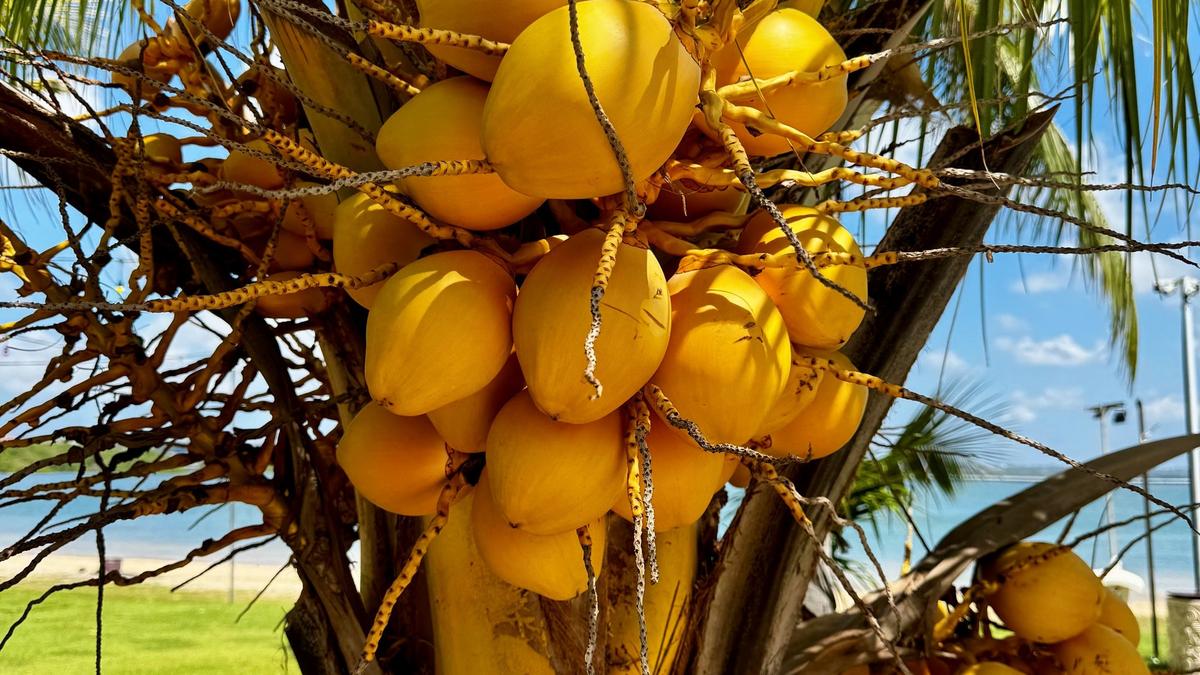
Coconut palms are a wonderful example of the variation and diversity of seeds, and of how plants can travel around the world.
Botanically, a coconut is a fibrous drupe: a type of fruit with three layers.
It can also be described as a seed, because it contains the embryo of a new plant. By the time coconuts are sold in shops, the outer layer has usually been removed. What we eat and drink comes from the endosperm, the white flesh and liquid inside the seed.
Inside the coconut is an embryo with the beginnings of roots and shoots ready to grow. When the seed germinates, the young plant emerges through one of the three pores visible on the coconut shell. You often see them sprouting when the outer husk is left outside laying on top of the soil.
Almost every part of the coconut is useful: coconut water is a massive hit these days and is now sold with all the other drinks in supermarkets. The fibrous outer husk can be used to make rope, mats, brushes, fuel, utensils, musical instruments and more. During World War II, when intravenous fluids were sometimes in short supply, coconut water was occasionally used as an emergency substitute.
In Western Australia, coconut palms grow and fruit best from Carnarvon into the Pilbara and Kimberley. Growing them in cooler regions is possible but it requires commitment.
As the climate warms, some gardeners in Perth have had success growing coconut palms to the point where they produce coconuts, although in areas with cold winters this will remain challenging.
Living along the coast from Geraldton to Wyndham will offer the best climate for growing conditions for coconut palms.

Climate zones
Coconut palms need average temperatures of at least 20C year-round, along with high humidity.
Ideal varieties
For home gardeners, dwarf varieties such as Malay Dwarf are a good option and may begin to fruit in about four years. These smaller varieties also make pot-grown coconut palms more practical for gardeners in places such as Perth.
Soil and drainage
Coconuts require light, free-draining soil and plenty of moisture. When planting a new palm, dig a large hole and add compost and manure. Keep the young palm well watered for the first three years.
Planting the nut
If you are sprouting your own coconut, submerge a ripe coconut in water for two days, then plant it on its side in well-drained soil, or in a pot with potting mix with only about half of the nut covered.
Cold management
If you are trying to grow coconut palms in Perth, start them in a large pot in a warm, sheltered position. They dislike strong hot easterlies and cold winds. Some enthusiasts even build temporary greenhouses around young trees to help them become established.
Tip of the week
Find a really sheltered spot that gets plenty of warmth and sunshine but where you can increase humidity particularly to the leaves. Afternoon watering in summer and underplanting will also help. Narrow, protected spaces near a warming fence are ideal.

Three jobs to do now
1. Head to the nurseries and look for bare-rooted deciduous trees to add some canopy cover to the garden.
2. Don’t overwater garlic as this may cause rotting of the forming bulb.
3. Hovea, verticordia, and hypocalymma will be in flower in native nurseries. They are ideal to fill the garden with colour over the winter period.
Do you have a question for Sabrina?
To submit a question to Green With Envy, inside Saturday’s The West Australian, write to Ask Sabrina, GPO Box D162, Perth, 6001 or email home@wanews.com.au. Please include your full name and suburb. Due to the volume of questions, not all of them will be answered.

