



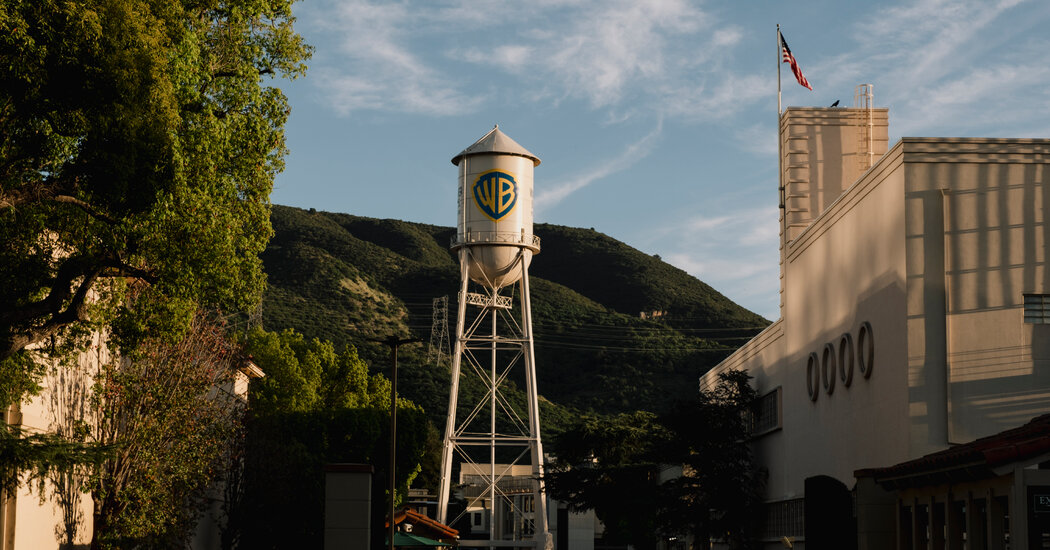
A federal judge on Monday temporarily stopped Paramount from completing its $111 billion purchase of Warner Bros. Discovery while she considers a lawsuit that argues the deal violates antitrust laws, a disruption to one of the biggest media deals in history.
Judge Araceli Martínez-Olguín of the U.S. District Court for the Northern District of California issued a temporary restraining order that was requested by 12 states that have sued to block the deal.
The pause is a brief stopgap that lasts for only 14 days. But in the judge’s order, she raised the prospect of a much longer delay. She said she would weigh whether to grant an injunction, which could halt the deal from closing for months, at a hearing in early August.
The lawsuit is one of the final hurdles in Paramount’s persistent push to buy Warner Bros. Discovery and create a Hollywood giant. The merger would unite under one roof two major movie studios, the streaming services HBO Max and Paramount+, and networks including CBS and CNN.
A prolonged pause in the merger could be costly for Paramount. The company agreed to pay Warner Bros. Discovery’s shareholders a fee of $650 million for every quarter that the deal does not close, beginning in October. That puts an expensive shot clock on the deal, giving Paramount an extra incentive to resolve the states’ lawsuit quickly.
Paramount argues that the deal will help the company compete with streaming services like Netflix and Amazon. But attorneys general in several states, led by Rob Bonta of California, have argued that the deal would give Paramount outsized dominance over the production of films in wide release, tentpole movies, which are the costly would-be blockbusters that sustain studio revenues, and basic cable channels. The states previously said the deal could close as early as July 22.
“This is a critical first win in our case to ensure this megamerger never sees the light of day,” Mr. Bonta said in a statement.
A spokeswoman for Paramount, Melissa Zukerman, said the evidence would show that the states’ claims “are without merit.”
“This merger is lawful, pro-competitive, and will benefit consumers, creators, workers and the entertainment industry,” she said.
Paramount argued at a court hearing before Judge Martínez-Olguín last week that the states’ request for a temporary restraining order was unnecessary and that it planned to defend its deal in court.
But Judge Martínez-Olguín disagreed. She said the states had made “a strong showing that the transaction will substantially lessen competition” in the market for movies in wide-release, and added the deal would be “be difficult, if not impossible, to unwind” if it was completed.
Judge Martínez-Olguín said that even if Paramount had to pay the fee to shareholders as a result of delays to the deal, it did not outweigh the potential harms to competition that could occur if the merger was allowed to go forward.
The court order is the latest twist in the monthlong pursuit of Warner Bros. Discovery by David Ellison, the tech scion who runs Paramount. Mr. Ellison had mounted a campaign to acquire Warner Bros., ultimately outbidding Netflix after proposing a handful of escalating offers.
The lawsuit to block the deal comes as states take a more active role in opposing mergers they say violate the law. In April, a group of states successfully obtained an injunction to stop the broadcasting company Nexstar from buying its rival Tegna. But the deal had already closed, the companies said.
Benjamin Mullin and Lauren Hirsch contributed reporting. Seamus Hughes contributed research.

