



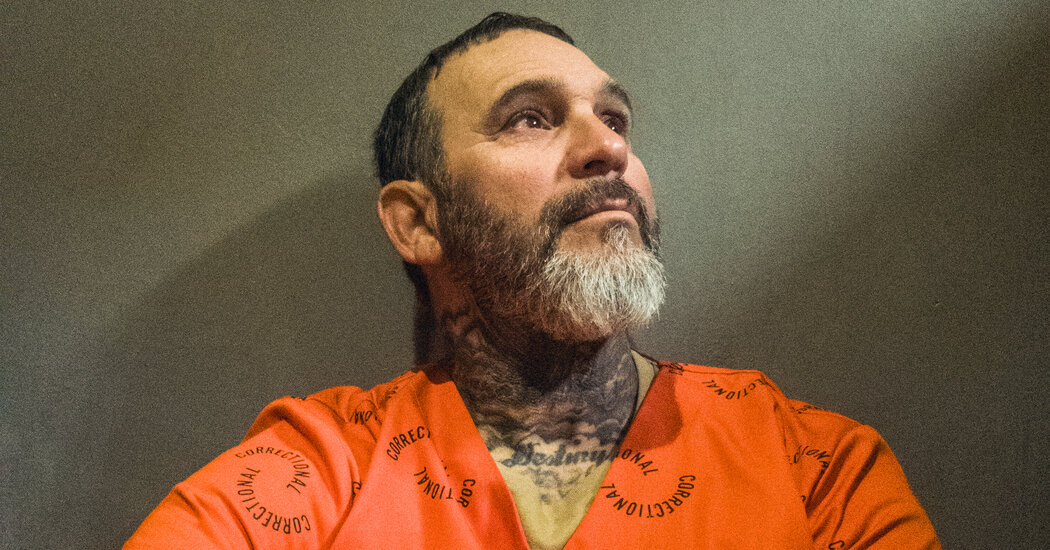
A raft of stabbings, shootings and car thefts ensued, with Mosquera and his friends often at the center of them. Mosquera told me that in 1988 he was ambushed at a fairground by rival gang members, who knocked his teeth out with a set of brass knuckles. (He still has rows of gold upper and lower teeth that flash as he speaks.) His gang decided to take revenge. One night in Coconut Grove, a neighborhood in Miami, they shot at a 16-year-old rival gangster, who survived the attack but was wounded in his leg.
Mosquera, who told me openly about many crimes he committed during his gang years, insisted he was not there that night. But fearing a life in prison if he stood trial, he took a plea deal for attempted first-degree murder and received a nine-year sentence. By 1996, Mosquera, then 26, had served his time. He thought he had a new life ahead of him, but as an undocumented immigrant, he was rearrested by immigration agents. Mosquera was caught in what is known as administrative detention — which, at the time, allowed immigrants to be held indefinitely before deportation. With Cuba still refusing to take deportees from the United States, Mosquera was held another six years, serving time in various prisons. A 2001 Supreme Court decision banned this practice, requiring the United States to release administrative detainees after six months if they cannot be deported.
It was during that time that the most brutal aspects of the American prison system came into focus for Mosquera. In 1996, he said, he and four other Cubans demanded a meeting with immigration authorities. Instead, he said, the guards assaulted them with pepper spray and tear gas. Later that night, he told me, a guard captain arrived with a group of subordinates, one of them wielding a metal pipe. Mosquera was beaten unconscious. As Mosquera and I talked, he lifted his right thumb, which is crooked. He hasn’t been able to move it since the attack, he said. (Human Rights Watch, which was alerted to the assault, reported that the men did not receive medical care for more than a week after the guards bludgeoned them.)
Mosquera was finally released in 2002 under an agreement that would allow him to remain in the United States and work, while maintaining regular check-ins with immigration authorities. Raised Catholic, he became a born-again Christian in prison. He also left his gang, even though others who tried to do so had been killed in retaliation, and started a family. As he spoke to me on a video call, he tilted his head back to show me the names of his daughters — Destiny, Faith, Monica and Cynthia — tattooed across his neck and chest.

