



In a single day in January, Immigration and Customs Enforcement spent more money than it had on any other day in either of President Trump’s terms, federal spending records show.
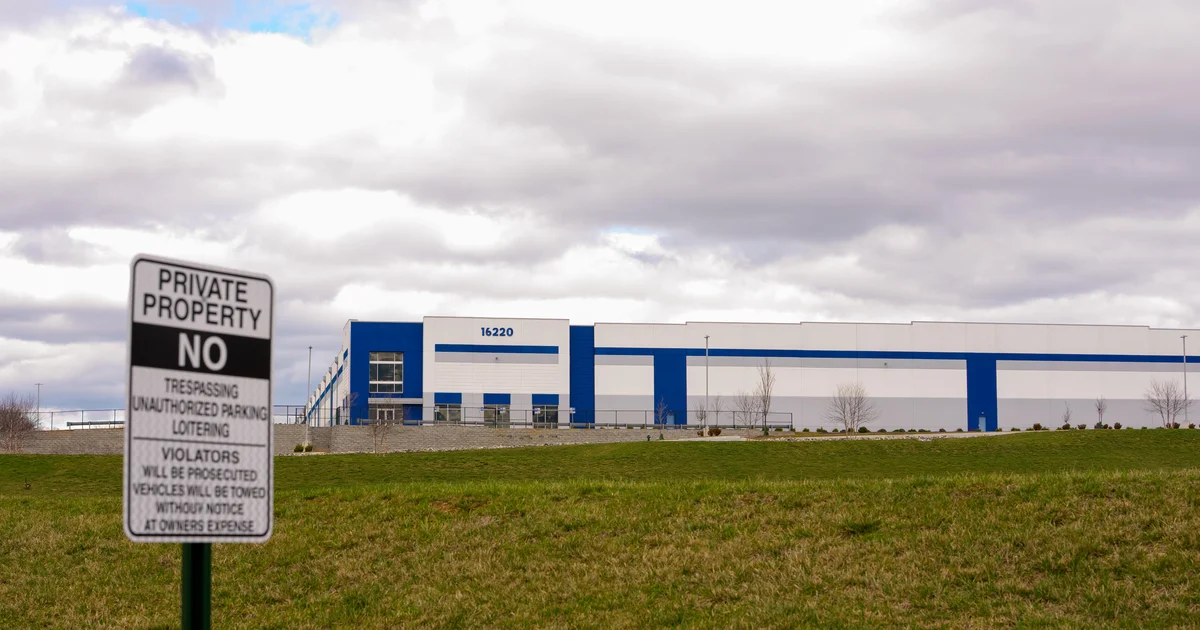
The agency advanced billions to Chicago Title Insurance in escrow to acquire detention facilities, according to a Department of Homeland Security spokesperson. Over the next two months, ICE used $1.07 billion of the funds to purchase 11 warehouses it planned to convert to detention megacenters, seven of which the agency now plans to sell.
The rest of the money sat with the firm for months after ICE abandoned the warehouse plan. In July and August, ICE moved $2.2 billion from Chicago Title to purchase four detention facilities from CoreCivic, a private prison company it separately pays to continue operating them.
In its rush to expand detention capacity, ICE wasted millions of taxpayer dollars, the Government Accountability Office found in a report released Thursday. The agency failed to account for long-term costs in acquiring detention centers and lost $20 million in unrecoverable costs purchasing the warehouses it no longer plans to use, the review found. Even more could be lost if ICE sells the warehouses for less than what it paid for them, the GAO report said.
Barring any undisclosed purchases, $1.55 billion still sits with Chicago Title Insurance for acquiring detention centers as ICE continues its push to double the number of detention beds in service of the president’s mass deportation agenda. Just this week, ICE awarded several companies contracts that could reach a combined $10 billion to expand and construct new facilities.
GAO concluded that „urgent planning“ is necessary to reduce further waste. ICE said it would produce a strategic plan by Aug. 31, 2027, a date the watchdog said wasn’t soon enough.
„We just saw a real lack of planning overall,“ said Heather MacLeod, director of Homeland Security and Justice at GAO. „The lack of planning has really led to stops and starts which have ultimately resulted in waste.“
GAO’s report did not estimate a total amount potentially lost to waste, but MacLeod said another review of ICE spending is currently underway.
Flush with cash after Congress funneled $75 billion to the agency — including $45 billion to expand detention capacity — through President Trump’s „One Big Beautiful Bill Act,“ ICE has nearly doubled its spending this year. The agency spent $19 billion from last October to July, the most recent month for which data is available, up from $11 billion the previous full fiscal year, a CBS News analysis of federal data found.
A DHS spokesperson wrote to CBS News that ICE is „working at turbo speed on cost-effective and innovative ways to deliver on the American people’s mandate for mass deportations of criminal illegal aliens,“ and that the spending bill known as OBBBA has provided „historic funding“ to help it carry out the mandate.
Appropriating funds outside of the typical process — and without the usual guardrails that come in appropriations bills — means ICE has more flexibility in how it can use the funding, said Kevin McNellis, a policy and budget analyst who previously worked in the Congressional Budget Office and Congressional Research Service. That also leads to a breakdown in oversight, he wrote in a report he authored for Co-Equal, a nonprofit focused on congressional authority.
„When DHS only had annual funding or relied on the annual appropriations for the majority of its funding, there were long standing systems and processes in place for DHS to inform Congress of its spending plan and for Congress to then oversee those spending plans,“ McNellis told CBS News. „The situation we’ve been in since OBBBA passed is we have an unprecedented amount of money, appropriated outside those long-standing processes, trying to be spent very quickly.“
ICE paid an 11% to 13% premium on the 11 warehouses it purchased, according to CoStar, a real estate analytics firm. Former Homeland Security Secretary Kristi Noem directed ICE to purchase new detention sites within 30 days, contributing to the high prices, The Wall Street Journal reported.
The remaining warehouses ICE still hopes to convert face legal challenges, though ICE already signed contracts worth a combined $426 million to renovate two of them. No detainees are currently held in any of the warehouses.
After dropping the warehouse plan, ICE spent $1.47 billion purchasing two California detention facilities from CoreCivic in July. The next month, ICE bought another two CoreCivic facilities in Kansas and Minnesota for a combined $734 million. In its announcement of the August purchases, CoreCivic said the company is in talks with ICE to sell more facilities.
CoreCivic is using the profits from the sales to pay down its debts, according to company filings.
GAO found that ICE had only forecasted costs for these centers and to-be-converted warehouses for the next three years, failing to consider how it would pay for them once the funds Congress has allocated through 2029 run out.
The watchdog also found that through FEMA reimbursements, ICE paid the state of Florida almost triple its typical per-bed rate for two state-operated facilities, including the now-shuttered facility dubbed „Alligator Alcatraz.“ ICE skipped typical contract negotiation practices, creating a new grant program with the state of Florida as the only eligible recipient, according to the GAO report. FEMA paid Florida a total of $608.4 million for „Alligator Alcatraz,“ GAO said.
ICE is also paying more than it typically would per-bed to house noncitizen detainees at facilities operated by the Bureau of Prisons. BOP officials told GAO they’ve had to pay staff overtime and for temporary assignments to meet ICE’s needs, resulting in a per-bed-rate double that of ICE’s median rate.
Another abandoned initiative GAO cited was ICE’s efforts to launch detention facilities at military bases, like the one at Camp East Montana in El Paso. A previous GAO review found ICE spent $7.1 million on detainee meals it did not need at the El Paso facility. ICE dropped its plan to launch similar facilities on military installations in Indiana and New Jersey, GAO reported.
ICE also spent $2.85 million on tents at Guantanamo Bay to house detainees that were never used. The facility, initially planned for 30,000 detainees, held only a handful. In May, CBS News reported that the Guantanamo Bay facility was holding just six detainees. The agency is still trying to house detainees on the naval base: this week it signed a contract with the same company it used to help procure the warehouses and acquire the CoreCivic facilities to construct a facility at Guantanamo Bay and at other sites.
DHS’s Inspector General is conducting its own audit into ICE’s acquisition of detention space to determine whether it made purchases in a „cost-effective manner.“ The internal watchdog is also probing ICE spending on air charter services and its reporting on how it is using Big Beautiful Bill funds.
„We think it’s important that DHS and ICE do develop a plan going forward tied to their needs and what they’re trying to get out of their expansion efforts,“ said MacLeod, the GAO director. „We’re encouraged to see that they agreed with our recommendation and we’re hoping they’ll take steps to address it quickly.“

