



Growing up in Perth, Telethon weekend was always pure magic.
I remember counting down the days as a kid, glued to the TV screen in my pyjamas, begging my parents to let me stay up past midnight just to see how high the donation tally would climb.
I loved the energy, Fat Cat, the celebrities and the feeling our whole State was throwing one massive, joyful party for a good cause — for me it felt similar to Christmas and was an undisputed highlight of my calendar.
But, in covering the lead-up to Telethon as a reporter, that childhood innocence has completely evaporated.
Over the past few weeks, my job hasn’t been about fun or entertainment. It has been sitting in quiet hospital rooms at PCH, listening to parents recount the exact moment their world fell apart.
On Tuesday, I spent an afternoon with Jana Catania at Perth Children’s Hospital where she brought me to tears.
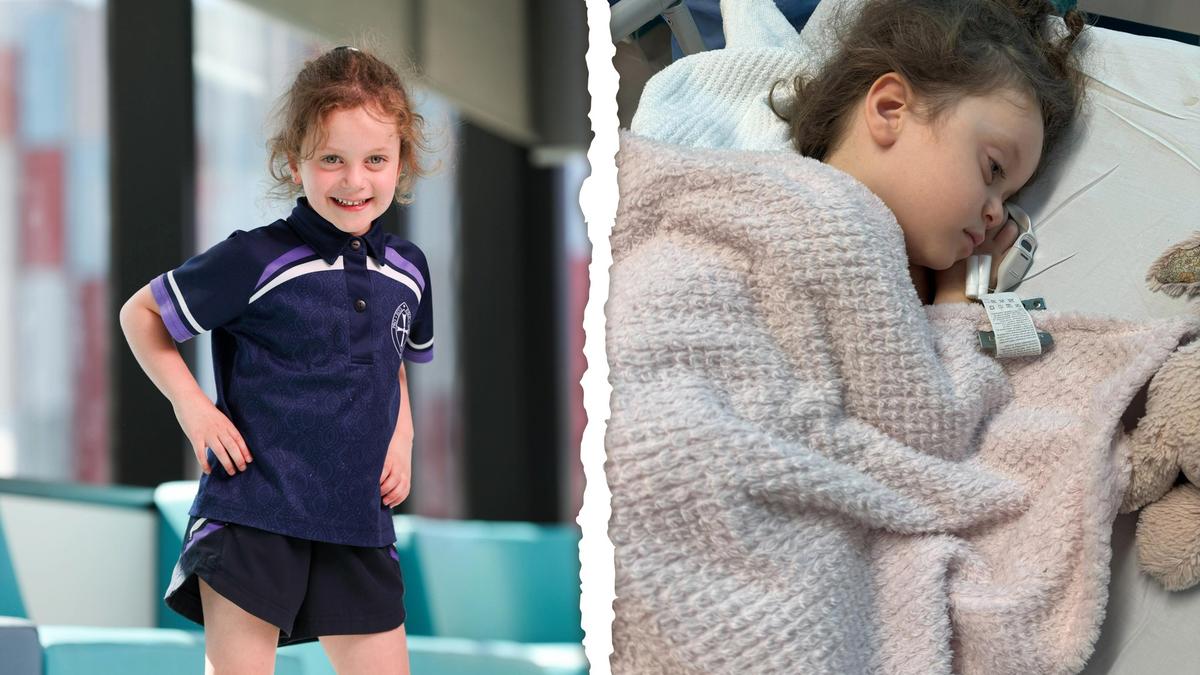
Ms Catania, crying herself, recalled the nine months when she watched her three-year-old daughter fight her way back “from the brink of death”.
Little Maxi sat right there with us, smiling from ear to ear, was diagnosed with leukaemia just last May. For that family, life was fractured into a permanent before and after.
Amy McKay, the mum of radiant Little Telethon Star Paige, who lives with a rare pilocytic astrocytoma, recently called me “part of the family”.
I met Amy and Paige for the first time in July. Since then I have listened to Amy tell Paige’s story a number of times — and each time it gets a little harder as I have grown closer to the beautiful McKay family.
There is no training that prepares you for watching a weeping mum while she carries the unbearable weight of knowing doctors can only manage her little girl’s quality of life.
There have been many times I have found myself wiping away my own tears, completely undone by the sheer weight of her grief and love for Paige.
I stood beside nine-year-old Aiden’s mum, Miraluna, utterly speechless when she told me of the countless times she has had to bring her son back to life with CPR because the condition he lives with makes it possible for him to stop breathing in the middle of the night with no warning.
Yet, somehow, walking into Aiden’s world you are met with energy and endless laughter.
The bravery and bubbly resilience of these kids in the face of such massive adversity is nothing short of incredible.
As a reporter who used to view Telethon through rose-coloured glasses, I know I will never look at it the same way again.
And for that transformation, I am profoundly grateful.
It is so easy to get swept up in the million-dollar cheques, the flashing lights and the glitz of a big television broadcast and forget the raw, devastating human stories that breathe life into every single dollar raised.
Now with eyes wide open — I think I love this cause more than I ever thought possible.
Because if I can use my voice as a journalist to make even a microscopic difference in the health care and futures of these precious families, I consider it the greatest honour of my life.

