



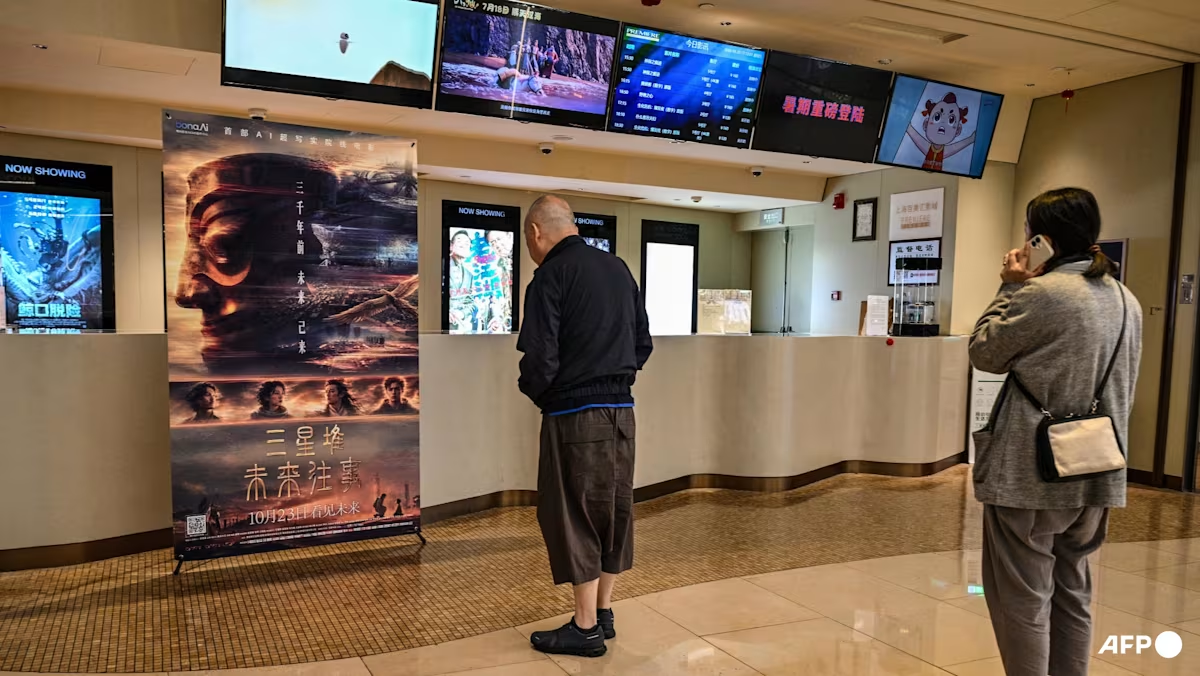
Nearly 100 people took more than two years to make the film, which cost more than 10 million yuan (US$1.5 million), Bona said.
But that was not enough to convince Iris Yang, who attended a free preview screening of the film on Thursday and said she would not have paid for a ticket, given the movie’s quality.
„If AI generation can match the theatrical experience of Avatar, I think I would be willing to pay for it,“ Yang said, referring to the US franchise known for the quality of its animation.
AI-generated video has gained popularity in the world’s second-largest economy. On Douyin, the Chinese equivalent of TikTok, AI-generated short dramas garnered more than 200 billion views in September alone.
But „the audience won’t automatically pay for the tickets just because it’s an AI-generated film“, independent AI director Zhang Jun told AFP.
Online, Chinese social media users also seemed unconvinced by the launch of AI movies in cinemas.
„If it’s free to watch on streaming platforms, it could become legendary. But paying to watch? People are not going to accept it at this stage,“ one user on Weibo commented.
In Hollywood, the rise of AI has sparked concern among film workers about the prospect of job losses.
An AI-generated sci-fi feature called Gods Don’t Give Gifts is scheduled for US release on Dec 4.
And a virtual Hollywood actor called Tilly Norwood, whose interviews have gone viral while fuelling job fears, is also set to star in an upcoming movie called Misaligned.

