


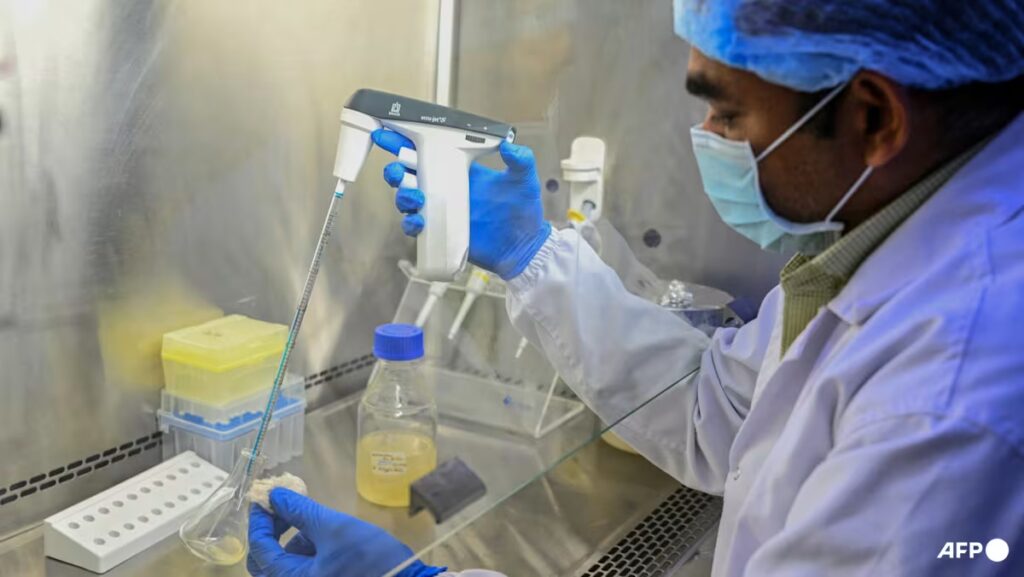
The government is now investing in drug discovery efforts.
In September, India’s Department of Pharmaceuticals approved about 16 billion rupees (US$168 million) in funding for 41 pharmaceutical and medical technology research projects, including novel drug discovery and clinical development.
Drug developers and scientists say that AI could make it cheaper and faster for more Indian companies to develop their own medicines by identifying promising compounds earlier.
But that addresses only part of the challenge.
Noubar Afeyan, co-founder and chairman of US-based pharma giant Moderna, told CNA that India’s ability to turn promising science into medicines will depend on building much more of the infrastructure needed before and during human trials.
“It’s probably more important to get preclinical and clinical capabilities established at scale than just AI,” he said. “I don’t think AI will fix that.”
LOWERING THE BARRIERS TO DRUG DISCOVERY
The potential significance goes beyond India’s pharmaceutical exports – which rose by 2.1 per cent to about US$31 billion in the financial year ended March 2026, according to government data.
Non-communicable diseases accounted for 49 per cent of deaths in India in 2021, or about 6.4 million, according to the World Health Organization. The financial burden is also significant, with households paying 43.4 per cent of the country’s total health expenditure out of pocket in financial year 2022-23, according to India’s National Health Accounts.
Scientists said that lower research costs could help more Indian companies develop new treatments without the resources of a large pharmaceutical firm.
Megha Goyal, a drug-discovery scientist and co-founder of Abhinavayan Biotech, said AI is already helping smaller Indian biotechnology companies identify promising drug targets, screen potential compounds and design molecules before committing to laboratory experiments.
“AI has not made drug discovery easy; it has made it more accessible and more efficient,” she said.