


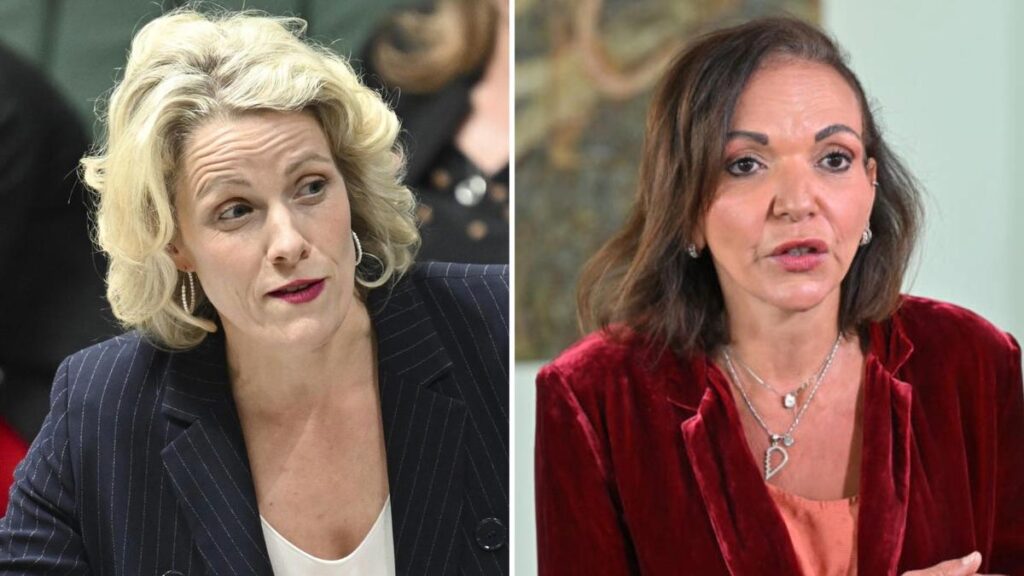
Labor ministers are at odds over the tax office’s ban on credit card payments that small businesses warn will cause cash flow problems and see consumers pay more for restaurant meals and takeaway coffee.
From December 1, the Australian Taxation Office will stop accepting credit card payments.
A ban on credit and debit card surcharge fees for consumer transactions came into effect a week ago.
The Opposition and business groups, including the Australian Chamber of Commerce and Industry, are calling on the ATO to reconsider this move, announced a week ago, arguing it will create cashflow problems for small businesses that have a tax liability, potentially meaning higher prices for customers going out to a restaurant as costs are passed on during a time of high inflation.
Housing Minister Clare O’Neil has joined Small Business Minister Anne Aly in calling on the Australian Taxation Office to reverse its planned ban on accepting credit card payments.
“We really want the ATO to go back and talk to business about what they’ve decided to do here and think about how they can find a solution that works,” Ms O’Neil told Nine’s Today show on Thursday.
“We have a simple principle and that is that you should not be charged to use your own money, and that’s a good thing for Australians.”
Just 25 minutes later, Assistant Minister for Science, Technology and the Digital Economy Andrew Charlton, touted as a future treasurer to replace Jim Chalmers, declared his support for the ATO’s controversial credit card payment ban.
“I’ve seen that decision by the tax office and the reason for that decision is that the Government has said that if we’re going to stop businesses from applying these surcharges, then it’s appropriate to be consistent and for government agencies to not have these surcharges as well,” he told ABC Radio National.
“The ATO has made a decision and that decision is that they don’t want the people who are not paying by credit card, which is 98 per cent of taxpayers, to be subsidising those that do.”
But colourful Sydney restaurateur Nahji Chu said the tax office’s credit card ban would create cash flow problems for small business.
“All of a sudden this week you can’t pay your ATO bill with your credit card. So for a small business, that’s cash flow,” she told Today.
“It’s cash flow and it means breathing space each month. So, it just means, okay, so if you can pay $10,000 on your credit card, it means a whole month of breathing space so you can bring more money in from revenue.
“But if revenue’s coming in and you don’t have the credit card facility, of course you’ve got to increase your prices.”
Australian Chamber of Commerce and Industry chief executive Andrew McKellar said the ATO had refused to budge, following a meeting with business leaders on Wednesday.
“The ATO is saying they’re not negotiating the decisions made. They’re talking about implementation and how that’s going to happen,” he said.
“I think from a small business point of view, the message is ‘like it or lump it, you have to put up with it’. And not surprisingly, many of the small businesses that we’re talking to are absolutely furious. It will have a big impact on them.”
The Reserve Bank of Australia in March announced a ban on surcharges on debit credit, EFTPOS, Mastercard and Visa payments would be coming into effect on October 1.
This ended a 23-year arrangement where consumers had paid surcharge fees on top of what it cost to do the actual transaction.
“Because the cost of doing card payments, processing card payments has gone down, then there’s no reason why consumers should be paying more after this change, including the price and the surcharge, than they were paying before,” Mr Charlton said.
Prime Minister Anthony Albanese last week made a social media video claiming surcharge fees were costing Australians $1.6 billion a year.
Mr Charlton said this change offered transparency.
“People will have transparency that the price they see is the price they pay,” he said.
Interchange fees, or the cost of processing a transaction, are being capped from 0.8 per cent to 0.3 per cent.
“That reduction means that card payments are cheaper for businesses to process,” Mr Charlton said.
“There’s no reason, as a result of this reform, that consumers should be paying more when they tap their card for a coffee – the price they pay because the cost to the business has gone down, there’s no reason why that should be greater than what they were paying before.”