


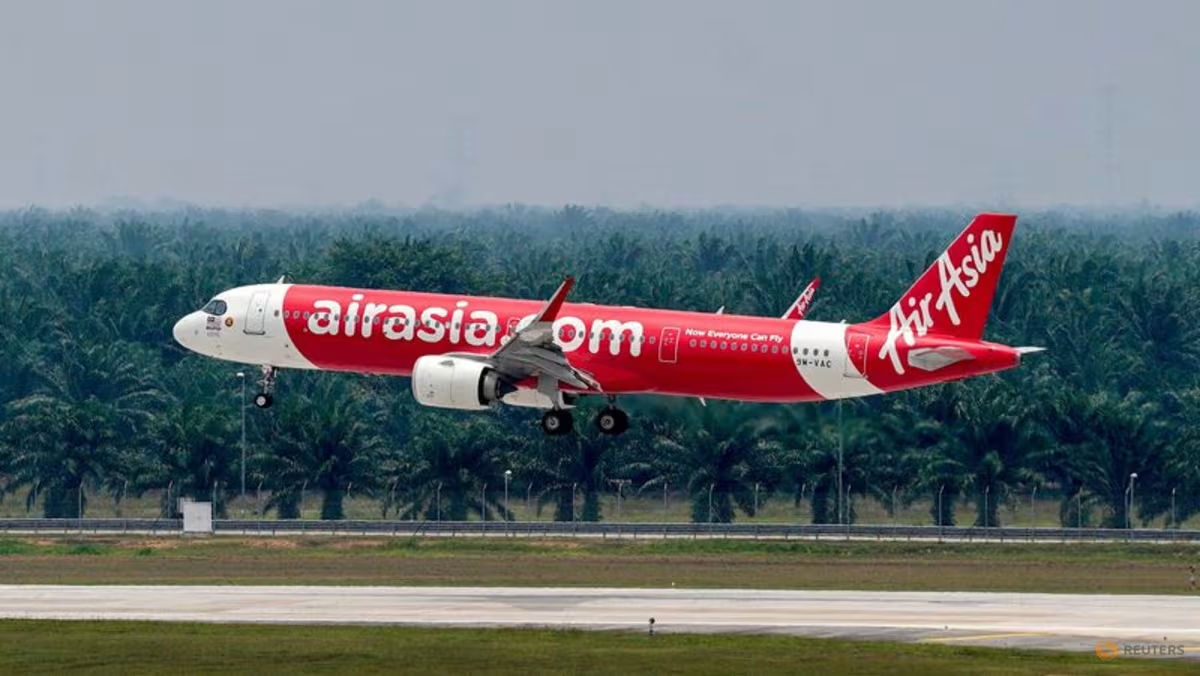
AIRASIA’S FLIGHT AND PLIGHT
The airline is no stranger to financial difficulty.
Established in 1993, it began flying three years later as a conventional full-service airline – but struggled financially, accumulating around RM40 million in debt.
In 2001, Tune Air, led by Fernandes and Malaysian entrepreneur Kamarudin Meranun, acquired the debt-laden airline for a token RM1 while also taking on its liabilities and subsequently transforming it into a low-cost carrier that would become one of Southeast Asia’s biggest aviation success stories.
Today it operates from hubs in Malaysia, Thailand, Indonesia, Cambodia and the Philippines.
Its fleet of 239 planes also serves more than 150 destinations across over 20 countries, mainly in Asia and Australia.
But its rapid growth has been punctuated by periods of financial stress.
The most severe came during the pandemic, which pushed parts of the AirAsia group into severe financial distress – with both AirAsia X and Capital A, then the parent of its short-haul airlines, falling under Bursa Malaysia’s PN17 classification in 2021 and 2022 respectively.
PN17 companies must undertake a financial recovery plan to maintain their listing on the Malaysian stock exchange.
Years of restructuring followed, culminating in the consolidation of its airline businesses under AirAsia X, now known as AirAsia Group Berhad – earlier this year.
Capital A, which retained the group’s non-airline businesses, exited PN17 in May.
In a statement released on Sep 2, AirAsia shared that its planned fundraising exercises, comprising up to US$1 billion in international debt markets and RM700 million in local credit facilities, were “primarily targeted at debt restructuring, refinancing and balance sheet consolidation, rather than purely funding operational shortfalls”.