


The Ebola epidemic that began in the Democratic Republic of Congo earlier this year has achieved a grim new milestone, turning up in a third region of the African continent, the widest footprint of any Ebola outbreak to date.
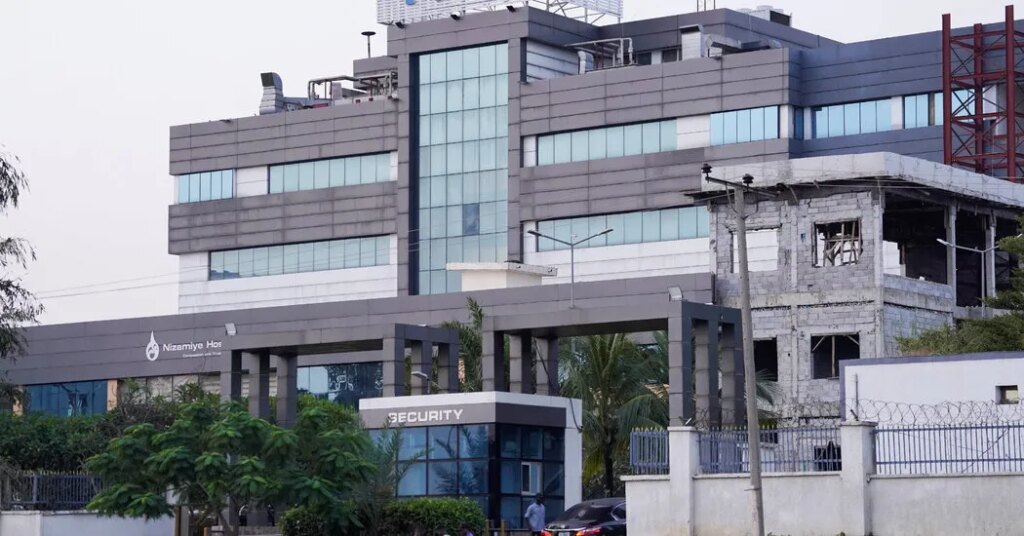
This week, health officials identified a new case in Abuja, Nigeria, more than 2,000 miles west of the outbreak’s epicenter in Central Africa. The news came the same day as the announcement of a ninth case of Ebola in the East African country of Kenya.
Dr. Jean Kaseya, director general of the Africa Centres for Disease Control and Prevention, said in an interview on Wednesday that he was calling for a meeting of all African health ministers on Oct. 28. If they cannot come up with ways to stamp out the outbreak, he said, “the whole continent can be affected.”
Since the first case was identified in May, Congo has recorded more than 9,700 confirmed cases and more than 4,600 deaths, making the outbreak the fastest growing Ebola epidemic ever. Within Congo, the disease has spread to eight provinces, and about 70 percent of new cases occur in the community, suggesting widespread undetected transmission.
Clinical trials of vaccines against Bundibugyo, the type of Ebola in this outbreak, are underway, but the shots are not expected to be available for many more months. And they leave out children under 5, who account for nearly one in four cases and one in three deaths.
Nigeria is Africa’s most populous country, and Abuja, its capital, is a hub for global travel, with thousands of international passengers each month.
The patient in Nigeria had recently returned from a trip to Uganda, raising questions about whether that country, too, has active cases again. Uganda confirmed 20 cases and two deaths earlier this year, but the World Health Organization declared in August that Uganda’s outbreak had ended.
Regardless of its origin, “I see the Nigeria case as a reflection of how uncontrolled the growth has become,” said Dr. Nahid Bhadelia, the director of Boston University’s Center on Emerging Infectious Diseases.
Dr. Bhadelia said she was more worried about Ebola spreading undetected in African countries that may share borders with affected countries than about it moving to other continents. “I worry about South Sudan every day,” she said.
Some public health experts were alarmed by a lack of clarity about the Nigerian case. The patient is a Ugandan national who lives with her husband, a Swiss diplomat, in Abuja.
The Ugandan health ministry has said the woman traveled to Congo on business and passed through Uganda on her way back home to Nigeria. “Travel through Uganda does not establish that infection occurred here,” the ministry said.
But according to Dr. Kaseya, the woman told health officials she did not travel to Congo and had been in Kampala, the Ugandan capital, on a two-week holiday.
“This is what she said, but we need to continue investigation because for sure she got Ebola somewhere,” he said.
Referring to the possibility of ongoing cases in Uganda, he added: “It’s so difficult to comment and to have a conclusion on that if we don’t know the full story from the lady.”
The dates of the patient’s travel are also unclear. The World Health Organization’s Africa office said she developed symptoms on Oct. 7, four days after returning to Abuja. But an official from the Nigeria C.D.C. has said she arrived in Abuja on Oct. 5, two days before symptoms emerged.
She sought care for malaria-like symptoms Oct. 11, but doctors did not suspect Ebola as the cause of her illness for more than a week. She was diagnosed as being infected with Bundibugyo on Oct. 20. During that time, according to Nigerian officials, she came into contact with at least 44 people, including many health care workers, who are now being closely monitored for signs of illness. But that number is likely to grow as officials learn more about her whereabouts before she was diagnosed, experts said.
In Kenya, eight new cases identified so far are all contacts of the first, a Congolese patient who traveled through Uganda before arriving in Nairobi. The patient was diagnosed on Oct. 5 and died the same night.
“One imported case can be contained by quickly tracing contacts,” said Dr. Tedros Adhanom Ghebreyesus, director general of the World Health Organization. “The real danger is sustained spread within communities.”
Nigeria contended with an imported case of Ebola during the 2014 outbreak, but was able to snuff out the resulting cluster of cases within a couple of months, in part by relying on its infrastructure for polio eradication.
Dr. Bhadelia said she was hopeful Nigeria would once again be able to contain Ebola quickly. She said she was more concerned about the lack of information from the Ugandan government on the potential trails of infection left behind by the patients who traveled to Kenya and Nigeria.
“We’re not hearing enough about the contact tracing, or active investigations to look for any chains of transmission that may have resulted around these two cases,” she said.