


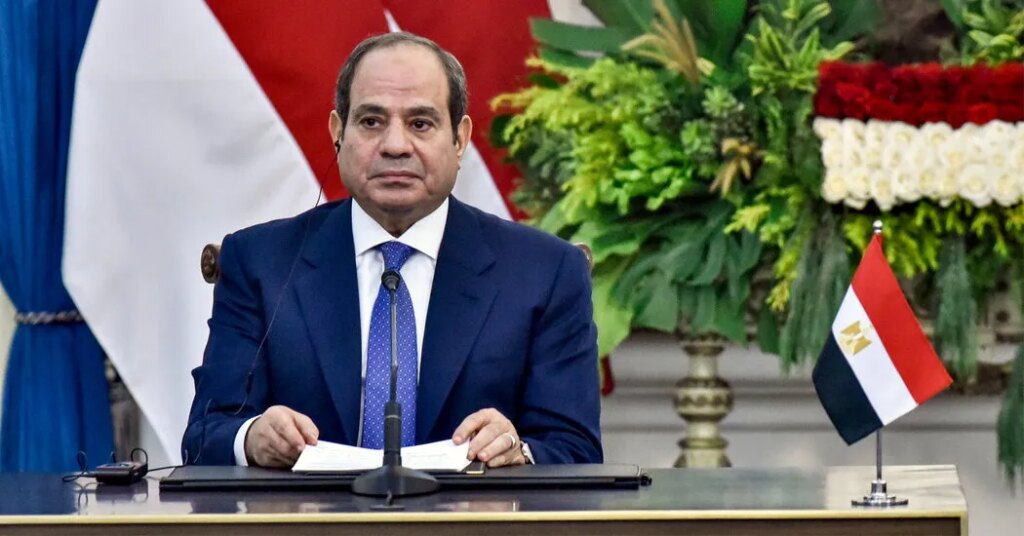
Egypt’s top security chiefs pledged on Sunday to support Saudi Arabia as the kingdom faces increasingly deadly attacks by the Iranian-backed Houthi militia of Yemen, raising the prospect of broader regional entanglement in the conflict.
The National Defense Council, whose chairman is President Abdel Fattah el-Sisi, said in a statement that Egypt would provide “all necessary and possible forms of support” to defend the kingdom, though it did not specify what that would entail.
Egyptian lawmakers were expected to vote on whether to approve military assistance at an emergency session on Sunday that Mr. el-Sisi called a day earlier, saying any Egyptian action would be defensive.
Neither country has publicly confirmed a Saudi request for Egyptian military assistance. But the kingdom has been seeking help from allies in recent weeks, with Britain agreeing to provide aerial refueling and France pledging troops and equipment to protect a Saudi oil export hub. President Trump rebuffed Saudi appeals last month to launch U.S. strikes against the Houthis, but the United States is providing significant military support, including intelligence and data to help with selecting targets.
Egypt made the offer after weeks of intense fighting in Yemen between the Houthis and the internationally recognized government of Yemen, which is backed by Saudi Arabia.
Since last month, the conflict has increasingly spilled onto Saudi soil. The Houthis have launched frequent attacks on Saudi airports, oil facilities and other vital infrastructure that have killed at least 19 people, according to the Saudi authorities.
On Sunday, the Saudi-led military coalition in Yemen, which is fighting the Houthis, said a military helicopter had crashed near the Yemeni border, killing two officers. Maj. Gen. Turki al-Maliki, a spokesman for the coalition, blamed a technical malfunction and dismissed Houthi claims to have shot down a Saudi helicopter in the area.
Egypt, a close Saudi ally, contributed air and naval support from the outset of the last Saudi-led military intervention against the Houthis in Yemen, which began in 2015. Egyptian warships helped protect shipping through the Bab al-Mandab Strait, a strategic choke point for global trade and energy shipments at the southern entrance to the Red Sea.
The waterway again became a point of contention in recent months after the Houthis announced a blockade on Saudi shipping in the Red Sea and restarted attacks on passing tankers. Last month, the militia staged a lightning advance along Yemen’s coast, seizing territory adjacent to the strait.
The group’s attacks have further roiled global energy markets during the upheaval of the U.S.-Israeli war with Iran and the resulting closure of the Strait of Hormuz in the Persian Gulf, another key route for energy exports.
Houthi officials have objected to any Egyptian involvement. In a letter published on Saturday by Saba, a Houthi-run news agency in Yemen, Yahya al-Rai, the speaker of the Houthi-aligned Parliament, urged Egyptian lawmakers to vote down the measures and avoid wading into the conflict.
“Egypt being drawn down this path would pose a grave danger to its national security and internal stability,” he wrote.
Oil-rich Saudi Arabia has been a major economic backer of Egypt since the 2013 military coup that deposed Mohamed Morsi, Egypt’s first democratically elected president, and swept Mr. el-Sisi to power. Saudi assistance has included financial aid, fuel supplies and billions of dollars in central bank deposits.
“It is inconceivable that we would allow Saudi Arabia, its security or its stability to be harmed,” Mr. el-Sisi said on Saturday.