


The Democratic Party’s ascendant left flank, looking to build on its success in Michigan last week, faces fresh tests in two primaries in the Midwest on Tuesday.
A democratic socialist appears to be clearly ahead in the governor’s race in Wisconsin, and a progressive is facing off against a moderate in an expensive Senate race in Minnesota. Wisconsin, like Michigan, is a closely watched national battleground.
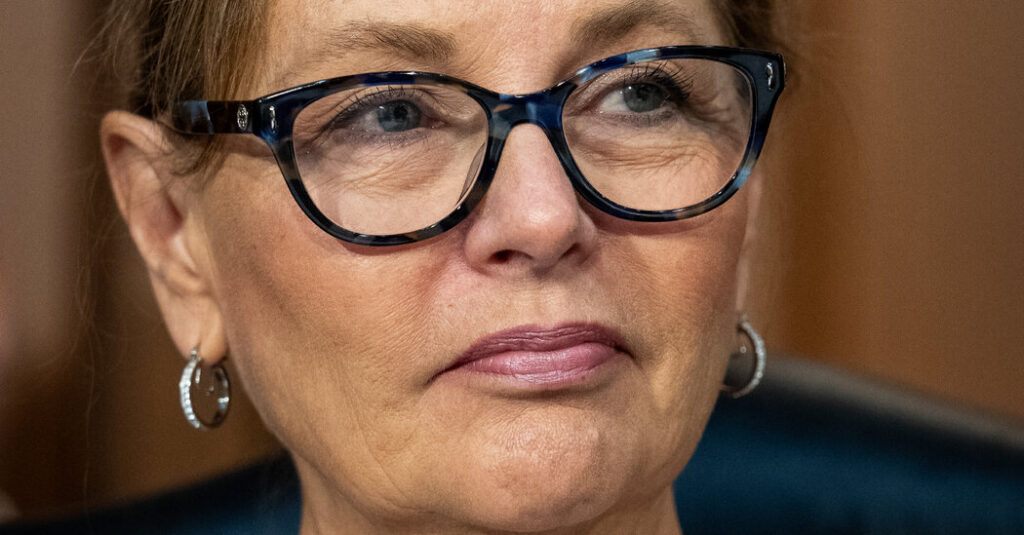
On the Republican side, President Trump’s choice to succeed Senator Lindsey Graham in South Carolina — Mr. Graham’s younger sister, Darline Graham — is running in a special primary election against four more experienced rivals. Despite Mr. Trump’s endorsement, a runoff is likely in the crowded race.
Is Trump’s support enough to lift Lindsey Graham’s sister in South Carolina?
Mr. Graham’s death last month rocked South Carolina politics, leading to Tuesday’s special primary election to succeed him. His sister, Ms. Graham, accepted Gov. Henry McMaster’s appointment to complete her brother’s term, but then she surprised South Carolina Republicans by deciding to run for a full six years in the Senate — with Mr. Trump’s support.
Special elections, especially those run on a compressed calendar, can be unpredictable. Four other Republicans also decided to run, increasing the likelihood that a runoff will be necessary on Aug. 25.
Ms. Graham, as the interim senator running with Mr. Trump’s endorsement, is the presumed front-runner. But she was untested and largely unknown before her appointment. And she has spent much of the last couple of weeks in Washington, D.C., casting votes in the Senate rather than meeting with voters and doing local media interviews to become better known.
An advocate for people with disabilities, she is running for office for the first time against more experienced campaigners: Representative Ralph Norman, who came in third in the Republican primary for governor in June; Representative Russell Fry; former Gov. Mark Sanford; and Mark Lynch, a businessman who lost the Senate primary in June to Mr. Graham.
What will Francesca Hong’s performance in Wisconsin say about her odds in November?
The front-runner for the Democratic nomination for governor of Wisconsin is State Representative Francesca Hong, a democratic socialist. While her victory on Tuesday is assured by most accounts, where she does well — or less well — could reveal clues as to whether the socialist brand can work in a general election in a purple state. More moderate Democrats worry that candidates with “socialist” by their names would struggle to win in America’s heartland, risking the party’s chance at a governorship in November.
Far-left candidates including Abdul El-Sayed, who won the Democratic Senate nomination in Michigan last week, have tended to do best among white and college-educated voters. More moderate Democrats fear that trend might suggest that other slices of the electorate that the party has counted on, including Black voters, could stay home in November. How well Ms. Hong does in Milwaukee, for instance, will be closely watched as election results come in.
Ms. Hong, 37, a chef who has been a state legislator for five years, has talked about abolishing the police, raising taxes on high earners and eliminating Immigration and Customs Enforcement. She has backed away from some of her previous statements in the closing days of the campaign.
She faces David Crowley, the Milwaukee County executive, who has been endorsed by Gov. Tony Evers, the outgoing Democratic incumbent. The Democratic nominee is likely to face Representative Tom Tiffany, a Republican from western Wisconsin who is close to Mr. Trump.
Will Democrats nominate a moderate or a progressive in Minnesota’s Senate race?
The race between Representative Angie Craig, a moderate who represents a purple suburban district in the Twin Cities area, and Peggy Flanagan, the state’s progressive lieutenant governor, has drawn inevitable parallels to the Michigan Senate primary last week. In that contest, Dr. El-Sayed, the progressive, narrowly defeated Representative Haley Stevens, the moderate.
The Minnesota race ranks among the most expensive in state history. Though Republicans have not won a statewide race since 2006, the party’s front-runner this year, Michele Tafoya, has strong name recognition as a veteran sports broadcast journalist.
Senator Tina Smith, a Democrat, is retiring and has endorsed Ms. Flanagan, who also has the support of Senator Bernie Sanders of Vermont. Ms. Flanagan has promised to fight for a single payer health care system known as Medicare for All and to vote for suspending military aid to Israel. But unlike Dr. El-Sayed in Michigan, she is a sitting office holder who has had to face questions about a fraud scandal in state-run safety net programs under Gov. Tim Walz.
Ms. Craig, much like Ms. Stevens, has received support from the American Israel Public Affairs Committee.
Will moderate Democrats finally try to improve their message — and ground game — if another round of progressives win?
Left-wing candidates have harnessed enthusiasm and turned it into actual votes by engaging in superior messaging and organization on the ground. Their better-funded rivals in the party establishment have tended to struggle this year in executing those same basics.
Should the far left continue notching victories on Tuesday, the gap in how the party factions handle the nuts and bolts of collecting cellphone numbers and email addresses, recruiting volunteers and later turning out voters to the polls could become even more apparent. So too could the reality that the left’s messages are resonating more deeply with the Democratic base.
Critics of the party’s progressive wing counter that field organizing is not enough to win a general election, when a candidate’s message must appeal to a wide swath of mainstream voters.