


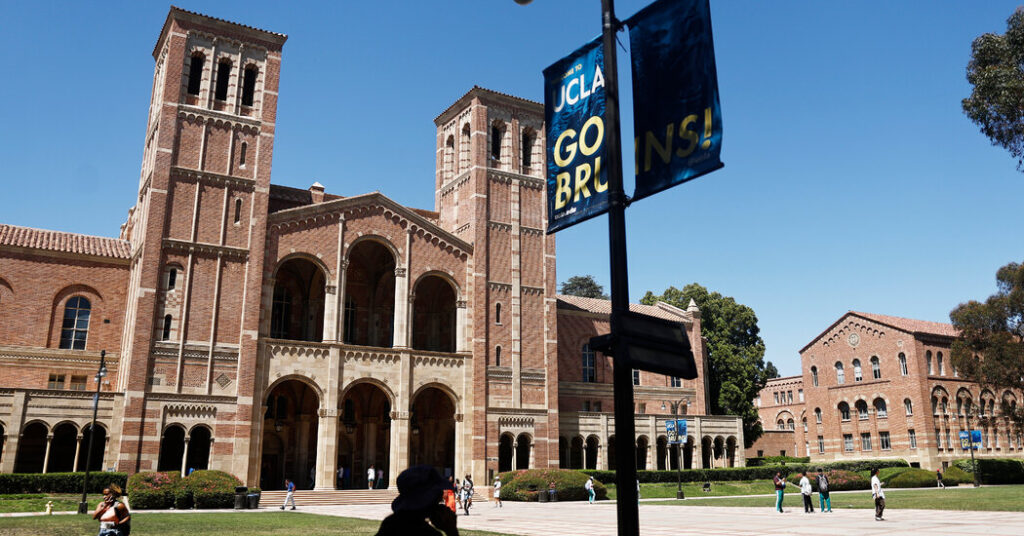
The first of the rare books went missing just before the Coronavirus pandemic: two centuries-old Chinese manuscripts, borrowed by a visitor using the name Alan Fujimori, from the rare books collection of the University of California, Los Angeles. Four years later, six more were requested, this time checked out by a Jason Wang. A year later, in August 2025, a man named Austin Chen borrowed eight more.
To library staff, perhaps it seemed that U.C.L.A.’s rare East Asia collection had a new, dedicated following — until librarians opened a storage box and realized the truth: None of the original books had been returned.
On Wednesday, Jeffrey Ying, 39, was sentenced in a California court for the string of thefts, having purloined rare Chinese manuscripts worth more than $200,000 using aliases, fake IDs and dummy manuscripts. He had pleaded guilty to one count of major art theft in October 2025.
According to investigators, Mr. Ying, of Fremont, Calif., would borrow the rare books for a few days at a time, create copies, affix fake asset tags and bring back dummy versions of the works. He regularly traveled to and from China within days of the thefts, according to court documents.
The authorities have not said what happened to the missing items.
The scheme unraveled in August 2025. Mr. Ying was arrested in California after he returned to the U.C.L.A. library and was recognized by staff, who alerted the police. Investigators searched Mr. Ying’s hotel room and discovered blank manuscript pages, fake versions of the books and manufactured labels.
Key to the brief success of Mr. Ying’s plot was that university libraries often struggle to keep close tabs on their sprawling collections, which has made them fertile ground for thieves.
In the 1980s, Robert Kindred, a struggling antiquities dealer, pillaged university libraries nationwide, stealing countless rare prints and pages from collections. More recently, in 2020, an archivist at the Carnegie library in Pittsburgh, Pa., pleaded guilty to stealing some the library’s rarest items, valued at $8 million.
A judge on Wednesday sentenced Mr. Ying to time served, one year of home confinement and three years of supervised release.