


The first camcorders became available to consumers the year I was born. There’s a tape somewhere — though, being over 40, it might have disintegrated by now — of toddler Alissa singing in a bathtub and asking precocious questions of my patient, 20-something parents. Both of my grandmothers loved recording the most mundane things we did together: eating cereal, digging for earthworms. I loved watching these videos when I was a kid. I think they told me, in some sense, who I was.
I thought of these tapes while watching “Remake” (in theaters), the latest documentary from the groundbreaking filmmaker Ross McElwee, and possibly his masterpiece. McElwee pioneered the first-person narrative documentary, in which the director is the subject; his hilarious 1986 film “Sherman’s March,” an accidental trip through his dating life, has been immensely influential on a wide range of filmmakers and storytellers. It’s often considered one of the greatest American documentaries ever made. In subsequent years, with “Bright Leaves” (2004), “Photographic Memory” (2012) and other movies, he would film not just his own life but also the lives of his family members, especially his children, Adrian and Mariah, as a way of understanding the world.
The tone of those movies was often wry and self-effacing. “Remake,” however, works in a much different register. Like many of McElwee’s films, it’s ostensibly about one thing but becomes about another. The titular remake at first refers to interest from Hollywood producers in adapting “Sherman’s March” into a film or TV series, but what he’s really after is a reappraisal of his own life and, especially, the life of Adrian, who died in 2016 of a drug overdose.
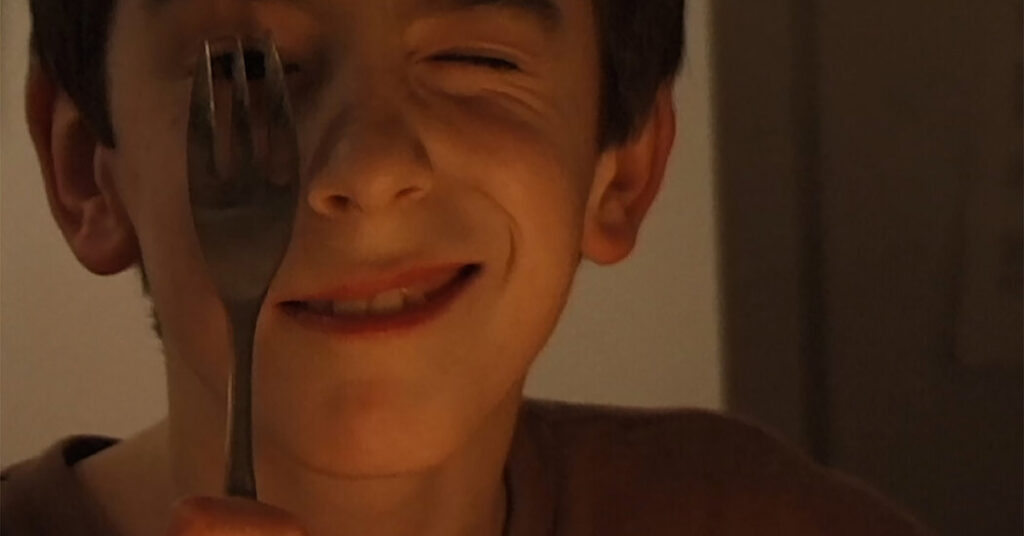
Much of the footage in “Remake” has appeared in McElwee’s previous films, but now it’s being recut and reconsidered. In his signature voice-over, he wrestles with questions, often addressing his son directly. The filmmaker wonders what he is really looking at now, and what he should have seen at the time. He ponders how his work, the constant presence of a camera in Adrian’s life, might have affected their relationship in good and not so good ways.
And most of all, he grieves. McElwee begins by saying, “I used to call myself a filmmaker,” and later, over footage shot by Adrian, revisits the statement, adding that “I used to call myself your father.” It’s a gutting moment, especially when coupled with his worries that rewatching video of his son too much may cause him to regard Adrian not as someone who lived, but as a fictional character who only existed onscreen.
Through other threads in the film, McElwee tries to revisit his past. He speaks with Charleen Swansea, his friend and former teacher who is a familiar character in his films. Now, at her advanced age, she doesn’t remember making any movies with him at all. Wini, an ex-girlfriend who appeared in “Sherman’s March,” points out that watching herself in that film feels like a visceral act of memory retrieval. “Memory is partly about connecting the past to the present,” she notes.
And so beyond grief for his son, “Remake” takes on the pain, and sometimes bittersweet joy, of connecting the past to the present, and trying to figure out what it’s all meant. As the title suggests, “Remake” is really about McElwee going back over a life captured on film and creating something new from it: an elegy, a gift and something of an apology to his lost son. As such, it’s devastating. As a meditation on memory and the passage of time, it is stunning.