


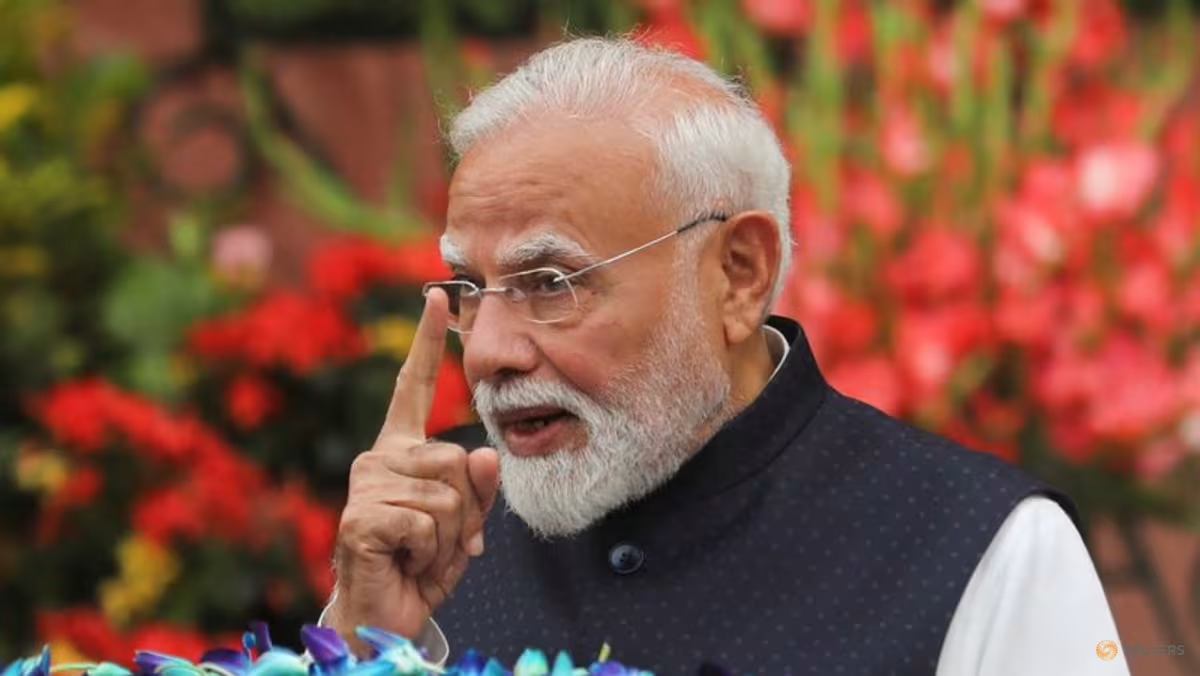
MODI’S „AURA OF INVINCIBILITY“ DENTED: ANALYST
Speaking to CNA’s Asia First, Devesh Kapur, Starr Foundation Professor of South Asia Studies at the Johns Hopkins University School of Advanced International Studies, said the government had underestimated the depth of anger among India’s youth over repeated failures of national exams.
He described the exams as „one of the few ladders of social mobility“ for India’s lower middle class, adding that the demonstrations also posed a political challenge because many protesters came from Modi’s traditional support base.
„The middle class and especially lower middle class have been core to Prime Minister Modi’s party’s support base and their own members‘ children were among the crowd,“ he said.
„So, it was much harder to dismiss them as anti-nationalists.“
The speed of the government’s response marked a departure from its usual approach to protests, Kapur noted, adding that the episode had dented the „aura of invincibility“ that Modi had.
„This time, I think most people were caught by surprise at the relative speed with which they moved to accept the resignation of the education minister, which probably tells us that they realise this is becoming a much more serious issue and needs to be nipped in the bud,“ he said.
Kapur said he expected some of the proposed reforms to be implemented, but cautioned that the controversy reflected broader economic frustrations.
„One should understand that the exams are just one symptom of deeper discontent in India’s youth, which is the lack of economic opportunities, the paucity of good jobs,“ he said.