


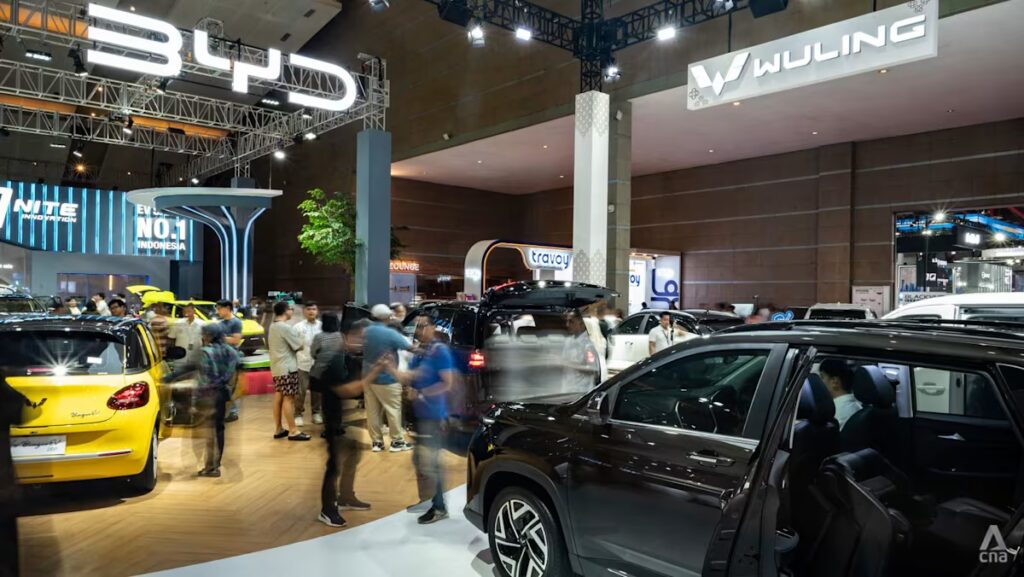
By building more of this supply chain domestically, the government hopes to attract investment, create jobs and capture greater economic value from its natural resources, rather than relying primarily on exports of raw materials.
The push is also part of a broader effort to reduce dependence on imported fuel and strengthen Indonesia’s energy security.
In August, President Prabowo Subianto launched the National Electric Motorcycle Ecosystem, an initiative aimed at developing the country’s electric motorcycle industry.
The programme brings together government agencies, state-owned enterprises and private companies to strengthen various parts of the industry, including vehicle manufacturing, battery production, charging infrastructure and after-sales services.
Prabowo warned that reliance on imported energy leaves the country vulnerable to disruptions caused by overseas conflicts and trade wars.
Indonesia spends an estimated US$28 billion to US$30 billion annually on fuel imports, according to the president.
„By using electric motorcycles, cars, buses and tractors, and by powering as many of our tools and devices as possible with electricity, we will be safer. We will be more prosperous,“ he said.
ROADBLOCKS TO WIDER EV ADOPTION
Despite the industry’s growing momentum, uncertainty remains over a long-awaited government incentive scheme aimed at supporting EV adoption.
Officials say discussions are ongoing, with the scheme still expected to take effect this year.
However, the prospect of further subsidies has also prompted debate over Indonesia’s transport priorities.
Critics argue that encouraging more private vehicle purchases, even electric ones, would do little to ease chronic traffic congestion in major cities such as Jakarta.
„We are already dealing with severe congestion, yet we are providing subsidies for the purchase of electric vehicles,” said Deddy Herlambang, executive director of Indonesia’s Institute for Transportation Studies.
“These subsidies or incentives could instead be redirected toward public transportation.”
Other barriers to wider adoption remain, including the need for reliable charging networks and accessible maintenance services.
Vehicle prices, charging availability and concerns over long-term battery performance could also influence purchasing decisions, particularly outside major urban centres.