


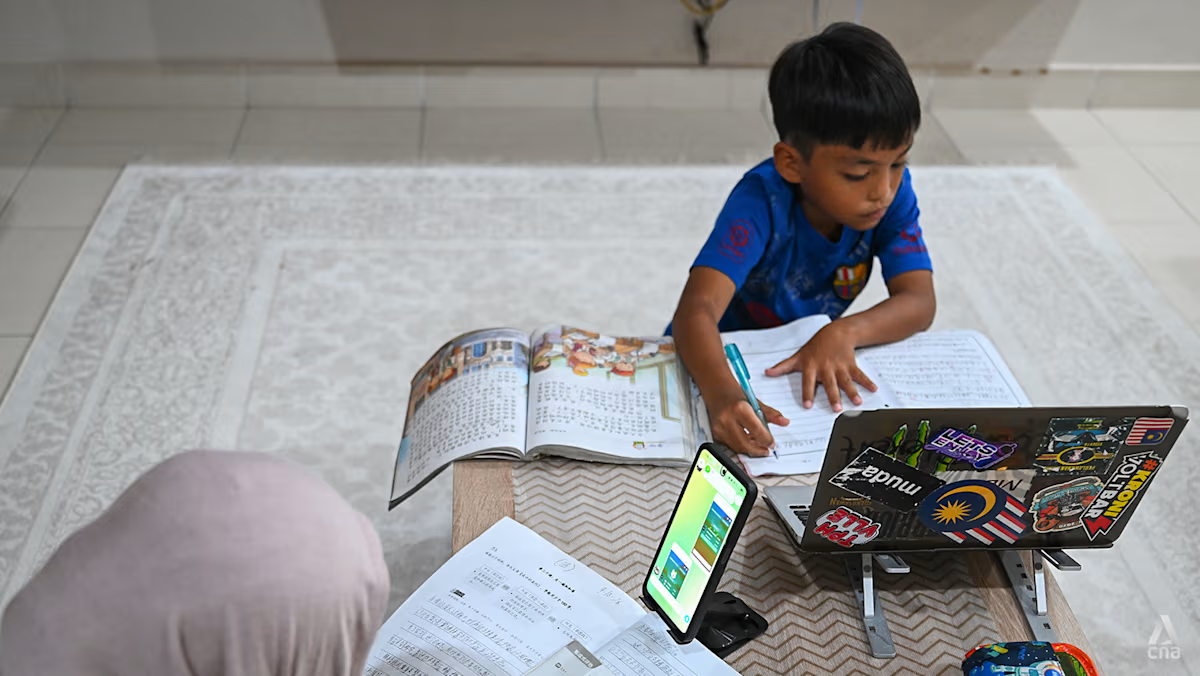
Four of her children, aged 8 to 14, attend SJK(C) Ladang Grisek, a government-funded Chinese vernacular school and one of thousands of schools in Johor that have been shut since last Thursday (Oct 8). Jacques‘ youngest, aged 5, is in preschool, which has also been shut.
The closures were made in deference to the Regent of Johor, according to a state representative, and it is unclear when normal classes will resume.
Schools in Negeri Sembilan, Melaka, Selangor and Kuala Lumpur have also closed intermittently in recent days.
Under federal guidelines, educational institutions must close when the Air Pollutant Index (API) exceeds 180, or remains above 150 for three consecutive days. Both levels fall within the “unhealthy” range.
For parents like Jacques, the closures have brought a difficult trade-off: Minimising their children’s exposure to unhealthy air while trying to ensure their education does not suffer, particularly with year-end examinations approaching.
Some parents have also questioned whether Malaysia’s closure threshold is too cautious. They pointed to East Malaysia’s Sarawak state where, in August, schools were required to close when the API exceeded 200.
In Singapore, the Ministry of Education has said schools may close if the country’s Pollutant Standards Index (PSI) reaches the “hazardous” range of 300.
Taufiq, a father in Shah Alam, Selangor, told CNA the bigger problem is the day-to-day uncertainty.
He believes Malaysia could be “more realistic” about its closure threshold to minimise missed classroom time.
“I think the uncertainty of whether there is school tomorrow or not – that is difficult to manage,” said Taufiq, who asked to be identified only by his first name.
“My wife and I are both working, so we also have to manage who can stay home with our nine-year-old son.”
Education Minister Fadhlina Sidek has said the government’s day-to-day approach to school closures takes into account fluctuating air quality as well as the disruption prolonged closures can cause to students’ learning.
Health experts CNA spoke to said Malaysia’s thresholds are based on local health advice and must account for the risks posed by prolonged exposure to unhealthy air.
“The education minister has acknowledged that prolonged closures disrupt learning and must be weighed against health risks. But this does not mean the threshold (for school closure) should be (lowered),” said Malaysian public health expert Zainal Ariffin Omar.
“It means the focus should be on making e-learning more effective and ensuring indoor air quality in schools is actually adequate.”