


WHAT THE CASE IS ABOUT
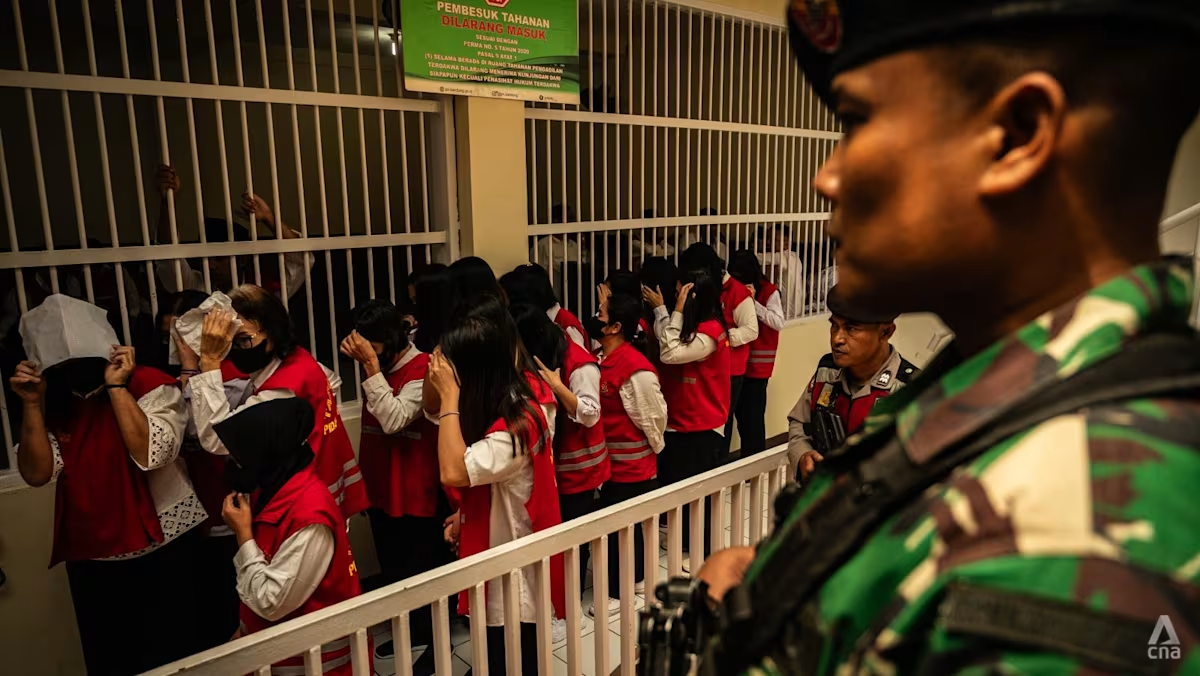
According to court documents seen by CNA, Lily confessed in a May 26 trial to trafficking at least 12 babies to Singapore receiving anywhere between S$17,000 (US$13,174) and S$21,600 per child.
She told the court that she was first contacted by a person named “John” in late 2022 saying that there was a couple from Singapore who were looking to adopt a child from Indonesia.
Lily told the court that she eventually found an Indonesian couple living in Pontianak, West Kalimantan who were struggling to pay for their child’s delivery. The defendant gave the Indonesian couple 58 million rupiah (US$3,200) to pay for the hospital bills, in exchange for their child.
John, meanwhile, gave Lily S$17,000 for her trouble. After the money spent paying for the hospital bill, hiring a notary to secure the necessary documentation and other expenses, Lily managed to pocket “around S$2,000 to S$3,000 plus”, she told the court.
According to court records, at least three more people allegedly contacted the defendant: “Petter”, “Mr Tan” and “Mr Chew”. Lily had described them as “adoption agents from Singapore”, saying that they too had clients looking to adopt babies from Indonesia.
While she could not remember how many babies she sold to Petter and Mr Chew, Lily told the court that she sold more than one baby to John and two to Mr Tan.
According to court records, Lily was handling a third transaction for Mr Tan when she was arrested in July 2025.
After her contact with these adoption agents, Lily purportedly looked for more babies to be adopted, enlisting the help of other defendants who acted as recruiters, caretakers as well as document forgers to conceal the babies‘ origins.
The syndicate members trawled through social media and joined several online adoption groups looking for parents hoping to give up their newborns, the majority of whom were from the Bandung area of West Java.
To sweeten the deal, the recruiters provided between 9 million rupiah and 15 million rupiah to parents.
Once they had the babies, the syndicate reportedly forged birth certificates, listing several defendants as fake birth parents or guardians.
These forged documents allowed the babies to have passports and other forms of identification and for Singaporean adoption papers to be filled out and processed.
The alleged syndicate members were arrested in mid-July last year during a series of near-simultaneous raids across Bandung, Jakarta and Pontianak, where the infants were kept in safe houses while in transit.
The case made the news in Indonesia and Singapore, and on other international media platforms.
Singapore’s Minister for Social and Family Development Masagos Zulkifli said in February that agencies were working closely with the relevant Indonesian authorities on the matter.
“When the facts are clearer, the Ministry of Social and Family Development will review whether existing adoption processes should be enhanced,” he said in a written response to a parliamentary question.
In January, Singapore’s Minister of State for Social and Family Development Goh Pei Ming said the country was working closely with relevant agencies to ensure all inter-country adoptions complied with strict legal requirements at home and in the babies’ countries of origin.
In Indonesia, many expectant mothers struggle to afford prenatal care and the costs associated with childbirth and raising a child.
Experts have told CNA that while poverty remains the biggest driver of the trade, the problem is compounded by deep social stigma surrounding abortion and widespread misunderstanding of how the legal adoption process works.
Social media has further enabled the trade, allowing syndicate members to connect directly with potential birth mothers and adopters across provinces and even national borders.
Additional reporting by Yuli Saputra