


Unlock the Editor’s Digest for free
Roula Khalaf, Editor of the FT, selects her favourite stories in this weekly newsletter.
Metro Bank swung to a profit in its first half as the high street lender pivoted away from retail customers and towards lending to small businesses.
The mid-sized bank reported pre-tax profits of £43mn in its first half, up from a £33.5mn loss in the same period last year, on a 22 per cent rise in revenue.
The uptick came as Metro Bank continued to scale back lending to retail customers in favour of becoming a specialist lender focused on small and medium-sized businesses (SMEs).
The lender said it had doubled new lending to corporate, commercial and SME customers in the period, though overall deposits fell 15 per cent year on year and its loan book declined 24 per cent. Shares were broadly flat in early trading on Wednesday.
Metro Bank became the first new high street bank in the UK for a century when it opened its flagship branch in 2010, and listed on the London market in 2016 at a £1.6bn valuation. But it has failed to take significant market share from the UK’s biggest banks, and suffered a number of setbacks.
In 2023, the bank was forced to raise emergency capital after its shares fell by more than 50 per cent when it admitted that regulators had not approved a change to capital requirements on its mortgage book. Colombian businessman Jaime Gilinski Bacal became the lender’s majority shareholder through that fundraising.
The Financial Times reported last month that Metro Bank had been approached by investment firm Pollen Street Capital about a potential takeover. The bank, which has a market value of about £835mn, has been seen as vulnerable to a takeover after a difficult period on the public markets. Sky News previously reported the approach.
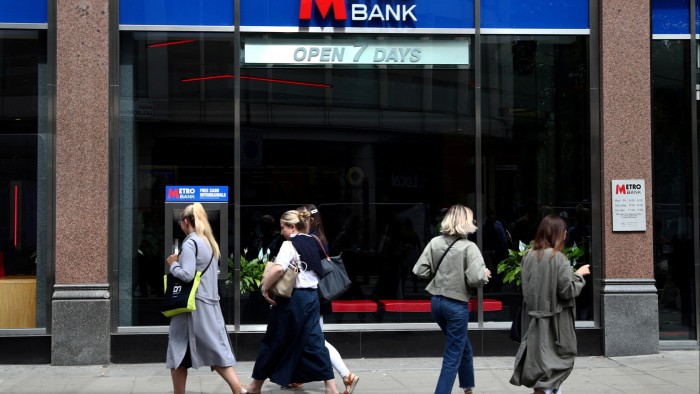
Metro Bank was founded with seven days a week opening times and flash branches in major cities. But as part of its cost-cutting programme it has scaled back opening times and closed stores.
The bank’s net interest margin — the difference between the interest it charges on loans and the rate it pays on customer deposits — rose to 2.87 per cent in the first half, compared with 1.64 per cent in the same period last year.
Chief executive Daniel Frumkin said the lender had “meaningfully reduced operating costs and optimised funding to have the lowest cost of deposits of any UK high street bank”.