


The latest cracks in the cease-fire between the United States and Iran have jolted an oil market that in recent weeks seemed to think durable peace between the countries was within reach.
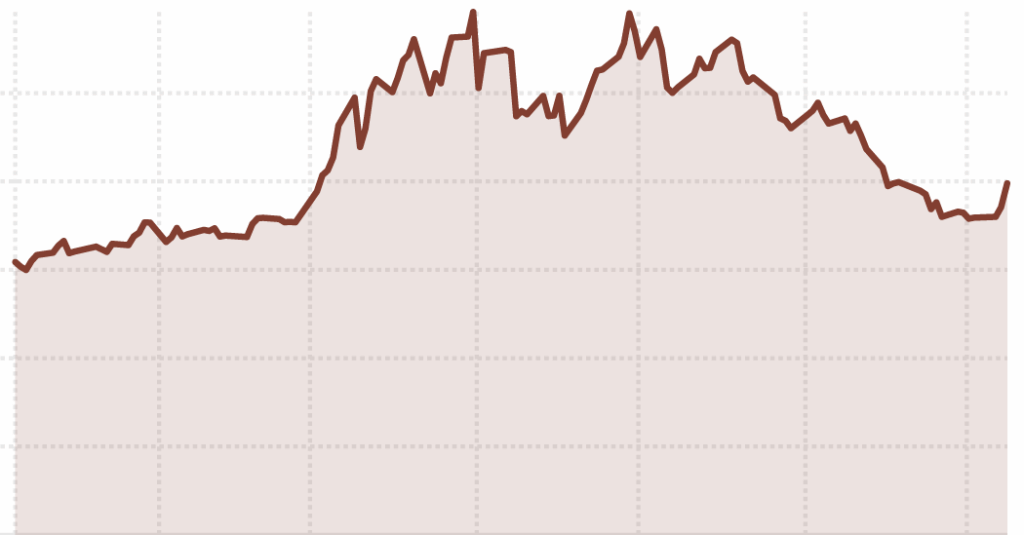
By midday Wednesday, international oil prices were approaching $80 a barrel, their highest level in weeks, after President Trump said the temporary truce with Iran was “over.”
Oil is trading at prices that have been fairly typical in recent years. But the international benchmark, Brent, has risen sharply from the start of the week when it was below prewar levels and analysts were warning that the world might soon face a glut.
“The honeymoon phase is over,” said Dan Pickering, chief investment officer for Pickering Energy Partners, a financial services firm based in Houston. “We’re being reminded that this is still an active conflict.”
The latest flare-up was set off by Iran’s efforts to exert more control over the Strait of Hormuz by striking vessels that were not following the country’s preferred route through the waterway. The United States responded by attacking Iran and revoking the sanctions relief it had provided for the country’s oil industry.
Iran then targeted U.S. military sites in Bahrain and Kuwait, and its foreign ministry said recent U.S. actions had rendered ineffective “important and essential parts” of the deal between the countries.
The United States would probably launch more strikes against Iran on Wednesday night, Mr. Trump said in Ankara, Turkey, where he was attending a NATO summit. He also floated the possibility of reinstating a blockade on vessels traveling to and from Iranian ports.
Analysts nevertheless remained optimistic that oil would not soon return to wartime highs, partly because millions of barrels of oil have been shipped out of the Persian Gulf in recent weeks. In addition, the United States and Iran previously agreed to continue negotiating after engaging in hostilities, said Kevin Book, managing director of ClearView Energy Partners, a Washington-based research firm.
“We had skirmishes at the end of June that didn’t really stop traffic,” Mr. Book said.
Still, this week’s attacks and counterattacks are a reminder that resolving the conflict between the United States and Iran — and allowing ships to regularly pass through the Strait of Hormuz without incident — will be anything but a smooth process. Given that uncertainty, oil prices may not fall to very low levels.
The war with Iran is the latest in a succession of crises that provoked energy shocks, including the Covid-19 pandemic, Russia’s invasion of Ukraine and Mr. Trump’s “Liberation Day” tariffs.
“Until something very different changes, prepare for more volatility,” said Tyler Rosenlicht, head of natural resource equities at Cohen & Steers, an investment firm.
In the short term, some of the biggest questions facing the oil market include whether Mr. Trump re-establishes the blockade on Iran and how shipping companies react to the heightened conflict. The head of the International Maritime Organization told shipowners on Wednesday to avoid the strait to protect seafarers from “unnecessary danger.”
Iran, which spent the early weeks of the war attacking energy facilities in Gulf countries, has refrained from doing so recently, even as tensions have flared with the United States. Oil prices would probably climb much higher if that changed.
Neil Quilliam, an expert on the Gulf states at Chatham House, a London-based research organization, said he believed more U.S. strikes would prompt Tehran to target U.S. bases and energy infrastructure throughout the Gulf. One thing Iran won’t do, he said, is cede control over the Strait of Hormuz.
“They have found they can exercise control over Hormuz, and this was relatively new to them and it’s not something they want to give up,” he said. “They would be willing to suffer the dire economic consequences of the U.S. imposing the blockade again as long as they can hold on to exercising some kind of control over Hormuz.”
The other big wild card is China, which has helped stabilize global energy markets by sharply reducing oil imports during the war. If it continues to hold back purchases, that will keep a lid on oil prices. The reverse is also true.
“They’re absolutely managing price and volatility very well,” Mr. Pickering said of China. “You can’t do that forever.”