


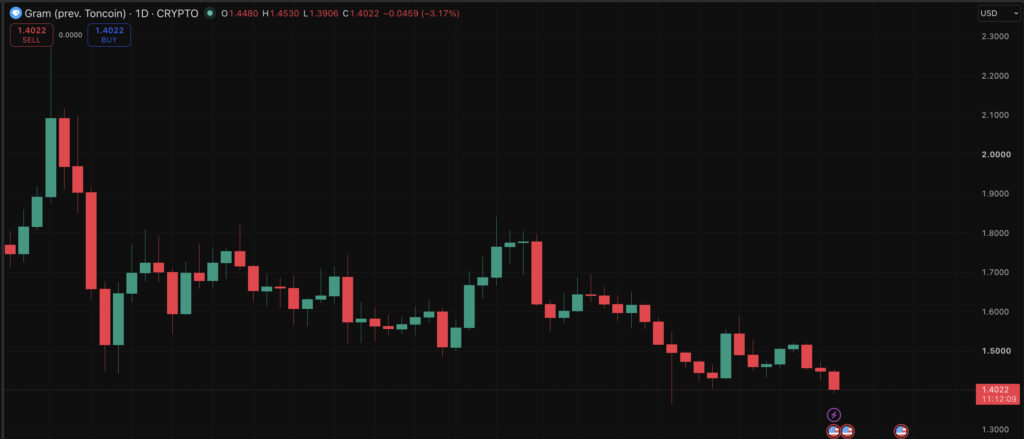
Russia’s FSB formally charged Pavel Durov with facilitating terrorist activities and placed him on an international wanted list. The move sent GRAM, formerly known as Toncoin, lower in early trading and added to its recent weekly losses. The case marks a major escalation from France’s ongoing investigation, shifting the focus from platform moderation to terrorism related allegations.
The FSB said the charges stem from Telegram’s alleged failure to remove material used by Ukrainian special services and terrorist or extremist groups to coordinate sabotage, mass killings, and cyber fraud operations inside Russia. Telegram’s official X account responded by posting an image of Durov making an obscene gesture but issued no written statement.
Durov’s whereabouts remain unclear. A May 16 Telegram post placed him in Dubai, while a July 23 update suggested he was in Georgia and expected to return soon. He holds Emirati and French passports and has not lived in Russia for more than a decade.
Discover: The Best Crypto to Diversify Your Portfolio
Muted Price Drop Masks a Bigger Pavel Durov Risk
GRAM’s initial decline looked relatively contained compared with the market reaction to Durov’s 2024 arrest. When French authorities detained him at Paris Le Bourget Airport in August 2024, Toncoin plunged sharply before the token’s later rebrand to GRAM, wiping billions of dollars from its market value. The smaller reaction suggests investors had already priced in some founder-related risk.

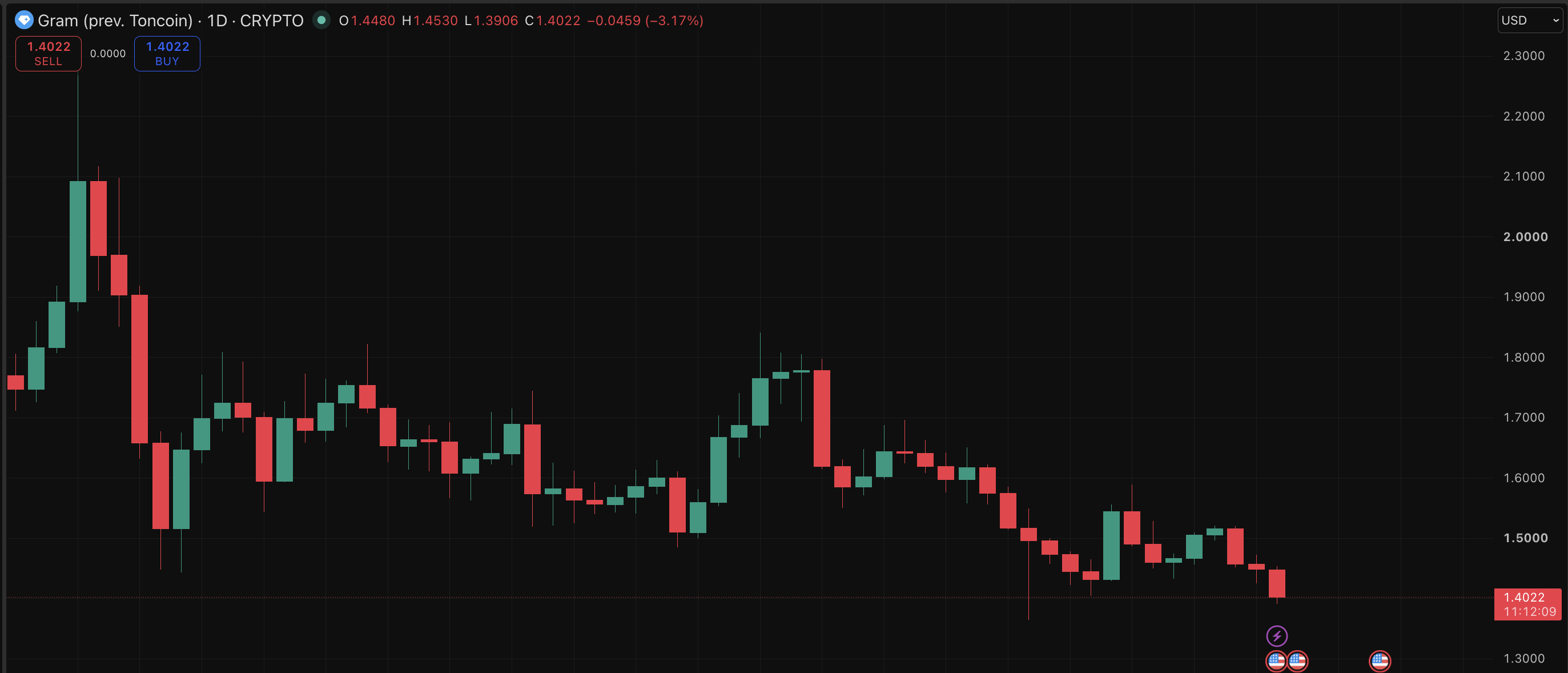
However, the terrorism allegations create a very different situation. Even without publicly released evidence outside Russia, the charges raise new concerns for banks, fiat on ramps, and exchanges supporting GRAM. The 2026 rebrand revived the token’s original identity and tied it more closely to Durov’s long-term vision, leaving less separation between the founder’s legal troubles and the token’s narrative.
Discover: The Best Token Presales
What Happens Next for GRAM and Telegram
Unlike the French investigation, which focuses on Telegram’s alleged cooperation with law enforcement, Russia’s case is framed around state security and wartime terrorism allegations. Russia has placed Durov on an international wanted list, although whether other countries act on it remains uncertain. The development follows months of mounting pressure, including reports that he was already under terrorism related investigation and an April summons delivered to a former Russian address.


The political backdrop adds another layer of uncertainty. Russia has repeatedly tried to restrict Telegram since 2018 while continuing to use the platform for official communications. In April, Durov said authorities appeared to accuse him of defending constitutional protections for free speech and private correspondence, adding that he was proud to be guilty of doing so. He has not publicly commented on the latest charges.
The immediate question for GRAM is whether the terrorism allegations prompt compliance-driven restrictions from exchanges or payment providers operating under AML and CFT rules. Telegram’s reported user base of more than one billion could still support adoption, but the founder’s legal situation is likely to remain a persistent source of headline risk. For now, markets appear more focused on continued uncertainty than on a quick resolution.
Trade Crypto on Bybit and Get a Chance to Win Our $1,000 USDT Airdrop
The post Russia Charges Against Pavel Durov Push GRAM Down as Founder Risk Deepens appeared first on Cryptonews.