


Homer doesn’t say much about the actual sound of the sirens, aside from descriptions of their song as “honeyed” and “melodious,” in Emily Wilson’s translation. Odysseus says he “longed to listen to more,” but he doesn’t give in, remaining tied to the mast until the ship passes through.
Nolan makes the scene more dramatically expansive, a reflection of Odysseus’ homesickness, his guilt over the sacking of Troy and his long recovery from the war. Asked what the siren song was, he answers:
All the things you want it to be. Then, all the things you wish you had never wished for. It was the delicious itch you go to scratch but find it’s under the skin, you can’t reach it. So the delicious itch becomes unbearable. Told you what you most want is what you most can’t have. And what you most can’t have is what you already had, and lost.
For most of the movie, Göransson’s music is metallic. He has said in interviews that he and Nolan didn’t want to use a traditional orchestra, so he assembled a chorus of gongs that are heard both acoustically and abstracted through synthesizers, making an earthy sound otherworldly. He occasionally brings in other textures, too, like the plucking of a lyre for a motif associated with Odysseus’ bow and, in the siren scene, an ancient reed instrument called an aulos.
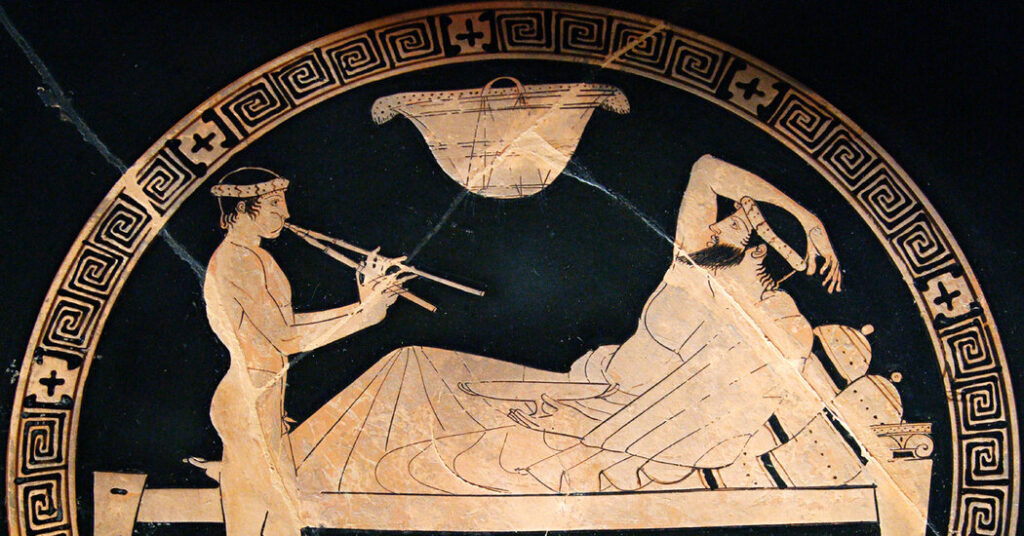
The aulos appears throughout Greek art, depicted in military and domestic scenes alike. To modern eyes it looks like two recorders that come together at a player’s mouth, blown at the same time. Its construction allowed Göransson to use one pipe for a droning pedal tone, and the other for melody.
That melody is just four notes: two that reach up, as if yearning, and two that fall, like a collapse. It’s so simple and so sad.