


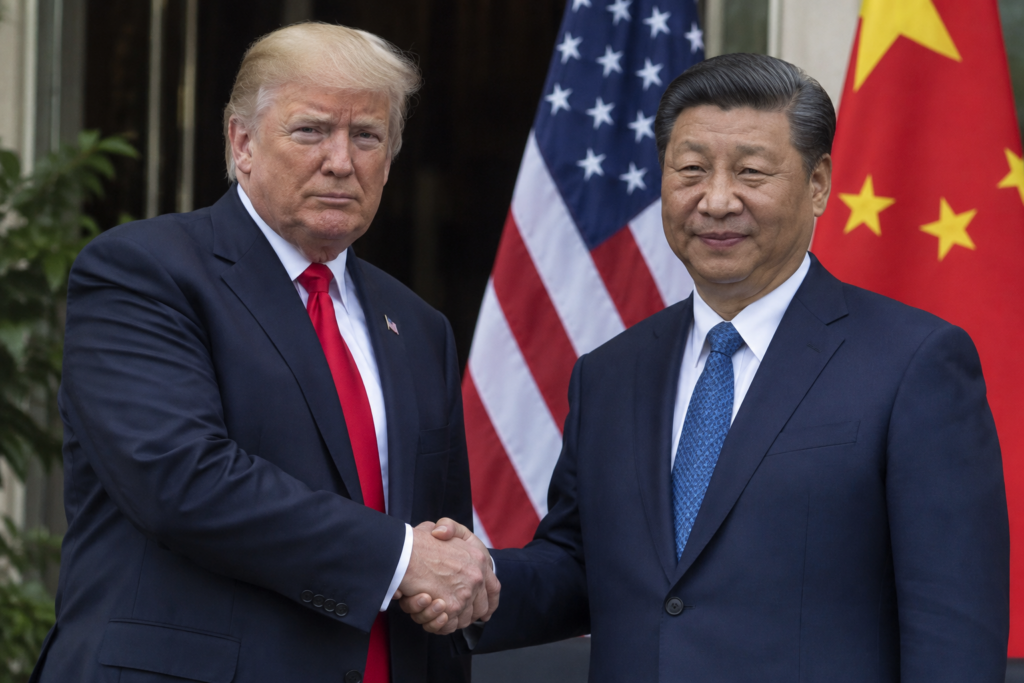

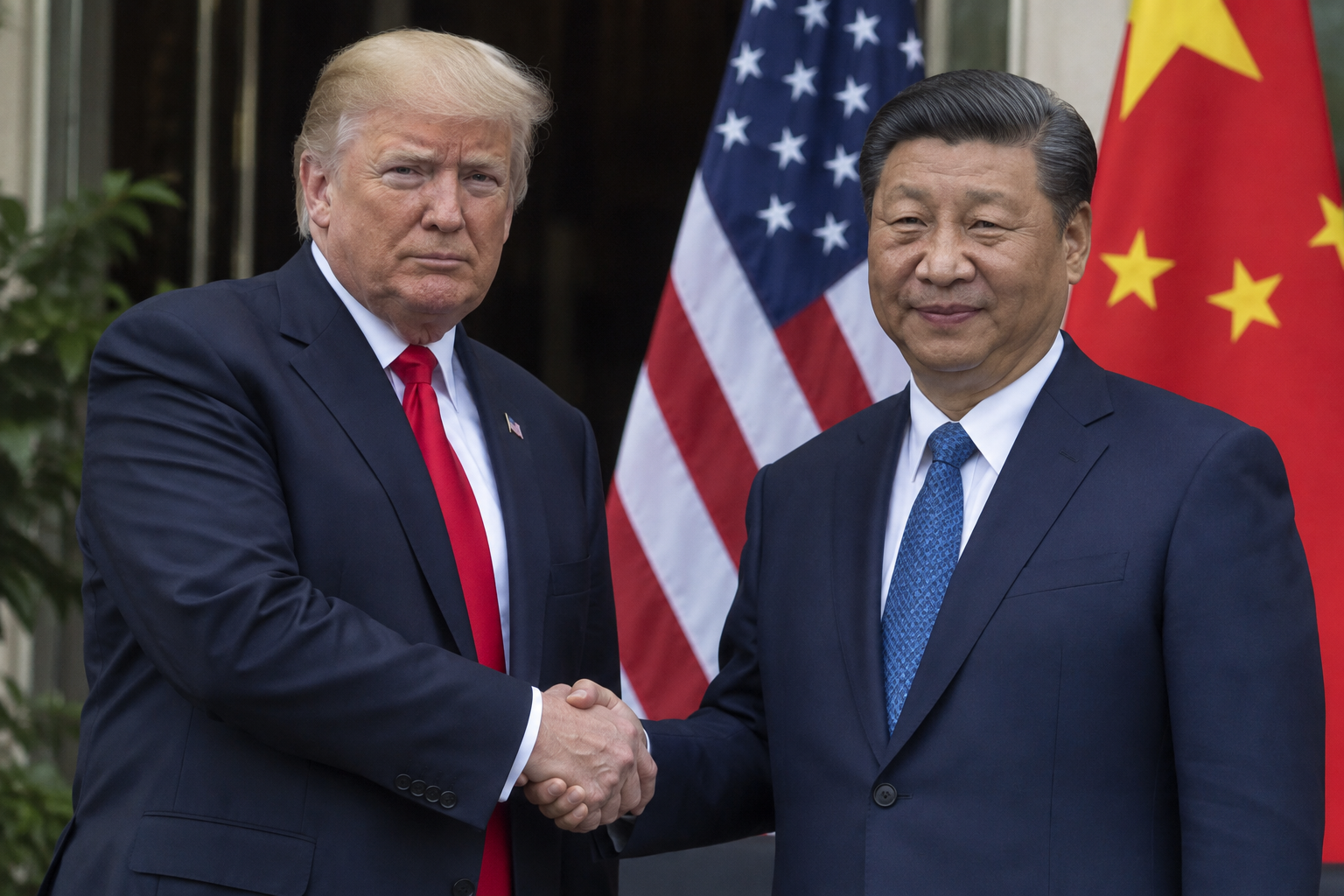
Donald Trump is set to welcome Chinese President Xi Jinping to the White House next week for their second meeting this year, with the two leaders seeking to stabilise a relationship strained by trade disputes, tensions over Taiwan and Iran, and a growing rivalry over artificial intelligence.
Xi’s visit, expected on Sept. 24, will be his first to the White House in a decade and the first Chinese state visit to the United States since 2015, when he was received by then-President Barack Obama.
The summit comes at a politically consequential moment for Trump.
The US president is grappling with the Iran war, rising prices and declining popularity ahead of November’s midterm congressional elections, increasing the importance of any economic or diplomatic gains he can bring home from talks with Xi.
For China, the meeting comes as its economy remains heavily dependent on exports, with the country on track to record a trade surplus of about $1 trillion for a second consecutive year.
Beijing is likely to focus on securing access to US technology and maintaining stable trade relations while pressing Washington on Taiwan and other strategic issues.
Markets will be watching closely for signs that the two countries can extend a tariff truce that helped prevent another escalation of their trade war.
Trade truce and tariff negotiations
The October summit in South Korea produced a tariff truce that paused a confrontation in which tariffs imposed by the world’s two largest economies had threatened to disrupt global supply chains.
That agreement is due to expire on November 10.
US Trade Representative Jamieson Greer said this month that the two countries would make „some announcements on agriculture and non-tariff barriers“.
Investors will also be looking for progress on an agreed mutual tariff reduction covering $30 billion in goods, Reuters reported.
Bloomberg reported on Tuesday that energy tariffs could be included in the $30 billion package of reciprocal tariff cuts flagged after the May summit but yet to be implemented.
Such a move could pave the way for Chinese imports of US LNG to resume, with annual imports ranging from $7.5 billion to $12 billion between the end of the previous trade war in 2020 and 2024.
However, a resumption of Chinese LNG imports would not immediately translate into a major new windfall for US LNG producers.
Although Chinese imports of US LNG halted after the tariffs were imposed, Chinese buyers have continued to honour long-term contracts with US suppliers, purchasing the cargoes and then reselling them elsewhere.
China could also make a relatively straightforward move by lowering duties on US agricultural imports, potentially creating room for Washington to point to increased access for American farmers.
For Trump, such announcements could have particular political value.
He will be looking for tangible trade wins before the midterms, including high-profile purchases of US agricultural products and Boeing aircraft.
Sources told Reuters this month that Xi is preparing a large business delegation to accompany him, similar to his 2015 visit.
During that trip, China signed a $38 billion agreement for 300 Boeing aircraft.
China said after the May summit that it would buy 200 additional Boeing jets, while Boeing described that order as only an „initial tranche“ of a potentially much larger transaction.
Beijing and Boeing have remained in prolonged negotiations over a deal that industry sources say could involve 500 737 MAX jets as well as dozens of wide-body aircraft.
The transaction has been stalled for years as Trump has threatened to restrict China’s access to critical spare engine parts.
A major Boeing order would therefore offer Trump a high-profile example of US exports benefiting from his negotiations with Beijing, while giving China an opportunity to demonstrate progress on its economic priorities.
Technology and rare earths remain sticking points
The two sides are also expected to negotiate over technology restrictions and critical minerals.
Beijing has been pressing Washington to delay a rule that would prevent thousands of Chinese companies from accessing advanced US technology.
Washington, meanwhile, wants China to ease restrictions on shipments of rare earths and critical minerals that are essential to high-tech industries ranging from automobiles and aerospace to defence.
The issue highlights the increasingly interconnected nature of the US-China relationship.
While Washington wants to limit China’s access to technologies considered strategically sensitive, US manufacturers remain dependent on supply chains involving Chinese minerals and processing capacity.
That creates incentives for both sides to negotiate, but also leaves significant room for disagreements over national security and industrial policy.
Taiwan poses a bigger geopolitical risk
Trade may produce the most visible announcements from the summit, but Taiwan could be the most sensitive issue.
US allies in Asia are increasingly concerned that Trump could soften Washington’s support for Taiwan in pursuit of economic agreements with Beijing.
Taiwan rejects China’s sovereignty claims over the island.
The US, like most countries, does not maintain formal diplomatic relations with Taiwan, but remains its most important international backer and arms supplier.
Xi is expected to press Trump on Taiwan during the summit. Any change in Washington’s language could be closely scrutinised by governments across Asia.
„There’s a great deal of trepidation, particularly from our allies, about where our China policy is going to land,“ said Emma Chanlett-Avery, political-security affairs director for US-based think tank Asia Society Policy Institute in an earlier Reuters report.
„Any indication of a softness on Taiwan would be quite alarming,“ she added.
Trump said Xi raised US arms sales to Taiwan during their May meeting.
Trump later described a pending weapons package worth as much as $14 billion as a „negotiating chip“.
Beijing is also seeking a change in Washington’s longstanding formulation on Taiwan.
People familiar with Chinese efforts told Reuters that Beijing hopes Trump will publicly state that the US opposes Taiwan’s independence rather than simply saying Washington does not support independence.
The distinction could carry significant diplomatic weight, particularly for US allies that rely on Washington’s existing position as part of the regional security framework.
Iran adds another layer to the talks
The war in Iran creates another area of potential tension.
Trump is expected to ask Xi to use China’s influence with Tehran to curb support for Iran.
China maintains close relations with Tehran and is by far the world’s largest buyer of Iranian oil exports, giving Beijing an economic relationship with Iran that Washington believes could provide leverage.
China, however, has shown little inclination to use that influence in line with US demands.
Reuters reported last month that Beijing was selling billions of dollars‘ worth of goods to Iran through a sanctions-evasion scheme.
China’s foreign ministry said it was not aware of such a scheme.
Washington has so far avoided directly targeting Chinese banks as part of its Iran pressure campaign.
Treasury Secretary Scott Bessent stopped short of imposing penalties on Chinese banks when he unveiled an „economic onslaught“ against Iran last month and warned countries to cut business ties with Tehran.
„To date, the American President seems content with China’s limited role, saying that the Chinese President had “behaved reasonably well.” This perceived restraint may not stem from Trump’s requests, but rather from Beijing’s calculus in maintaining ties with Gulf partners, including Saudi Arabia and the United Arab Emirates,“ Toomas Hanso, junior research fellow at the International Centre for Defence and Security, said.
The Iran issue therefore gives Trump another reason to seek cooperation from Beijing, even as the two countries remain strategic competitors.
AI emerges as a new summit issue
Artificial intelligence is also expected to feature prominently when the leaders meet.
The highly anticipated Sept. 24 summit comes as some in the AI industry are calling for greater safeguards around the rapid development of advanced models.
OpenAI CEO Sam Altman, Nvidia CEO Jensen Huang and Qualcomm CEO Cristiano Amon plan to attend next week’s state dinner with Trump and Xi, four people familiar with the event told POLITICO.
Their presence underscores the increasingly strategic role of AI in US-China relations.
Advanced AI models have implications not only for commercial competition but also for national security, military capabilities and control over critical technologies.
Analysts see AI as a potential area for cooperation because both countries face concerns over misuse and the broader risks created by rapidly advancing systems.
But the intense technological competition between Washington and Beijing is likely to limit the scope for substantive cooperation.
Any agreement on AI safeguards could therefore be largely symbolic, particularly as both countries continue to compete over chips, computing infrastructure, advanced models and access to the technologies needed to build them, Reuters said.
The post Trump-Xi summit: What to expect on tariffs, Taiwan, Iran and AI appeared first on Invezz