


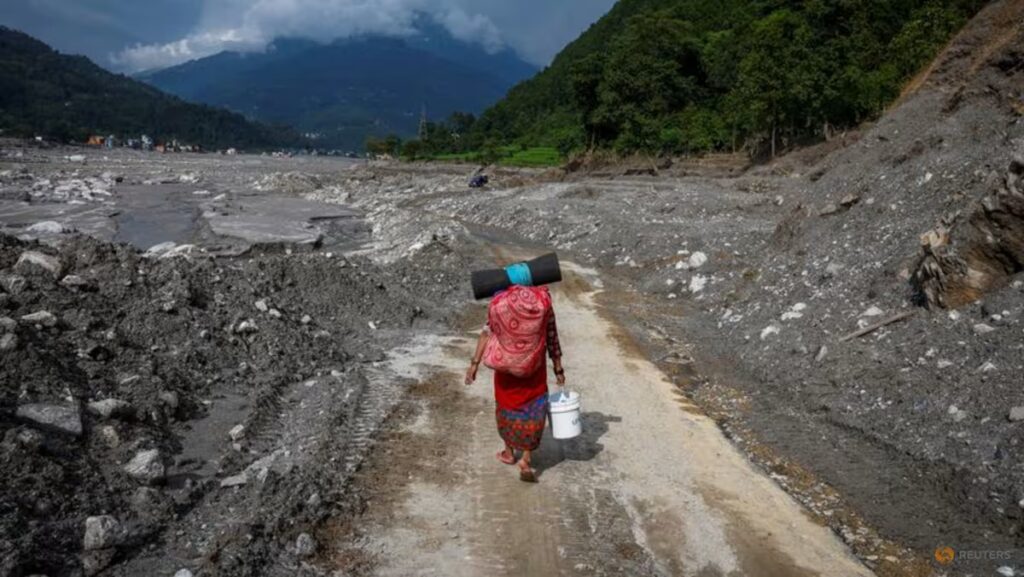
In an extraordinary meeting, the fund’s board agreed to earmark the modest sum for the Himalayan country, which was hit in August by tsunami-like floods triggered by a climate-induced ice and rock avalanche that killed more than 1,400 people and left over 5,000 missing.
Camila Minerva Rodriguez Tavarez, the Dominican co-chair of the board, called the outcome „truly historic“ and thanked members for „allowing us to act promptly and have a response to Nepal.“
Reacting to the news, Nepal’s finance minister Swarnim Wagle told AFP: „The fact that they could convene this emergency meeting in response to our letter and commit US$20 million of grant money is very welcome.“
The decision does not, however, mean that Nepal will immediately receive the funding, which amounts to less than 0.5 per cent of the government’s US$4.78 billion estimate for reconstruction.
US$20 million is the maximum amount countries can request in a single application.
Nepal will first have to present a proposal for the board’s approval, with no firm timeline for the process.
The creation of the „Fund for Responding to Loss and Damage“ was hard-won at the UN climate conferences of 2022 and 2023 by developing countries, many of them among the least responsible for climate change yet most vulnerable to its impacts.
The fund grew out of calls for „climate reparations“ from historically major emitters, which ultimately did not materialise.
But since it became operational, critics have faulted both meagre pledges from rich nations – US$822 million to date – and the fact no money has been disbursed so far.
Wagle said that Nepal is a test case for „how serious the world is in helping developing and fragile countries to respond to the loss and damage associated with climate change.“