



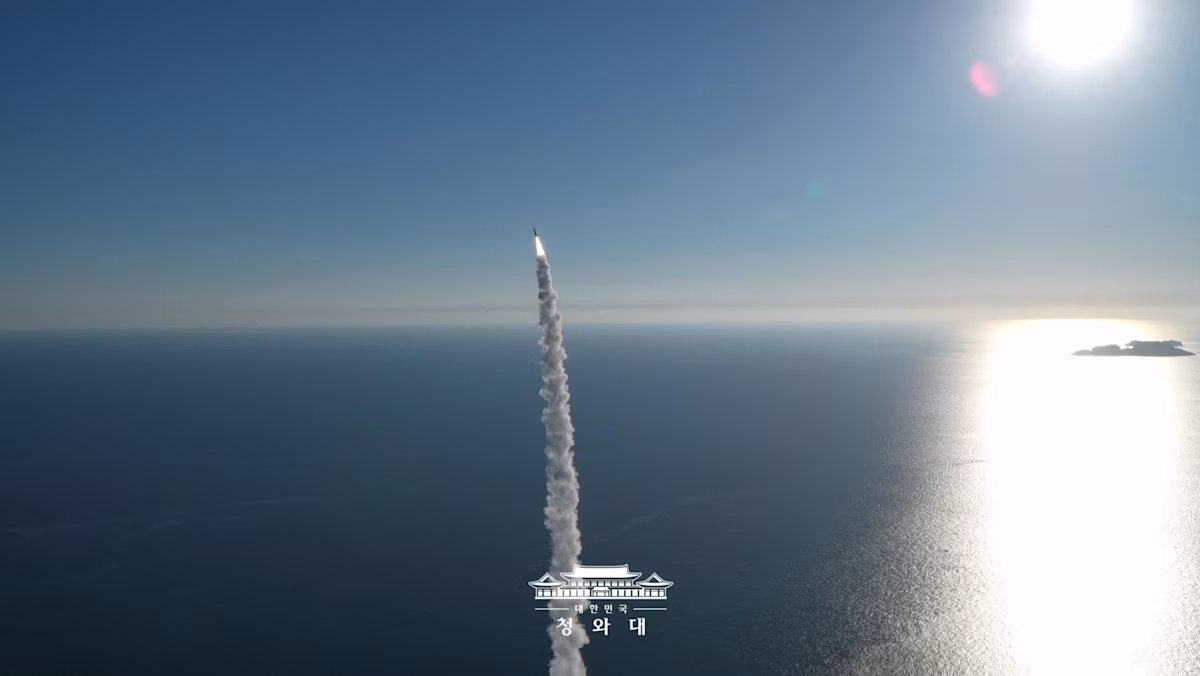
“Boost-glide vehicles can have ranges of up to thousands of kilometres, effectively making them ICBM (intercontinental ballistic missile) equivalents,” the research organisation Center for Arms Control and Non-Proliferation said in a factsheet.
Meanwhile, hypersonic cruise missiles use specialised engines, typically air-breathing scramjets, to sustain high-speed flight.
Hypersonic weapons can be designed to carry either conventional or nuclear warheads.
Why are they hard to intercept?
The challenge lies in a potent combination of extreme speed and manoeuvrability.
Traditional ballistic missiles generally follow a high, arcing trajectory, allowing defence systems to calculate their likely path and determine where to intercept them.
By contrast, hypersonic glide vehicles and cruise missiles can travel at relatively low altitudes, delaying detection by ground-based radar systems due to the Earth’s curvature.
Crucially, their ability to change course makes it harder to predict where they will strike, further complicating interception efforts.

