



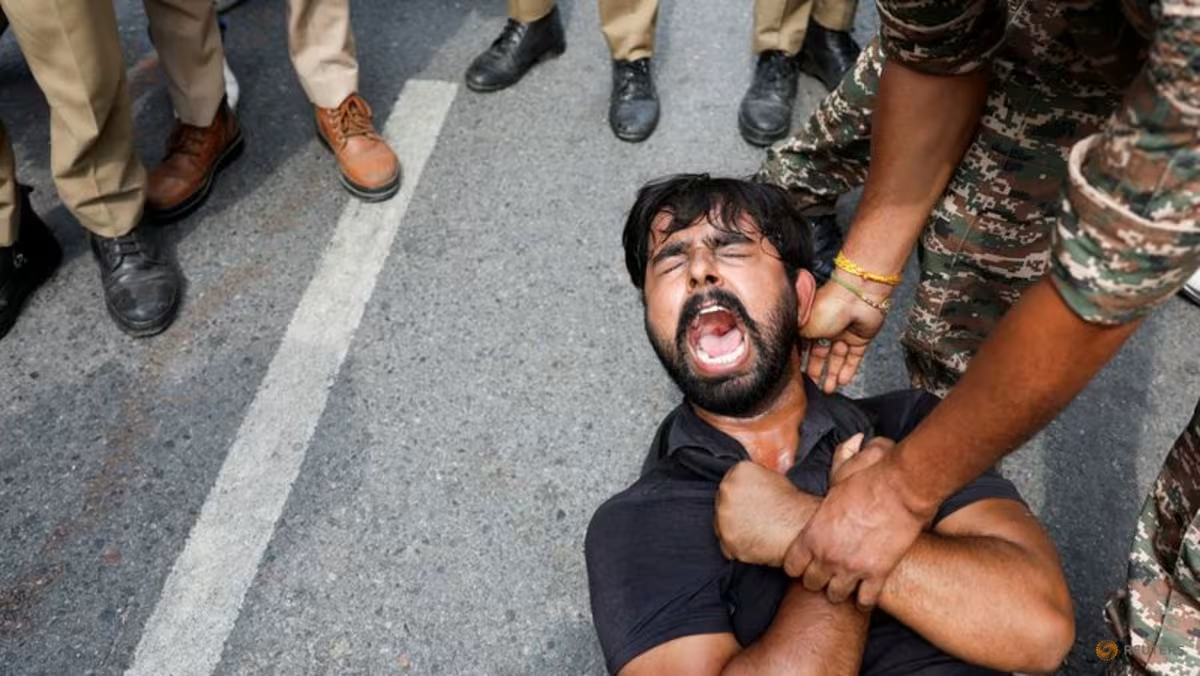
The Narendra Modi government is weaker than it has ever been, senior journalist, film maker and publisher Paranjoy Guha Thakurta told me.
“What is unique about (the movement) is that it has broken social barriers – gender, caste, religion and class. The scale and spontaneity has taken the government by surprise, and having accepted the demand of the youth and the students for the resignation of the education minister, it fears that if the chief election commissioner is removed it will become weaker and vulnerable to more pressure to completely scrap the SIR.”
This would be a significant reversal. “SIR is its (the BJP’s) final attempt to convert a rambunctious democracy into a tame, gelded electorate which it can call upon at will to legitimise its democratic credentials,“ historian and political and social essayist Mukul Kesavan told The Wire this week.
Taking on an immovable state may lead to a stalemate, but the broadening youth movement is unlikely to stop trying. There are risks ahead, including violence, and disunity in the leadership, but there is no doubt that this is the most serious threat to the credibility and stability of the Modi government since the prime minister first took power in 2014.
Across South Asia, youth are demanding more and increasingly challenging entrenched, orthodox and in many cases corrupt political elites. There are lessons in this that could resonate beyond India – the world’s largest democracy – to corrupt and complacent gerontocracies elsewhere.
Nirmal Ghosh, a former foreign correspondent, is an author and independent writer based in Singapore. He writes a monthly column for CNA, published every third Friday.

