



The singer known as D4vd met Celeste Rivas Hernandez when she was 11, began a sexual relationship with her when she was 13 and, when she was 14, got into an argument with her the day before he invited her to his home and fatally stabbed her, prosecutors said in court documents filed on Wednesday.
In the days and weeks that followed, the documents say, D4vd placed her corpse in an inflatable pool and cut off her limbs with a chain saw he had ordered online before stuffing them into a garbage bag and putting the bag in the front trunk of his Tesla.
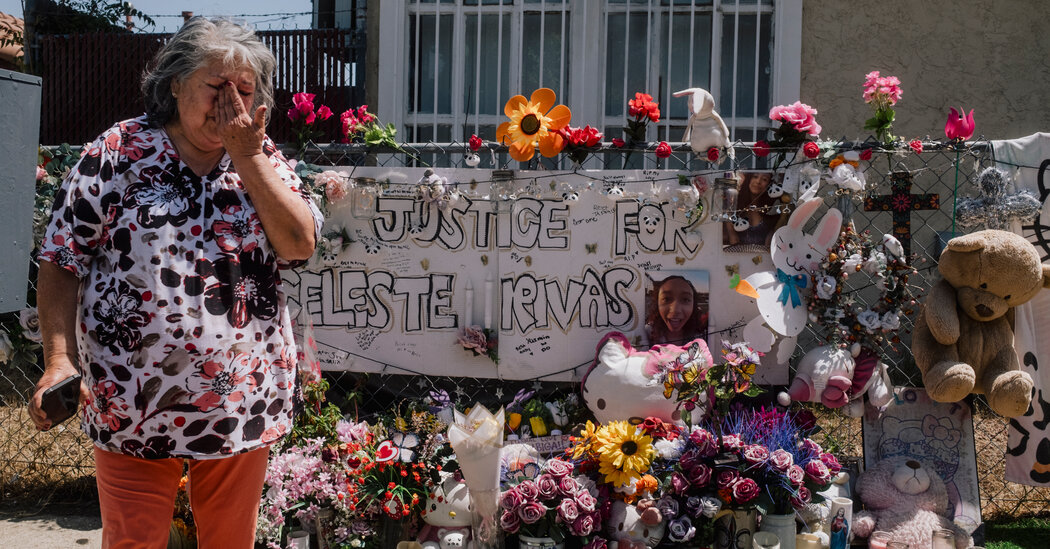
The legal filing offers the first detailed account of how the authorities believe that Celeste’s remains ended up in his car, where they were discovered in September. The police have refused to discuss their investigative findings for months, and the mystery surrounding the circumstances of Celeste’s disappearance has captivated Southern California and beyond.
At a hearing in Los Angeles Superior Court on Wednesday, where D4vd, whose real name is David Burke, appeared handcuffed and wearing an orange jumpsuit, his lawyers objected to the release of the prosecution’s brief. The filing outlines the evidence prosecutors say they will bring forward at a preliminary hearing, which is now scheduled for May 26.
The lawyers for Mr. Burke said the public nature of the documents in the closely watched case could complicate their client’s right to a fair trial with impartial jurors. But the judge disagreed, allowing for the document’s release.
A spokesman for the Los Angeles County District Attorney’s Office declined to comment on the contents of the filing.
A lawyer for the Rivas Hernandez family, Patrick Steinfeld, could not be immediately reached for comment on Wednesday evening. But he has said that the grisly findings of a medical examiner’s report “have caused profound emotional pain for the family.”
A lawyer for Mr. Burke did not comment on the filing on Wednesday. But Mr. Burke, 21, has pleaded not guilty to the first-degree murder charge against him, and his legal team has said that “the actual evidence in this case will show that David Burke did not murder Celeste Rivas Hernandez.”
In the court filing, prosecutors say Mr. Burke and Celeste began a sexual relationship in November 2023 and spent much of the summer of 2024 together, noting that she traveled with him to Las Vegas, to London and to Texas to meet his family.
At one point, after Celeste’s parents had taken away her cellphone because she had run away from home, Mr. Burke paid one of her classmates $1,000 to give her a new one that he had purchased, the court documents say.
The pair broke up in the fall of 2024 but continued to talk, the documents say.
Text messages show that on April 22, 2025, Mr. Burke and Celeste got into a “lengthy argument,” prosecutors say in their filing. Celeste had expressed jealousy over Mr. Burke’s relationships with women, the documents say, and she “threatened to disclose damaging information about her relationship with defendant to end his career and destroy his life.” The documents note that the first studio album from Mr. Burke, an up-and-coming singer who had created the anthem for the video game Fortnite, was released on April 25.
On April 23, Mr. Burke sent an Uber to Celeste’s home in Lake Elsinore, Calif., that dropped her off about 90 minutes later at the house where he was staying in the Hollywood Hills, the documents say. Soon after she arrived, Mr. Burke “stabbed the victim to death multiple times and stood by while she bled out,” according to the filing.
Prosecutors say that around 10:30 p.m. that night, after Celeste had died, Mr. Burke sent text messages to her phone asking where she was — what they called part of a “premeditated plan to cover up the murder.” An hour later, he drove to Santa Barbara County to dispose of and destroy evidence, the prosecution’s filing says. Mr. Burke returned to the same area of Santa Barbara County at least two more times, the court documents say.
Mr. Burke returned home the next morning and gave a radio interview to promote his forthcoming album, prosecutors say. He briefly continued to text Celeste’s phone but stopped on April 26, the documents say.
According to the documents, from April 24 to May 5, Mr. Burke, using a false name, ordered a shovel, two chain saws, a body bag, heavy duty laundry bags and a blue inflatable pool to be delivered to his home. He “took horrifying measures to destroy and discard victim’s body,” the documents say. In addition to removing her limbs, Mr. Burke amputated Celeste’s left ring and pinkie fingers because one of the fingers had been tattooed with his name, the documents say.
Prosecutors say they found small blue plastic fragments amid Celeste’s remains that were later matched to the pool, and that biological samples collected in the garage area matched Celeste’s DNA profile.
The filing says that Mr. Burke put part of Celeste’s body in a garbage bag and part of it in the body bag, and placed both bags in the front trunk of his Tesla. Before leaving for a music tour in July, he parked the Tesla on a nearby street, the documents say.
Officials have said the car was later towed to an impound lot in Los Angeles, where Celeste’s remains were discovered in the vehicle’s trunk after reports of a foul odor.
On Jan. 17, 2026, almost eight months after prosecutors say Mr. Burke committed the murder, they say that a state employee found Celeste’s U.S. passport card off State Route 154 in Santa Barbara County.

