



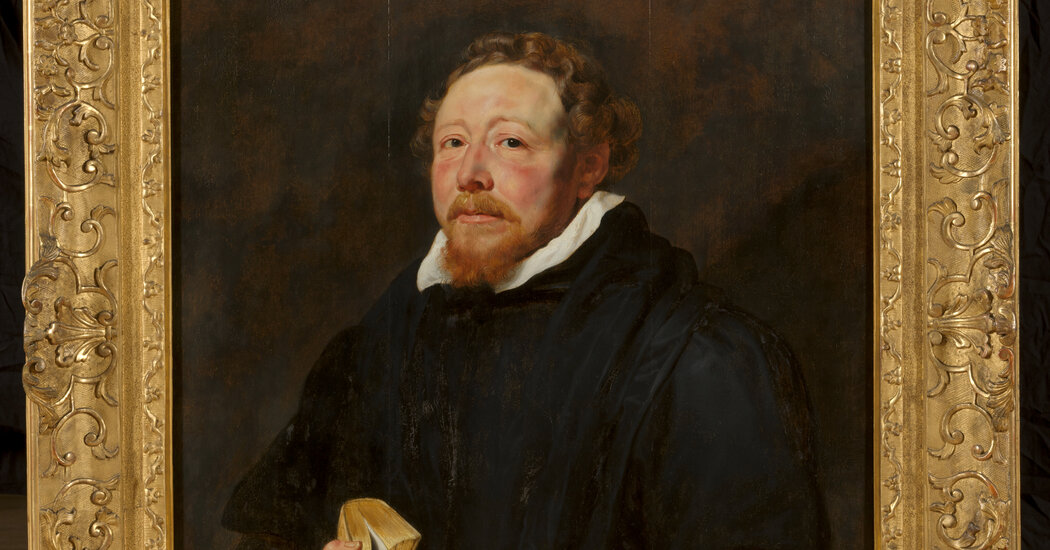
The collection is worth millions, perhaps hundreds of millions of dollars, and contains tapestries, antique silver, and 1,500 oil paintings on canvas, including works by Rembrandt, Frans Hals and a half dozen by Peter Paul Rubens.
But this is not a museum collection or the private trove of a single wealthy art collector.
It is known as the Dutch Art Collection (Nederlands Kunstbezit-collectie, or NK Collection), and consists entirely of art and cultural objects that the Allies repatriated to the Netherlands from Germany in the wake of World War II. Its current custodian is the Dutch Cultural Heritage Agency, which loans the artworks to Dutch museums, embassies and government buildings.
Most of the works were looted from Jews who had been deported or killed in concentration camps, while others were sold under duress. Some have no known history.
For decades, they have been labeled “heirless” or “orphaned” property by the Dutch state, and have remained in the custody of the cultural heritage agency, some on loan to museums, and others in storage at a large warehouse in Arnhem.
But on Wednesday, a committee appointed by the Dutch government two years ago to address the quandary of what to do with the art issued a report that set out what it described as a feasible plan to settle the issue going forward.
Under the proposal, a foundation to be created by the Dutch Jewish community would be entrusted as guardians of a collection that is emblematic of both humankind’s aesthetic genius and its worst failings. Such a foundation would “preferably be housed at the Jewish Museum” in Amsterdam, the panel recommended, which could actively program exhibitions, and lend artworks to other institutions.
The committee suggested that the Dutch state provide the foundation with an annual budget of 400,000 euros (about $471,000) to exhibit the works, explain the dark history associated with the cultural property, and label the art in museums to make a “visible reference to this sorrowful history.”
“This collection is important to tell a story,” said Lodewijk Asscher, chair of the Committee on Heirless Jewish Looted Art that issued the recommendation. “It can help us understand what happened during the Holocaust, to help us understand why it’s important to fight against antisemitism and other forms of racism and discrimination.”
He said the foundation could invite documentary makers to create films about different aspects of the collection or curators to create traveling exhibitions of the works. “It’s important to understand not only how massive the scale was — not only of the murder — but also of the theft of the Jewish community,” he added.
Rianne Letschert, the Dutch minister of Education, Culture and Science, said in a statement that the report “provides direction” for dealing with the remaining works and that it would be “shared with the Dutch Parliament very soon.’’
“The collection of orphaned Jewish looted art includes a painting that hung above someone’s sofa, a dinner service that stood on the table on Friday evenings, or a wedding gift,” the minister said. “These are the last visible traces of lives that have been destroyed. These objects deserve a destination that does justice to that history and to the Jewish community.”
Some heirs of families whose art was looted were not pleased with the panel’s recommendations.
“It’s a whitewash,” said Alfred Fass, who is trying to trace artwork looted from his family’s collection. “They want to keep the paintings in Holland and that’s it. They will not even make the minimal effort to find the heirs.”
Fass is a member of the Dutch Immigrants Association, (Irgun Olei Holland), an organization that represents Dutch Jews who live in Israel. It sent the Asscher Commission its own report two months ago that proposed selling the collection and using the proceeds for the Dutch Jewish community in both the Netherlands and Israel.
It also recommended paying rent to the Jewish community for the art it exhibits, with proceeds going to the families of Holocaust survivors, and social services for them.
“Due to the fact that the number of Holocaust survivors is getting smaller and smaller, we want to make sure the collection benefits the survivors,” Gideon van der Sluis, the group’s treasurer and spokesman, said.
Asscher’s committee opposes selling the works, he said. “We still intend to make restitution possible, when heirs are found,” he said.
Niv Goldberg, a lawyer who represents an heir of the art dealer brothers Nathan and Benjamin Katz, said he was opposed to turning the collection over to a foundation and to selling it. His clients have recently appealed an earlier claim for some 222 artworks in the NK collection, that was rejected by the Dutch restitutions commission for a variety of reasons.
“Very, very few artworks from the NK collection have been restituted in all this time,” he said. “To be in that situation and to say we’re closing this down to me indicates a certain lack of good faith in the government’s abilities in this area.”
Though decades have passed since the works were returned to the Netherlands by the Allies, he said many potential claimants had no access to official documents to support their ownership. Some important archives related to the war — like judicial files of collaborator trials — were sealed for 75 years and have just been opened recently.
“Maybe in another generation it will be reasonable to come to the conclusion that no more information is going to come out that will help in restituting works of art that are held in these collections,” Goldberg said, “but I feel that it’s far too early.”
The restitution process has moved in fits and starts, and many owners could not be found, in part because nearly 80 percent of Jews from the Netherlands were killed in the Holocaust.
About 700 objects were returned to their owners in the years directly after the war, and another 1,600 were sold at auction, according to Lucy Frowijn, a spokeswoman for the Ministry of Culture, before the first state agency in charge of restitution closed its doors in the early 1950s.
Following the landmark Washington Conference on Holocaust Era Assets in 1998, which established new rules for global restitution efforts, the Dutch established a committee to reinvigorate return efforts, the Origins Unknown Commission, led by the art historian Rudi Ekkart.
Subsequent returns included the restitution of 202 artworks to the heirs of Jacques Goudstikker, a prominent Jewish art dealer in old master paintings, who had died while trying to escape the Nazi invasion. Since then, about 500 artworks have been restituted through the Dutch Restitution Committee.
Today, more than 3,500 remain in the NK Collection. Some paintings hang in the Rijksmuseum in Amsterdam and the Bonnefanten Museum in Maastricht. Those museums occasionally acknowledge their connection to the war with special exhibitions, but others do not currently label the pieces as looted art.
Amelie Ebbinghaus, head of restitution for the Art Loss Register, a British organization that tracks looted art, said the Asscher Commission’s proposal sounded like a good step forward.
“It sounds to me like it could actually be a very interesting solution,” she said. “What you really want to achieve with these kinds of works is that they remain in the public domain, in some way, and that restitution claims remain possible. It sounds to me that this could be a way to ensure that.”

