



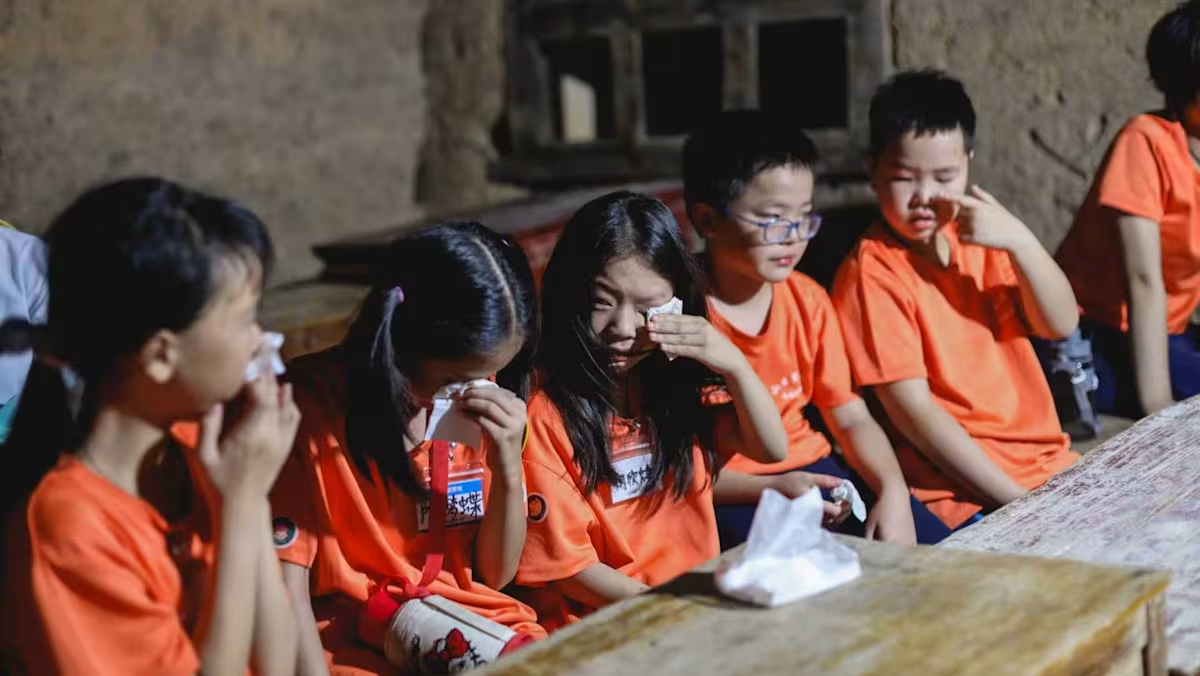
Age of participants matters greatly too, Setoh noted.
A 15-year-old, for example, may better understand why they are at a hardship camp and that it will end, while younger participants depend more heavily on having trusted adults around to feel safe, she added.
Not every child hates the experience.
A Chengdu father surnamed Gao, who sent his reluctant Secondary 1 daughter to a camp, told local media that while she complained about the farm work, she also enjoyed it.
„She almost likes it,“ he said.
The same hardship, noted Desiree Qin Baolian, an associate professor of human development and family studies at Michigan State University, can leave one child stronger and another traumatised.
„We can put children in challenging situations,“ she said. „However, the container needs to be warm and supportive.“
Whether a child’s new obedience after camp reflects growth or fear is the question parents should ask, Qin said.
„Short term obedience and long term growth and health is very different.“
Fear-driven obedience also “does not last long” and plants “seeds of fear and distrust” in a child, Qin said
Over time, she said, such children may come to feel they „cannot trust adults and others around them to help them“.
When a child feels loved and cared for, by contrast, „it’s like having sunlight“, she said – a feeling that carries them „through many dark moments in life“.

