



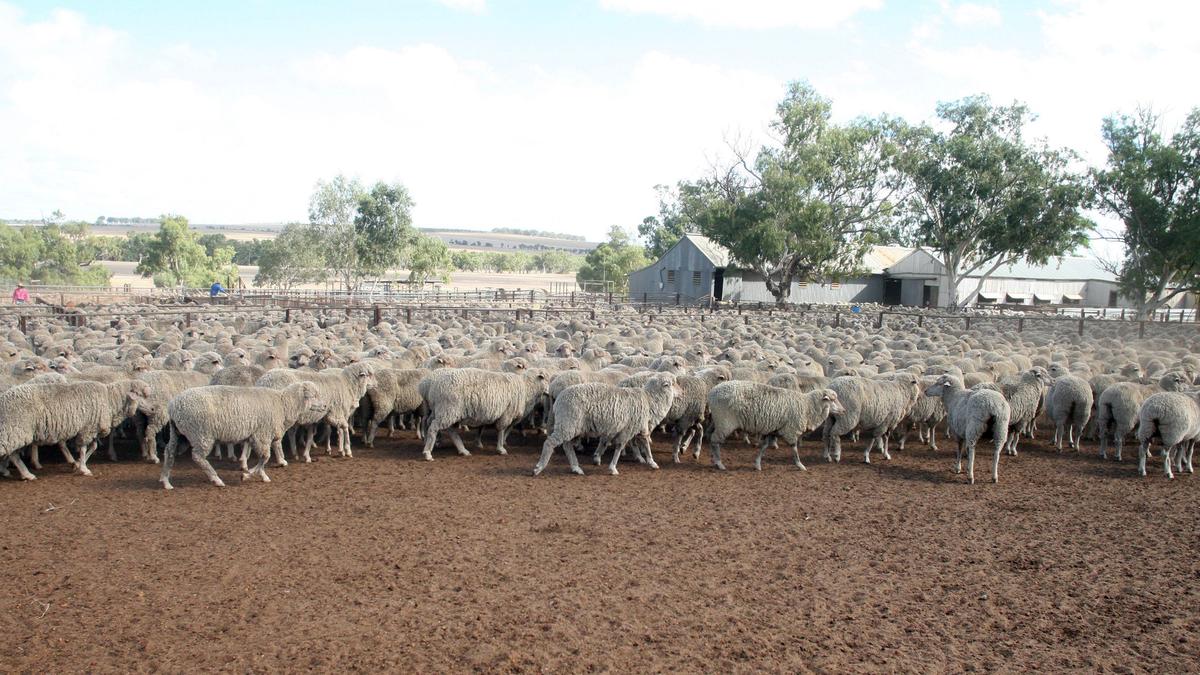
The Dongara-based Henderson Shearing team were filling the bales at the O’Brien and Gillam family’s historical Irwin House shearing shed as the wool market lifted 70¢ to close at 1895¢/kg.
The sharp rise recorded in the week ending April 24 was welcomed by Sally O’Brien (nee Gillam), whose family have been producing Merino wool in the Irwin district for 90 years.
The Gillam family became the third-generation owners in 1936 of the pastoral farming land first leased in 1850 by English-born Samuel Pole Phillips.

“The wool market lift will help pay for the jump in input costs,” she said. “It was perfectly timed, but as we all know, the faster the wool market rises, the faster it may fall.”

Her family, who run the Gabyon Pastoral Company, will be organising about 300 bales of 20-micron wool for the Bibra Lake Wool Selling Centre to sell through Nutrien Wool in the coming weeks.

“We will harvest the wool from 10,000 ewes in our eight-monthly shearing program that produces 60-80mm length,” Ms O’Brien said.
“Five years ago, we decided to change from our traditional annual shearing to every eight months for productivity gains in animal health and lambing.”

Former world shearing record-holder Lou Brown said he had been on the job at Irwin House taking the wool off about 220 head a day.
“The wool is coming off really good, sheep are very plain-bodied with no wrinkles up the neck — the sheep are a bit strong after being on lupin feed,” he said.
Ms O’Brien runs the 30,000ha mixed farming enterprise in the Irwin shire across the Irwin House homestead and at the Mondarra farm with her husband Daniel and brother Andrew Gillam and his wife Debbie.
With a renewed cropping program in place to combat the rising costs of fuel and fertiliser, Ms O’Brien said they were servicing a healthy level of debt due to expansion.
“We are conscious of interest rates and inflation, but we are confident we will keep moving forward,” she said.
“Along with an uprising wool market, we have had good demand for our Poll Dorset/Merino lambs and the Merino wether lambs.”
Historically, wool was the main revenue driver and meat was secondary, but this has changed substantially.
Ms O’Brien said stud Poll Merino rams, mostly from Seven Oaks, were selected to run in Gabyon’s internal stud flock of 600 nucleus ewes that have been objectively measured since the 1970s, to breed about 20 commercial flock rams.
Ms O’Brien said the crossbred program used Tipperary Poll Dorset rams over Merino ewes.
“Our Merino hoggets will be fleece weighed and tested in August — they are then classed, with the top half selected for replacements, and the bottom half go into the cross-bred flock,” she said.
“We finish all our lambs on standing crops or through the feedlot for the domestic market.”
Ms O’Brien said there was strong demand for Gabyon lambs, with the majority marketed to Fletchers as heavier types finishing at about 55kg-60kg liveweight.
“This year we sent about 1250 lambs to the WA Meat Marketing Co-operative, and they did extremely well,” she said.
“Our lambs are weaned in late November, and we put them in standing crops, barley or oats and about 20 per cent lupins.”
The operation has seven confinement pens to use when required, which Ms O’Brien said helped to contain soil erosion on the fragile sand paddocks during poor seasons.
“In a poor year, we may finish 80 per cent of our lambs in the feedlot pens, supplemented with homegrown hay and grain and Milnes Feed pellets,” she said.
Spreading the risk even more so with livestock, the two couples run 480 cows, including 80 Angus recently introduced.
“We secured some well-bred in-calf females that will be replacing 1100ha taken out of wheat production,” Ms O’Brien said.
“The tipping point was the cost increase analysis on fuel and fertiliser and with the suppressed and oversupply in the global wheat market, the numbers didn’t add up to put that country in.
“Our cropping program will be reduced from its normal 6000ha, taking out 1100ha of the grey sand country with its high inputs due to the uncertainty supply of diesel and nitrogen.”
“The bonus of where we are here, there are a lot of people that have gone out of livestock, allowing us to find agistment if required.”

Mr O’Brien said he was planning to begin dry-seeding by April 27.
“We will put in 500ha of GM canola, mostly to manage weeds, then 1500-2000ha of lupins before seeding in 3000ha of wheat, the balance to standing crops including a mix of lupins and oats,” he said.

