



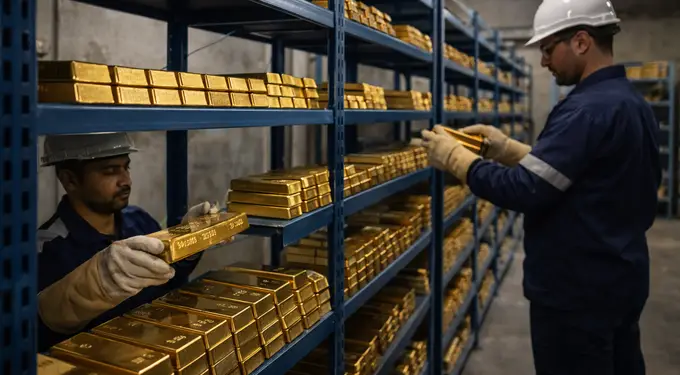
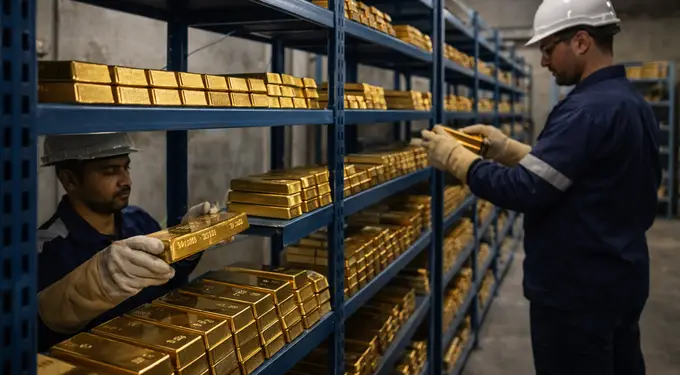
Gold prices edged lower on Friday and were on track to post a weekly decline as escalating tensions between the United States and Iran heightened inflation concerns and reinforced expectations that the Federal Reserve could maintain a hawkish monetary policy stance.
Spot gold slipped 0.1% to $4,115.79 per ounce by 0601 GMT.
The precious metal was on course to register a weekly decline of 1.4%.
Meanwhile, US gold futures for August delivery fell 0.4% to $4,124.90 per ounce.
Geopolitical tensions lift inflation concerns
The decline in gold came as oil prices remained on track for a weekly gain amid continued military exchanges between the United States and Iran.
Iranian armed forces launched attacks on US military infrastructure in the Gulf states on Thursday.
The strikes followed US military action targeting Iran’s southern coastal and eastern provinces earlier in the week.
The latest escalation has fuelled concerns that higher energy prices could add to inflationary pressures.
As a result, investors have increasingly priced in the possibility that the Federal Reserve may need to keep interest rates elevated or even raise them further this year.
Markets increase expectations for September rate hike
According to CME’s FedWatch tool, markets are now pricing in a 63% probability of a September interest rate hike.
It compares with approximately 54% a week earlier, reflecting a notable shift in market expectations as geopolitical risks intensified.
Higher interest rates typically reduce the attractiveness of non-yielding assets such as gold.
While the metal is widely regarded as a hedge against inflation, rising interest rates increase the opportunity cost of holding bullion because it does not generate interest income.
The changing interest rate outlook has therefore weighed on investor sentiment toward gold despite ongoing geopolitical uncertainty.
HSBC lowers long-term gold price forecasts
Separately, HSBC lowered its average gold price forecasts for 2026 and 2027 on Thursday.
The bank cited a more hawkish outlook for US monetary policy along with a stronger US dollar as the key reasons behind its revised projections.
A stronger dollar generally makes gold more expensive for holders of other currencies, potentially reducing demand and adding further pressure on prices.
Other precious metals post gains but remain weekly losers
Among other precious metals, silver traded little changed near $60 per ounce on Friday but remained on track for a weekly decline.
Platinum climbed 1.4% to $1,632.99 per ounce, while palladium advanced 1.9% to $1,270.54 per ounce.
Despite Friday’s gains, all three metals remained on track to end the week lower, reflecting broader investor caution amid shifting monetary policy expectations and heightened geopolitical uncertainty.
Gold, meanwhile, continued to face competing forces.
While geopolitical tensions traditionally support safe-haven demand, growing expectations of tighter monetary policy and higher interest rates outweighed that support, leaving the precious metal on course for its first weekly decline in recent sessions.
The post Gold dips as escalating US-Iran conflict fuels inflation concerns appeared first on Invezz

