



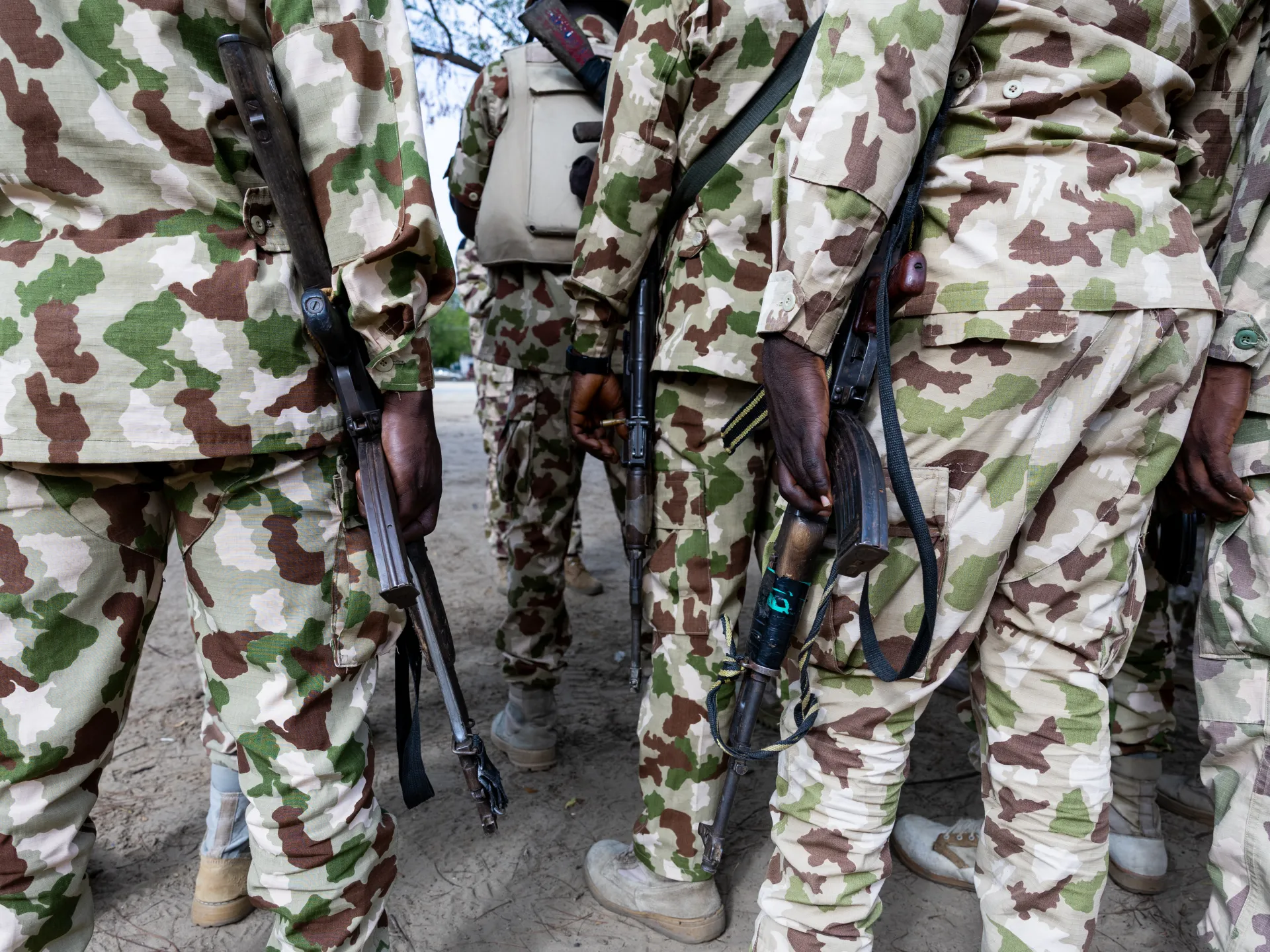
Nigeria’s military announced on June 29 that several senior commanders from terrorist groups had surrendered in the northeast. Captain Mohammed Goni, acting military information officer for Operation Hadin Kai (OPHK) against these groups, said the surrenders followed sustained military pressure and that those involved were being held in a secure location for profiling and debriefing.
The announcement brought renewed attention to Nigeria’s terrorism crisis, which has widened significantly since the Boko Haram uprising of July 2009. What was once a largely Boko Haram-led insurgency confined to a small geography has become a broader conflict involving multiple terrorist factions and other armed networks. Today, Boko Haram is no longer the only major threat; the landscape also includes the Islamic State West Africa Province (ISWAP), Ansaru, Mahmuda, Lakurawa, and many other, smaller groups involved in banditry, armed robbery and kidnapping.
Nigeria’s response has also evolved since 2009. Alongside military operations such as OPHK, the authorities have developed programmes to process, deradicalise, rehabilitate and reintegrate some of those who leave terrorist groups. Operation Safe Corridor (OPSC), established in 2016, was designed to support military operations by working with eligible, low-risk individuals associated with such groups. OPHK itself was launched in April 2021, replacing Operation Lafiya Dole (OPLD), while other efforts include joint task force operations in the northeast, Operation Desert Sanity and multinational initiatives such as Operation Lake Sanity.
Continued defections from Boko Haram and ISWAP have strengthened the case made for OPSC. Its proponents argue that, alongside military pressure from OPHK, the programme offers a real opportunity to shift the dynamics of the conflict in the Lake Chad Basin. They also see it as reinforcing the Borno State government’s local, non-kinetic, community-driven approach, known as the “Borno Model”, and as a possible foundation for national reconciliation and transitional justice.
On June 12, during Nigeria’s 2026 Democracy Day celebrations, President Bola Ahmed Tinubu said that more than 124,000 fighters and dependants had entered the surrender process since he took office in 2023. Defence Headquarters has put total surrenders between 2016 and 2025 at more than 300,000, with 2,615 people said to have been successfully reintegrated into society after graduating from the OPSC programme.
The numbers do indicate success. They show that sustained military pressure, coupled with rehabilitation opportunities, is driving defections and generating intelligence that helps security forces accelerate operations and save lives.
But mass surrenders and reintegration, in their current form, could also be a socioeconomic time bomb.
Reintegrating former fighters into communities where many of their victims remain displaced poses serious moral risks. According to the Observatory for Religious Freedom in Africa, 79,323 people were killed and 34,773 abducted in terrorism-related violence across Nigeria between 2020 and 2025, while Nigeria’s internally displaced population reached 3.7 million.
This creates a stark contrast between the support offered to “repentant” or surrendered fighters and the conditions endured by their victims. OPSC and other government programmes provide former fighters with counselling, education, vocational training and, in some cases, tools or support intended to help them rebuild their lives after graduation. Many IDPs, by contrast, remain in camps or host communities where food, medical care, education and employment are severely limited.
The imbalance sends a dangerous message: that violence and terrorism can lead to rehabilitation and economic support, while victims are left to face poverty, displacement and neglect. It has also fuelled resistance in some affected communities, where reintegration is seen as giving former fighters a route back into society while victims remain without adequate acknowledgement, redress or support.
OPSC officials reject the idea that the programme rewards those involved in terrorism. They say those who surrender are screened and profiled, and that the Ministry of Justice determines who is eligible for rehabilitation and who should face prosecution. But for many victims, the injustice remains stark: they see former fighters receiving support to rejoin society, while those harmed by the violence are left to grieve lost relatives, homes and livelihoods with little help or redress.
That grievance is made worse when former fighters return to the same communities as their victims. For IDPs and other survivors, living alongside people linked to groups responsible for murder, kidnapping and rape can reopen trauma and deepen fears about whether their “repentance” is genuine, or whether they may return to violence. With weak support for victims and local communities, many are being asked to accept returnees before they have been given the help they need to recover.
Reports from January 2025 have raised concerns that some Boko Haram and ISWAP defectors are bypassing official rehabilitation programmes and returning directly to communities. Residents interviewed in those reports described fears about recidivism, resistance to authority and the effect of such returns on social harmony and security.
These concerns are not only about poverty, stigma or the lack of post-release support, although all of those can make reintegration harder. They also raise questions about screening and monitoring. If individuals who have not been properly assessed are able to return to communities, or if some retain extremist beliefs after surrendering, the process can create long-term risks for internal security and social cohesion.
Another major weakness is the limited role given to local communities and displaced people in reintegration and development plans. When victims feel their experiences and concerns have been marginalised, these programmes lose moral legitimacy. That makes reconciliation harder and can leave communities more vulnerable to resentment, retaliation or vigilante justice.
This is the difficult balance facing the Nigerian government and the military. Encouraging fighters to defect may be necessary to weaken armed groups and bring the conflict closer to an end. But that cannot come at the expense of justice for victims. Reintegration will remain fragile and morally troubling if those who suffered the most are left displaced, unsupported and without redress.
Nigeria’s surrender and rehabilitation programmes can only contribute to lasting peace if they are matched by a serious commitment to victims: compensation, trauma support, community consultation and the rebuilding of shattered lives. A policy designed to end violence cannot succeed if it makes victims feel forgotten.
The views expressed in this article are the author’s own and do not necessarily reflect Al Jazeera’s editorial policy.

