



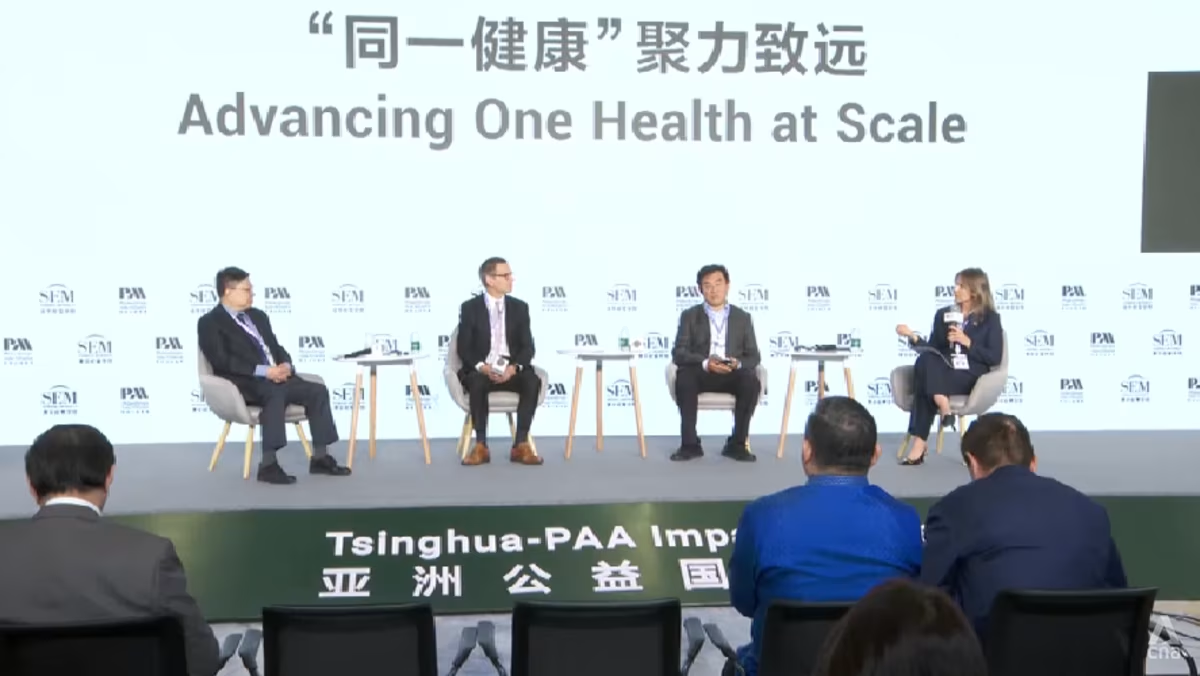
On energy transition, attendees said expanding renewable energy generation is only one part of the equation.
“The challenge is not simply about more renewable capacity, but making the entire power system more flexible and efficient,” said Hu Ruoyu, deputy China director at the Asian Development Bank.
“The next phase of energy transition is not just about financing additional infrastructure. It is also about strengthening institutions, improving regulations, and developing commercially viable solutions.”
LEARNING FROM CHINA’S ABILITY TO SCALE
Organisers said the decision to hold the inaugural summit in China was deliberate, given the country’s experience in developing and scaling innovative solutions.
Seow said China’s approach offered valuable lessons for the rest of Asia.
“The ability of the Chinese market to take a small solution to (reach) maybe hundreds of thousands or millions (is) really quite amazing,” he said.
As part of the summit, delegates were also scheduled to visit projects around Beijing to see how technology was being applied to real-world challenges.
These included the use of AI to support children with autism, as well as digital tools to help preserve the Great Wall of China.
Seow said PAA also planned to bring more international partners to China to learn from environmental projects, including efforts to combat desertification in Inner Mongolia and innovations combining offshore wind farms with aquaculture.
“These are innovations that I think people should understand, and maybe adapt back home,” he said.
The summit, two years in the making, marked what organisers hope will be the start of deeper collaboration between PAA, Tsinghua University and other Chinese partners.
Seow said discussions would continue at the Philanthropy Asia Summit in May, stressing that the focus must shift from conversations to practical action.
“The conversation need not stop at one summit. Action requires continuous effort,” he said.

