



US$5 BILLION DISASTER COST
Khanal said his meetings in New York had been productive, with the United States announcing US$31 million in new flood recovery support.
The G7 informally promised support at a meeting on Wednesday, he said, and Britain has also vowed to help.
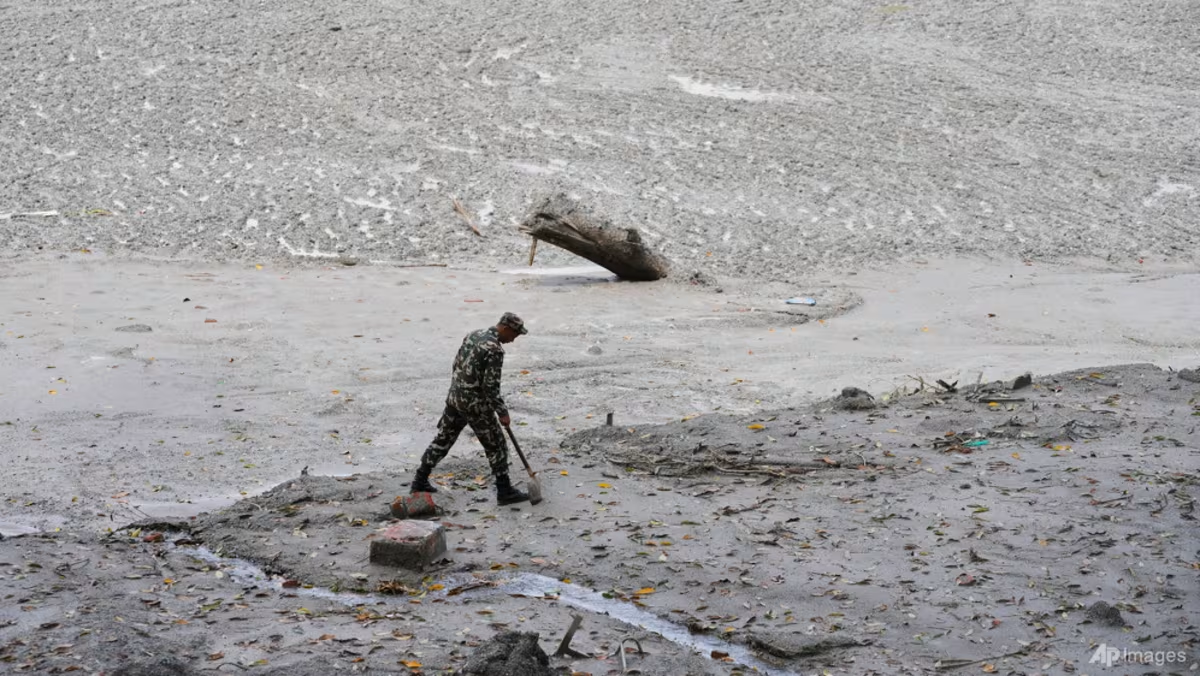
Still, the scale of the challenges is enormous: preliminary estimates by his government put the cost of the disaster at US$5 billion.
Nepal has asked the UN’s Loss and Damage fund for US$20 million, the maximum allowed, but a tiny fraction of what it needs.
The fund, established in 2022 in the aftermath of catastrophic floods in Pakistan, has yet to make even its first disbursement and is dramatically underfunded – and climate justice advocates see Nepal as a key test of its credibility.
Khanal said, however, he had been encouraged by cash assistance and rescue teams sent by Nepal’s neighbours, as well as the Nepalese diaspora who had sent money directly to the Prime Minister’s Relief Fund.
Previously, he said, the diaspora preferred to donate to international organisations and local nonprofits – but that has changed since the election of new Prime Minister Balendra Shah, a former rapper who won power on the back of a youth-led movement.
Jeremy Konyndyk, a former USAID official under Joe Biden, has criticised President Donald Trump’s administration for sweeping aid cuts to Nepal after it took office, including for flood prediction and glacier inventories.
„There’s no early warning system that probably exists in the world right now to imagine a compounded disaster of that nature,“ Khanal said. „But obviously what USAID and other institutions used to provide us is financial and technical assistance.“
Nepal now needs more such assistance from the world to develop more complex systems involving satellites to monitor the rate of glacial melt and provide advance warnings, he said.

