



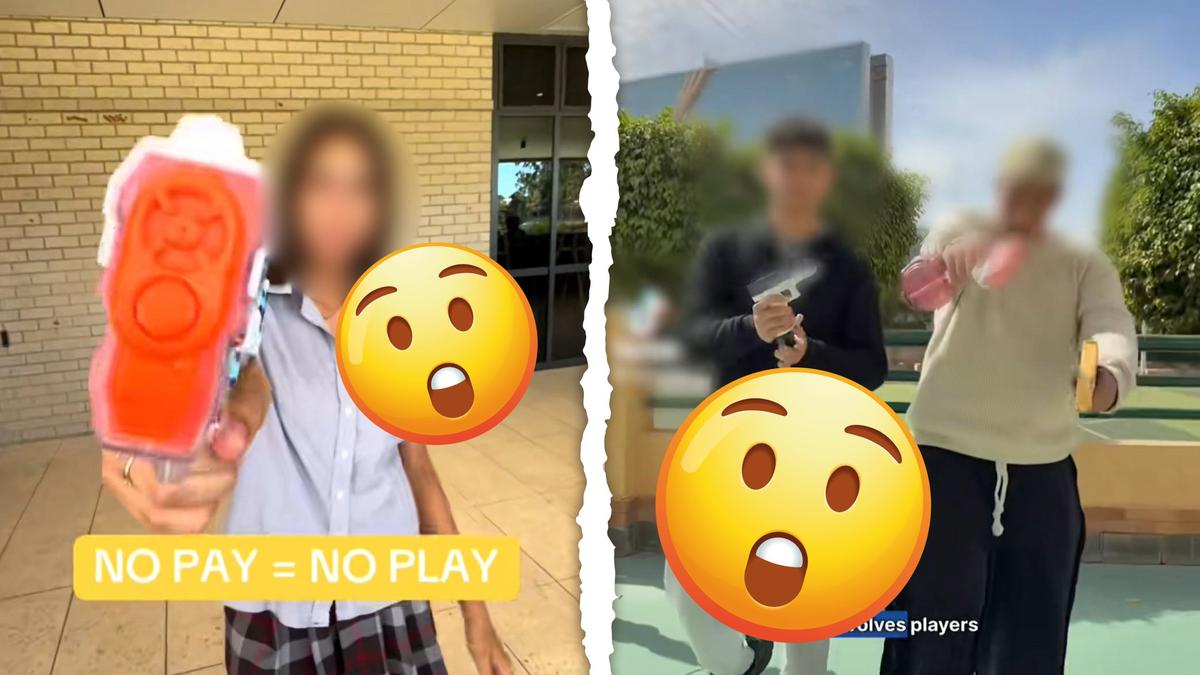
A game where teens stalk and shoot each other using water guns — prompting police warnings in Australia and overseas — has become wildly popular in Perth.
Year 12s from schools across Perth have been signing up for Senior Assassin, a game where they “eliminate” their designated targets by shooting them with a water gun after hunting them down via their phones, while avoiding being soaked themselves.
While it seems like harmless fun, the game has sparked concerns that teens stalking each other with fake guns could be perceived as threatening.
NSW Police last month issued warnings about the growing trend, after Sydney’s Campbelltown TAFE was forced into lockdown and police swarmed the campus.
The alarm was reportedly triggered by a 16-year-old girl walking through the grounds with a water pistol, taking part in a Senior Assassin game.
WA’s biggest courts and crime stories to your inbox
Sign-up to our weekly newsletter for free
Sign up
Videos posted by NSW Police on social media warn teens that fake guns could be mistaken for real ones from a distance.
“If someone reports a firearm to police, then we treat it as a genuine threat and we respond accordingly,” one post said. “Because in that moment, we don’t know it’s just a game.”
A second video cautioned teens that “causing fear, unwanted physical contact or injury could be considered an assault”, while running on to someone else’s property was “trespassing”.
“What might seem like a game can quickly become a serious police matter, with legal consequences and real risks,” it said.
Multiple teenagers were arrested earlier this month in three US states after terrified residents reported seeing hooded figures chasing each other with what appeared to be firearms.
A WA Police spokesperson said if a member of the community reported seeing a firearm or suspicious behaviour, “Police would treat the matter seriously and respond accordingly”.
Senior Assassin originated in the US, where it’s typically played over several days or weeks by “seniors” in their last year of high school.

Rules outlined on the “Splashin” app — which Perth teens are using — stress that players must use brightly-coloured water guns that do not in any way resemble real guns.
Players also agree they will not wear disguises or masks, frighten or endanger members of the public, enter a house without permission or damage property.
The app assigns targets and allows players to track them, using their phone’s location services, except when they’re in designated “safe zones”.
Wearing swimming goggles or floaties gives a player immunity from elimination.
The winner is the player with the most points or the last player, or team, left standing.
In a TikTok video explaining the game’s rules, students wearing Bob Hawke College uniforms can be seen demonstrating how to play.
The clip notes that buses and trains are off-limits to players, though bus stops and train stations are not.
“Homes are not safe zones, but if you want to enter someone’s house you must have consent from someone else that lives there,” a student says. “We do not condone any violence.”
Other TikToks show students from different schools ambushing each other in parks and suburban streets.
WA’s Education Department said students were banned from using mobile phones during the school day.

“If any student attempts games on school grounds that pose an unacceptable risk to others, schools will deal with this in line with their student behaviour policy,” a department spokesperson said.
“Parents are encouraged to speak with their children about the potential dangers, and any concerning behaviour should be reported to the school and appropriate authorities.”
Adolescent psychologist Michael Carr-Gregg said while a parent’s first instinct might be to tell kids planning to join the game “don’t do it”, the smarter approach was to acknowledge its appeal.
“It’s social, competitive, a bit rebellious, and for many Year 12s it feels like a last hurrah before everything changes,” he said.
“If you start there, you’re far more likely to be heard. Then pivot to the reality. While the game is often played with water pistols, the issue is that it doesn’t look harmless to the outside world.
“Police are increasingly warning that imitation guns can be mistaken for real weapons, triggering emergency responses or putting young people in genuinely dangerous situations.
“There have also been incidents involving car chases, trespassing and accidents when kids get carried away trying to ‘win’.
Dr Carr-Gregg said parents could set clear boundaries, such as no realistic-looking weapons, no chasing cars or no playing at night.
“The goal isn’t to control the behaviour — it’s to stay in dialogue,” he said. “A simple line like: ‘I trust your judgement, but I also know how quickly things can escalate — let’s think this through together’ is far more effective than a ban.”

