



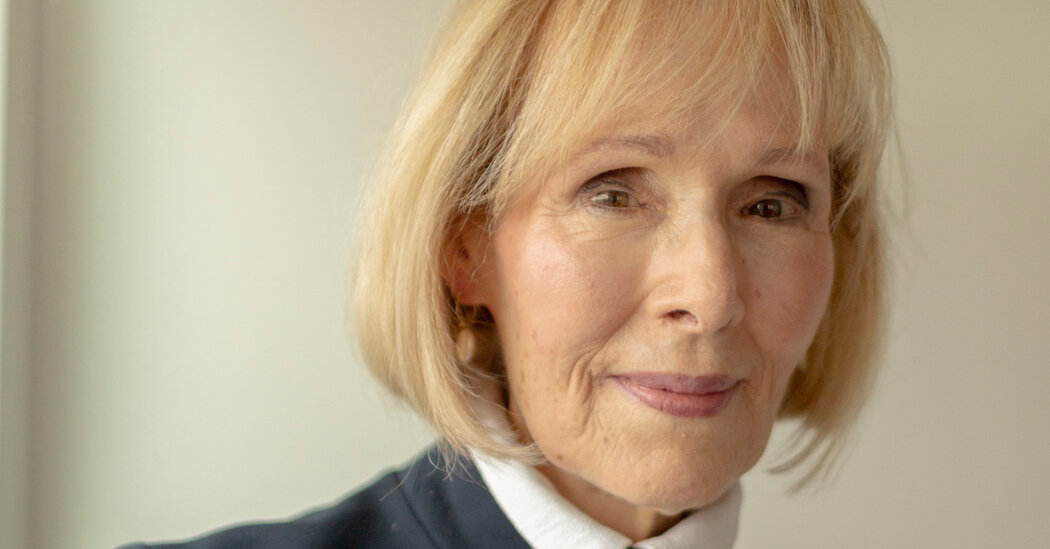
President Trump on Tuesday asked the Supreme Court to step in and overturn an $83.3 million jury award against him for defaming the writer E. Jean Carroll after she accused him of a decades-old sexual assault in a Manhattan department store.
The president urged the justices to reject the jury’s award, asserting that the Supreme Court’s 2024 decision granting presidents sweeping immunity for actions they take in office shielded him from liability in the case.
“This is the first case in our nation’s history in which a court has imposed damages liability on a president for his conduct in office,” Mr. Trump’s lawyers said in a filing to the court reviewed The New York Times.
Lawyers for Mr. Trump asserted that the question of whether he had immunity in the case was “straightforward on the undisputed factual record.” An appeals court had rejected that argument. Mr. Trump’s lawyers told the court that if the ruling was allowed to stand, it would cause “significant damage,” harming not only Mr. Trump but also future presidents and the nation.
The petition to the justices is the latest turn in Mr. Trump’s continued efforts to deny Ms. Carroll’s claims and avoid two separate monetary awards that juries ordered him to pay related to Ms. Carroll’s allegations that Mr. Trump sexually assaulted her in a Bergdorf Goodman dressing room in the mid-1990s and then defamed her in a series of statements and social media posts.
In late June, the Supreme Court rejected a separate request from Mr. Trump that the court review a $5 million judgment against him from a previous 2023 jury finding that he had sexually abused and defamed Ms. Carroll.
The court’s decision not to hear that case prompted a trial court judge to order that the money, which had been held in escrow while Mr. Trump appealed, be paid to Ms. Carroll.
Mr. Trump’s new petition relates to a far larger judgment awarded by a Manhattan jury in 2024. That jury awarded Ms. Carroll $65 million in punitive damages after determining that Mr. Trump had acted with malice in verbally attacking her in social media posts, at news conferences and during the trial. The jury also awarded Ms. Carroll $18.3 million in compensatory damages for her suffering.
At the time, Mr. Trump called the verdict “absolutely ridiculous” on social media.
“Our Legal System is out of control, and being used as a Political Weapon,” he added, and pledged to appeal. “They have taken away all First Amendment Rights.”
The Supreme Court is currently on its summer recess, and the justices are not likely to consider whether to take up the case until late September, when they meet for their annual “long conference,” at which they consider thousands of pending petitions — and reject most of them.
Got a news tip about the courts? If you have information to share about the Supreme Court or other federal courts, please contact us.
Mr. Trump has pursued various efforts to overturn the verdict, so far unsuccessfully.
In September, a three-judge panel of the U.S. Court of Appeals for the Second Circuit unanimously upheld the jury’s 2024 award. The panel rejected arguments by Mr. Trump’s legal team that he was insulated from liability because of the Supreme Court’s presidential immunity decision.
In a decision that greatly expanded presidential power, the justices — split along partisan lines — found that Mr. Trump was entitled to substantial immunity from criminal prosecution on charges that he tried to overturn the 2020 election. The court’s conservative majority agreed that presidents can be shielded from actions taken in office as part of their official duties that could later be used against them by political opponents.
Lawyers for Mr. Trump have argued that his statements about Ms. Carroll, which came during his first term as president, were “official presidential statements” and thus could not be used as evidence against him to impose liability.
In its ruling, the appeals court judges rejected that position, writing that Mr. Trump “never wavered or relented in his public attacks” against Ms. Carroll, who is 82. The panel also said that he had assailed her “as a politically and financially motivated liar, insinuating that she was too unattractive for him to have sexually assaulted her and threatening that she would ‘pay dearly’ for speaking out.”
Mr. Trump’s lawyers then asked the full appeals court to hear the case, which is called en banc review. In late April, a divided appeals court declined to take up the case.
In its petition to the justices, Mr. Trump’s legal team, citing to the 2024 Supreme Court immunity case, asserted that the appeals court had “refused to apply presidential immunity even after this court recognized that ‘most of a president’s public communications are likely to fall comfortably within’ that protection.”
Though Ms. Carroll has already been paid the judgment from the 2023 case, the president is nevertheless asking the Supreme Court to revisit its June decision not to intervene in that matter, too. Lawyers for the president have said the justices should hear challenges to both verdicts together.
Supreme Court rules provide parties a pathway to request a rehearing once the court has denied a petition. It is rare but not unprecedented for the justices to grant such requests.
The justices did not provide any reasoning for their decision to reject the case, which is typical when the court declines to hear petitions.
After the justices rejected the case, Mr. Trump called Ms. Carroll’s lawsuit “a Fake Case,” writing on social media that he would “continue the fight against this Weaponization and Lawfare Case against me, including the ridiculous claim of Defamation, with all of my power and strength.”

