



The Supreme Court’s ruling on the Voting Rights Act in the middle of a heated primary season could create a chaotic scramble among states that are considering drawing new congressional maps ahead of November.
The decision is likely to modestly improve Republicans’ fortunes ahead of the midterm elections, giving them a slight edge in the redistricting wars. How big of an edge remains to be seen. But Republicans are still facing significant headwinds in their quest to retain control of the House in November, with the war in Iran driving gas prices up and President Trump’s approval ratings down.
And the ruling all but guarantees that the redistricting arms race will stretch into the 2028 election, with both Republican and Democratic states likely to redraw their maps yet again to eke out a partisan advantage.
The court’s ruling declared Louisiana’s congressional map to be an unconstitutional racial gerrymander. But the political implications there and in other states remained unclear as strategists from both parties raced to determine if there is time to redraw maps this year.
The court directly struck down Louisiana’s current map, but Gov. Jeff Landry, a Republican, gave no indication of any immediate actions in a statement. With a May 16 primary looming — and early voting set to begin this weekend — drawing new congressional boundaries would require a breakneck timetable and perhaps new election dates.
Republicans in several other states pointed to the court’s ruling as a justification for redrawing maps — including in Florida, where state lawmakers approved a new map Wednesday creating up to four Republican-leaning seats. The map now awaits a signature from Gov. Ron DeSantis, a Republican who is expected to sign them.
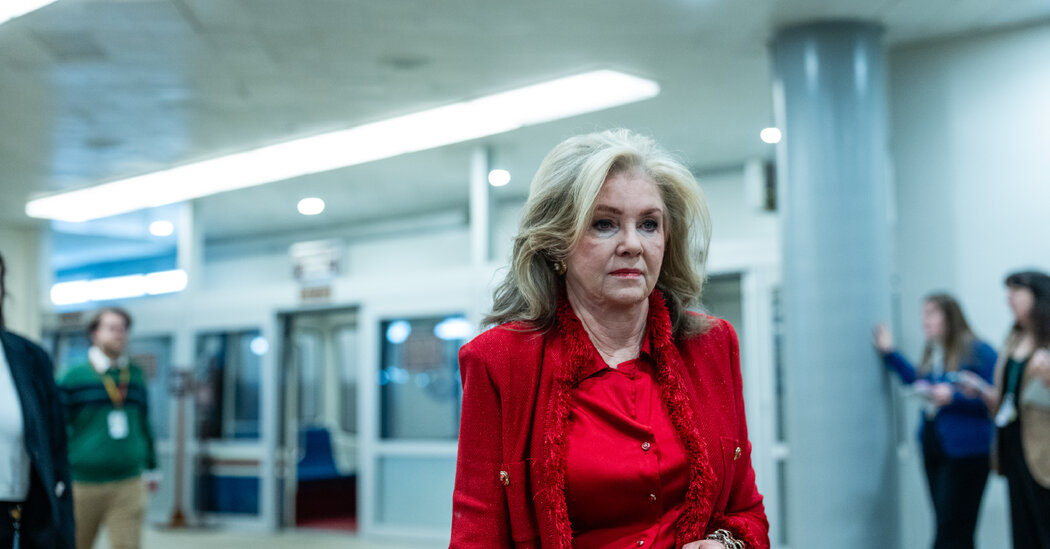
In Tennessee, Senator Marsha Blackburn, a Republican who is running for governor, called on the legislature to reconvene this year and pass a new map that eliminates a majority-Black district in Memphis. Ms. Blackburn said, “I’ve vowed to keep Tennessee a red state” and pledged to “do everything I can to make this map a reality.”
Tennessee lawmakers could face difficulties in carving any further partisan advantage out of their map. They previously resisted the wave of gerrymandering that had swept through other states starting last year, including Texas and California. When asked of his plans, the state’s Republican House speaker, Cameron Sexton, said: “We are reviewing the recent opinion as I have conversations with the White House and other individuals.”
There is some skepticism that a new, Republican district could be drawn in the Memphis area without endangering at least one other Republican-held seat nearby. Still, several Democrats said they were taking the possibility seriously, given how aligned Tennessee Republicans are with the Trump administration.
“I’ve always — since I heard the first opinion on this case — thought this was a possibility, and it’s unfortunate,” said Representative Steve Cohen, the Tennessee Democrat who holds the seat, adding that the General Assembly could “draw some pretty bizarre maps.”
Mr. Cohen’s primary opponent, State Representative Justin J. Pearson, has also raised alarm about the prospect, saying he would be reaching out to civil rights lawyers to see what options still remained.
Other states that Democrats fear could be targeted include Alabama and Mississippi. Although Mississippi’s primary was in March, the Republican governor recently called a special session to consider new judicial lines. Alabama’s primary is May 19, but the fact that early voting has already begun could make a new map difficult to enact this year.
“We will act as quickly as possible to apply this ruling to Alabama’s redistricting efforts and ensure that our congressional maps reflect the will of the people, not a racial quota system the Constitution forbids,” said Alabama’s attorney general, Steve Marshall.
Democrats are more concerned about the long-term implications for the party than they are about the midterms.
The conservative majority opinion cast the ruling as a limited one that preserved a central tenet of the Voting Rights Act. But the court’s liberal wing, in dissent, argued that the justices had effectively dismantled the landmark civil rights law. And some Democrats saw the ruling as essentially gutting the ability to challenge gerrymandered districts on racial grounds.
Without those guardrails, some Democrats fear 2028 will become a worst-case scenario, with Republican-controlled states across the country redrawing their maps to maximum partisan advantage. An analysis by The New York Times last year found that all told, Democrats would be in danger of losing around a dozen majority-minority districts across the South if the court struck down part of the Voting Rights Act.
Democrats are also gearing up for a battle for 2028. Already, Democrats in Colorado and New York have begun to explore the process of changing state laws and redrawing their maps before the next House races in two years. On Wednesday, Gov. Kathy Hochul of New York reiterated her support for drawing new maps.
“I’m working with the Legislature to change New York’s redistricting process so we can fight back against Washington’s attempts to rig our democracy,” Ms. Hochul, a Democrat, said in a statement.
Gov. J.B. Pritzker of Illinois, also a Democrat, hinted at future action in his state during a news conference on Wednesday. “We have options,” he told reporters after the decision from the court had been handed down.
Elsewhere, Democratic strategists have pointed to Oregon and New Jersey as states that could draw new maps for partisan advantage, though they would have to undertake similar processes as Virginia and California and get permission from voters through referendums.
So far, Republicans have been less direct about their plans. Lt. Gov. Burt Jones of Georgia, a Republican who is running for governor, said in a statement that he would “fully support redrawing our state’s legislative maps in compliance with today’s decision” — but he did not say when.
Both Lt. Gov. Pamela Evette and Representative Ralph Norman, Republicans from South Carolina running for governor, called on their state to redraw the sixth congressional district held by Representative Jim Clyburn, a Democrat. Mr. Norman also did not specify whether redistricting should happen now or ahead of 2028.
“What happened today is a turning point,” Mr. Norman said in a statement. “It means states like ours can finally take a hard look at districts that were designed to be untouchable.”
The primary calendar is the principal impediment to taking immediate action.
Beginning a fresh redistricting process in states where the early-voting process has begun would amount to tossing legally cast votes, which would likely invite fresh court challenges. It also could create chaos and confusion among voters and candidates.
Similarly, states where candidate filing deadlines have passed would have to pass new laws to change those dates if they try to redraw their maps this year.
In other states, congressional maps are already so heavily gerrymandered, especially after this year’s back-and-forth battle over maps, that it would be difficult to carve out further partisan advantage.
Abbie VanSickle, Reid J. Epstein and Shane Goldmacher contributed reporting.

