



An art publisher accused in a civil suit of isolating Robert Indiana, the artist, in the final years of his life, has been found to have created unauthorized or adulterated versions of Indiana’s work by a New York jury.
The jury in federal court in Manhattan found in favor of Indiana’s former business partner, the Morgan Art Foundation, a for-profit company, that sued the publisher, Michael McKenzie, on the grounds that he had interfered with its rights by making Indiana works that he did not have the authority to produce.
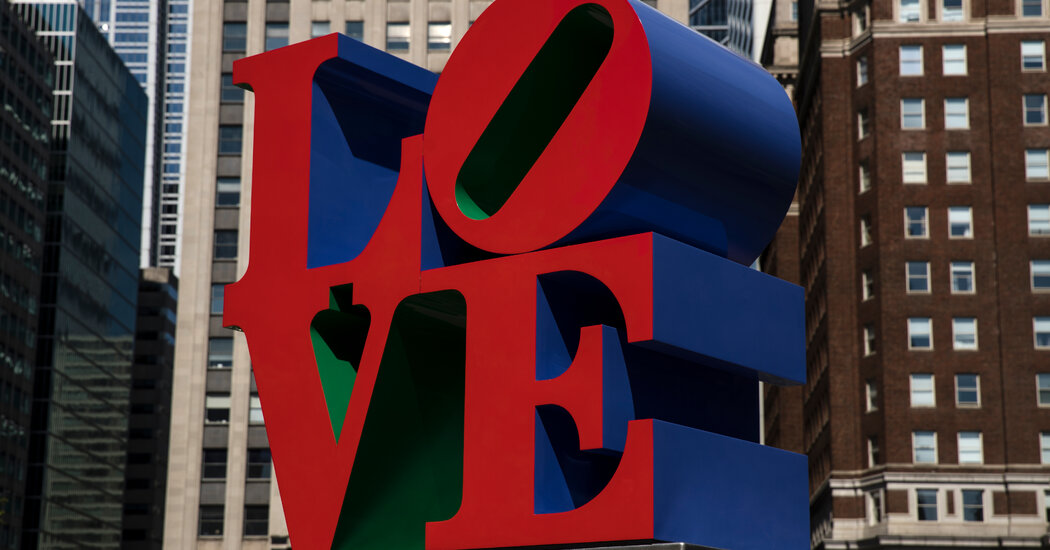
Among the works cited in the suit were some based on the most famous of Indiana’s works, a depiction of the word “love” in capital letters, with the L and a jauntily tilted O perched atop the V and E. The image is recreated in sculptures that sit in plazas in several cities and on coffee mugs and refrigerator magnets worldwide.
The jury awarded Morgan $102.2 million in damages.
A lawyer for Mr. McKenzie, Nicole Brenecki, said Mr. McKenzie was evaluating his options, including an appeal.
“It’s an astronomical figure and it requires a lot of liquidity to pay it,” she said. “Instead, he might pursue an appeal, which is procedurally available to him.”
After eight years of courtroom hostilities, the ruling may finally bring to an end the long-running claims and counterclaims surrounding Indiana’s art and legacy that have been watched closely by the art world and began around the time of his death at his home in Maine in May 2018 at age 89.
At that time, the Morgan company set off a bitter legal dispute that pitted it against Mr. McKenzie as well as Mr. Indiana’s former caretaker and the artist’s estate. The wide-ranging battle over control of the Indiana legacy — which included accusations of forgery, unpaid royalties, elder abuse and copyright infringement — clouded the market for the artist’s work.
In 2021, Morgan and the caretaker and the Indiana estate agreed to settle their disputes. The terms of the settlement were undisclosed.
Since then, Morgan has joined in partnership with the Star of Hope Foundation, a nonprofit that Indiana established before his death to support the arts in Maine. The foundation is converting Indiana’s former home, a former meeting hall for the Independent Order of Odd Fellows on the remote Maine island of Vinalhaven, into an art space that is accessible to the public.
The art that Indiana left behind is the foundation’s main asset. In addition, it receives royalties from Morgan on its sales of Indiana works. Two separate New York galleries began working with Morgan and the Star of Hope Foundation to reboot Indiana’s lackluster market with new shows last year.
The dispute between Mr. McKenzie and the Morgan company continued.
Morgan argued that bogus artworks dreamed up by McKenzie had damaged Mr. Indiana’s market and his reputation. In its court papers, it challenged the authenticity of several works, including “BRAT,” a huge sculpture and homage to bratwurst that Mr. McKenzie had sold to a Wisconsin sausage maker.
“The isolation and exploitation of Robert Indiana in the last years, days and even months before he died was a tragedy, and Michael McKenzie was the mastermind,” a lawyer for Morgan, Luke Nikas, said in his closing argument.
Mr. McKenzie, for his part, questioned whether Morgan’s contracts with Indiana were valid and insisted his productions of Indiana artworks were not an infringement.
Ms. Brenecki told the jury that Morgan did not have the rights it claimed and that its concern for Indiana was a convenient argument to advance its suit. “What they were trying to protect was their money,” she said in court.
The jury sided with Morgan on its trademark and copyright claims, and agreed that Mr. McKenzie had interfered in the company’s agreements with Indiana. The jury decided McKenzie had infringed copyright for the Indiana artworks “The Ninth American Dream” (2001) and “USA FUN” (1965) and infringed trademark rights on a variety of “LOVE” prints and works in metal.
“This verdict restores trust to the Robert Indiana market,” Mr. Nikas said in a statement. “We exposed these forgeries, held Michael McKenzie accountable, and protected the integrity of the artist’s legacy.”
Before the trial, Mr. McKenzie had already been found liable for sanctions for discovery misconduct, including failing to disclose he had a database of Indiana artworks and removing works from his studio.

