



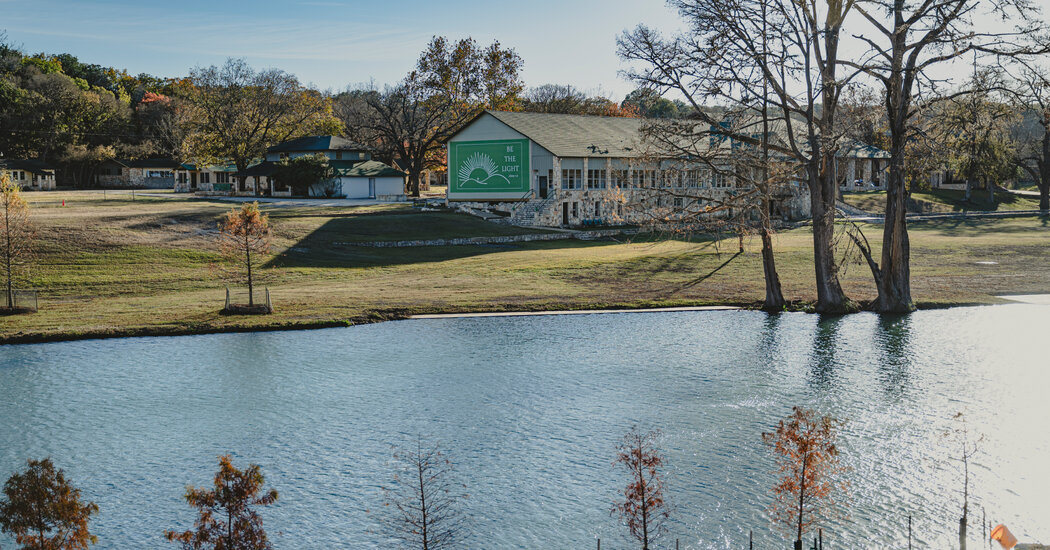
Camp Mystic, where 27 children and counselors died in catastrophic flooding last year, may be denied a license to reopen this summer after state health officials deemed the camp out of compliance with Texas health and safety requirements.
A review by the Texas Department of State Health Services, obtained by The New York Times, said the camp’s emergency plans must undergo major revisions in order to receive a license to reopen. A spokesman for Camp Mystic said the camp received the notice on Thursday.
The camp planned to partially reopen to campers in late May for its 100th summer — not on the site where campers died last summer, but rather on a nearby site.
The document, addressed to the camp’s director, lists more than 20 categories in which Mystic’s submitted plans have been judged incomplete, insufficient or missing, according to the state’s guidelines. Texas enacted a package of strict new summer camp safety laws last fall in the wake of flooding last July that killed 27 children and young counselors, as well as the camp’s executive director.
A spokeswoman for the state health department, Lara Anton, said that the letter was a regular part of the process of reviewing a camp’s application for a license from the state. “Most youth camps have received a notice of deficiency letter for their emergency plan,” she added, because of the additional safety requirements adopted last year.
In a statement, the camp said that it was working with the state agency “to address the areas outlined.”
“Our priority remains the safety and well-being of our campers, and we hope to continue the nearly century-long mission and ministry of Camp Mystic,” the statement read.
A spokesman for Camp Mystic said it remains the camp’s intention to open on May 30 for the first session as planned.
Problems identified by the letter to the camp include maps that do not make clear where cabins are located in relation to floodplains and floodways. The review also notes the camp’s “insufficient” plans for emergencies including fires, severe injuries, flash floods and other natural disasters.
In the section on flash flooding, the review notes that the camp did not submit a floodplain map from the Federal Emergency Management Agency. Its evacuation plan is also labeled “insufficient” because it lacks, among other things, details on staff responsibilities during an evacuation, a notification process for families, and a process for evacuating campgrounds and notifying authorities.
The Texas Legislature will hold two days of hearings next week on what happened at Camp Mystic last summer. A group of legislators visited the camp’s grounds this week as part of the state’s investigation. The state police are also investigating the camp’s response.
More than 800 girls have signed up to attend Camp Mystic this summer, the camp’s leaders said in February. The camp planned a modified schedule of six shorter sessions to accommodate more children, since the section of the campus that sustained serious damage, and where people died, remains closed.
The body of one girl, Cile Steward, has not been found. Her parents are among many of the families whose daughters died at the camp who are now suing the Eastland family, the camp’s longtime owners, for negligence in their preparations and response to the floods.
In emotional testimony this month, Edward Eastland, the director of the site where campers and counselors died, said that he did not see storm warnings the day before the flood, and had not met with workers at the camp to discuss the possibility of flooding.

