



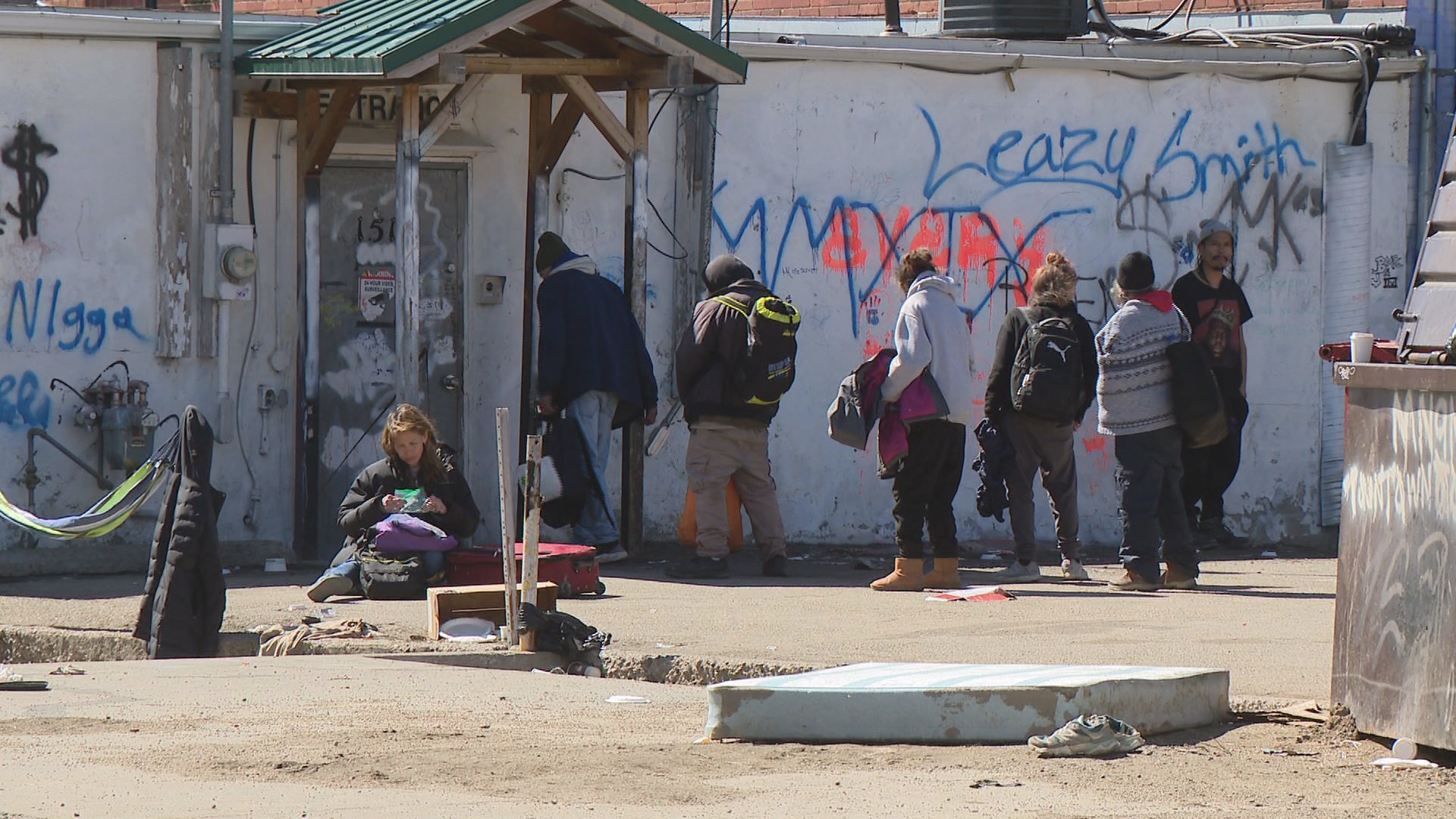
A sociology and public health researcher says the Saskatchewan government’s policies for dealing with addictions are rolling back progress made in the last 30 years, in the wake of the shutdown of Saskatoon’s only safe consumption site.

“I think that we are taking a step backwards in our approach of looking at abstinence-only treatment focus modalities in isolation from looking at things like harm reduction, for looking at other modes of community supports, community-based resources, or other prevention mechanisms that look at whole communities and whole families,” said Maryellen Gibson, doctoral candidate at the University of Saskatchewan.
Two weeks ago, Prairie Harm Reduction closed its doors for good after discovering a financial shortfall of hundreds of thousands of dollars. Since then, the provincial government has remained steadfast in its recovery-focused and “saying no” approach to dealing with addictions across the province.
“Proactive is not doing the drugs at all in the first place,” said Saskatchewan health minister Lori Carr on Thursday, when asked by reporters about reactive and proactive measures to address addictions and overdoses.
“We’re working with individuals. That’s why we have education campaigns out there that talk about not using drugs, and, of course, illicit drugs are very dangerous and that’s what we’re seeing happening right now.”
But education campaigns are not enough to address the complex nature of addiction and why people choose to use drugs, said Gibson.
“Of course, having education and prevention campaigns is a piece of our work in preventing the harms around substance use, but it is not the be-all and end-all,” Gibson said.

Get daily National news
Get daily Canada news delivered to your inbox so you’ll never miss the day’s top stories.
“We need to have a full continuum of care and a continuum of interventions and responses for people.”
The province’s health minister is also pointing to the tabled forced drug treatment bill, called The Compassionate Intervention Act, as a means of addressing the crisis. This act would allow those with addictions to receive treatment against their choosing, with recovery orders to be requested by family members, medical professionals or through police intervention.
The bill has yet to move beyond its first reading in Saskatchewan’s legislature, but Gibson, who is conducting research on it, said it is likely to pass given the province’s majority government.
The province touts that the bill will be used in a small number of cases, but Gibson said recent rhetoric from the province that claims it will help with the crisis is conflating this.
“If the idea of this bill is solving all of these crises that we’re having, it doesn’t in fact mean that it’s going to be reserved for the most severe cases and only being used in a very small amount of the time,” Gibson said, adding that the act could support people in extreme cases.
The provincial stance on addressing Saskatchewan’s addictions is being echoed in Ottawa, with Saskatoon West MP Brad Redekopp pushing the federal government Thursday to keep the site shuttered.
“Saskatoon needs hope, recovery, treatment and safety, not a new licence for the same disaster under different management,” said Redekopp during question period.
Redekopp has also been vocal online, sharing his thoughts on the closure of Prairie Harm Reduction to his social media following.
“Here is my response to a Google review that called me ‘heartless’ for advocating for the closure of Prairie Harm,” he said in a post on April 23.
“What was heartless was leaving people in addiction while our neighbourhood paid the price. Real compassion means treatment, recovery, rehabilitation, and safer streets.”
Earlier this week, Regina issued an overdose alert after seeing 140 overdoses in the first three weeks of April.
Since Prairie Harm Reduction shut down, fire crews in Saskatoon say they have been responding to around 16 overdose calls every day.

There is no silver bullet approach to resolving the addiction crisis, said Gibson, adding that funding for community organizations and the health-care system are meaningful starting points.
“Until basic needs are met and until we are looking at a decolonial approach to the way that our province is providing health care and support, we will continue to see substance use proliferate in our communities,” said Gibson.
“We need to have a reliable and consistent funding source for organizations that are providing resources and supports for people at various levels of … their substance use or also precarity.”
© 2026 Global News, a division of Corus Entertainment Inc.

