



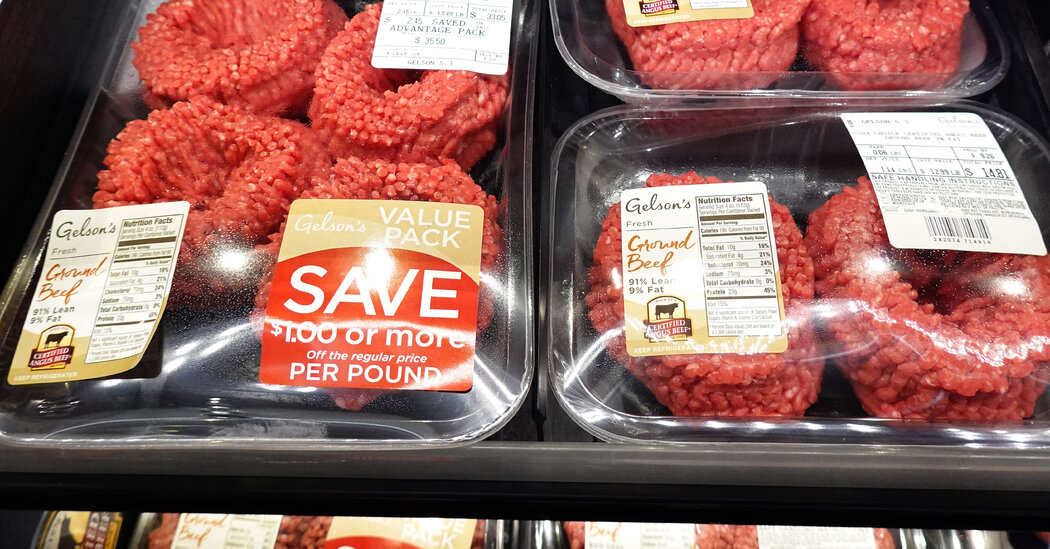
President Trump will allow up to 300,000 metric tons of ground beef to be imported into the United States with lower tariffs over the next 90 days, he said in a social media post Friday morning, a bid to lower the cost of a staple food for Americans pinched by higher prices.
The beef will be imported with “no out of quota tariff” and sold 25 percent below the current market price, which is $6.89 per pound, he said.
The president provided almost no details about how his plan would work, but the news seemed to surprise and anger ranchers. He did not say which countries the beef would come from, where it would be sold or how it would be discounted 25 percent.
A White House official said the president would sign an executive order to remove the tariffs within the next two weeks. In exchange for the tariff relief, the president had secured a deal with foreign beef exporters to provide a 25 percent discount, he said.
The official did not specify which foreign exporters he was referring to, or which country the beef was from.
“This action, during a time of record high demand for beef, will help address the affordability of beef, after our nation’s cattle supply fell to its lowest level in 75 years under the Biden administration,” the Agriculture Department said.
More than 80 percent of the beef Americans consume is produced in the United States, meaning that even an increase in beef imports is unlikely to radically increase the supply of beef and lower prices.
Groups representing ranchers said the plan was only a short-term fix for consumers, and would hurt ranchers and discourage them from increasing the supply of American cattle and reducing prices over the longer term.
“While America’s cattle producers share the goal of keeping groceries affordable for consumers, flooding the market with government-subsidized, below-market beef is not the way to rebuild the American cattle herd,” said Colin Woodall, the chief executive of the National Cattlemen’s Beef Association.
He pointed out that the market price for live cattle fell after the president’s announcement, already costing ranchers money.
The government of Brazil, a major provider of U.S. beef imports, said that its president, Luiz Inacio Lula da Silva, had spoken on the phone with Mr. Trump on Friday. The Brazilian president emphasized the need for further tariff talks, the government said.
The statement did not mention beef, and the White House did not respond to a question about whether Brazil would be supplying the beef. But Brazil is one of the few countries that could export large amounts of beef to the United States within the next 90 days, fulfilling the 300,000 metric ton goal.
Only six countries exported more than 100,000 metric tons to the United States last year, and two of them, Canada and Mexico, already export their beef without tariffs because of free trade agreements. Brazil, Australia, New Zealand and Uruguay are the other four.
Mr. Trump has repeatedly imposed tariffs in an effort to protect U.S. markets, raise revenue for the U.S. government and goad foreign countries into making concessions. But the levies have also pushed up U.S. consumer prices, according to economists, crashing headlong into Mr. Trump’s promises to help alleviate the cost of living for Americans.
The White House has struggled to address persistently high grocery prices, especially high beef prices. Since Mr. Trump returned to office in January 2025, the price of ground beef has risen 24 percent, according to the Bureau of Labor Statistics.
The only durable way to lower beef prices, ranchers and economists said, is to increase the size of the American cattle herd. U.S. cattle numbers are the smallest since the 1950s, after years of drought and low margins resulted in cattle producers reducing the size of their herds or leaving the business. It takes years for ranchers to increase the size of the country’s herd, and there is little evidence they have taken steps to do so over the past 18 months.
“Today’s announcement and other market interventions throw cold water on the prospect of herd expansion and sacrifices long-term stability for short-term messaging,” Mr. Woodall said.
This year, the president signed an executive order to allow imports of an additional 80,000 metric tons of ground beef from Argentina without tariffs. Last year, the United States imported almost 1.9 million metric tons of beef and beef products, according to Census Bureau trade data.
Another small increase in the beef supply could be on the horizon. Live cattle imports from Mexico were halted in May 2025 over fears of the spread of the flesh-eating screwworm fly. But with the fly having reached the United States this summer, the Agriculture Department plans to slowly reopen the southern border to Mexican cattle starting on Monday.

