



WHO DECIDES WHETHER THEY RECEIVE PROTECTION?
The unification minister normally determines whether a North Korean arrival qualifies for protection, although the NIS director can make the decision on national security grounds.
Yu told Reuters the sensitivity of the case could also keep them out of public view longer than other North Korean arrivals.
Their physical and psychological condition is also likely to be assessed.
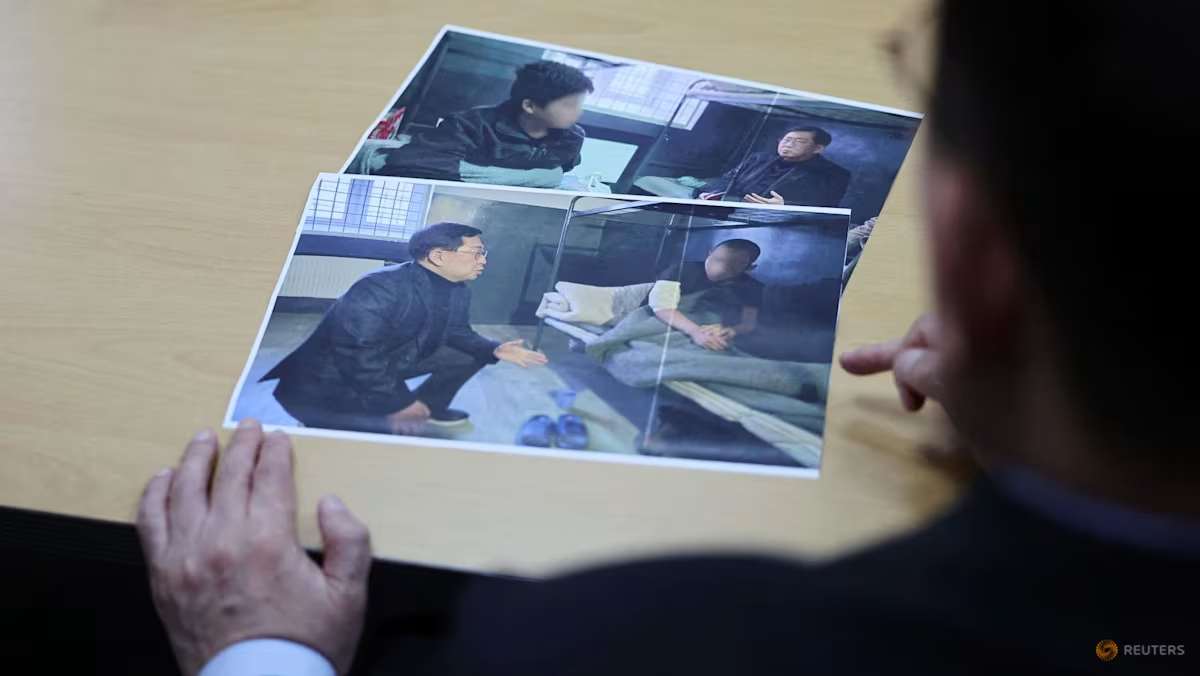
Yu said when he met them they were being held separately at a Ukrainian detention facility and the prolonged isolation and uncertainty may have affected their mental health.
DID UKRAINE HAVE THE RIGHT TO TRANSFER THEM?
The Third Geneva Convention requires prisoners of war to be released and repatriated without delay after active hostilities end. That does not necessarily prohibit earlier release or transfer to a third country.
South Korea and Ukraine have not disclosed the legal basis for their transfer, including whether it formally ends the soldiers’ POW status.
Peter Ward, a research fellow at the Sejong Institute, said repatriation was a basic principle governing prisoners of war (POWs) but should not apply where it could damage their welfare or human rights.
„There is ample basis under humanitarian and human rights law for these POWs to be transferred to a third country of their choice so long as that third country of their choice is prepared to take them,“ Ward said.
Lee Shin-wha, a Korea University professor and former envoy for North Korean human rights, said the transfer could still generate legal and diplomatic friction because international law treats North Korea as a separate state, while South Korea considers North Koreans as its citizens.
Their stated wish to come to the South and the risks they could face in the North provide grounds for accepting them, she said.

