



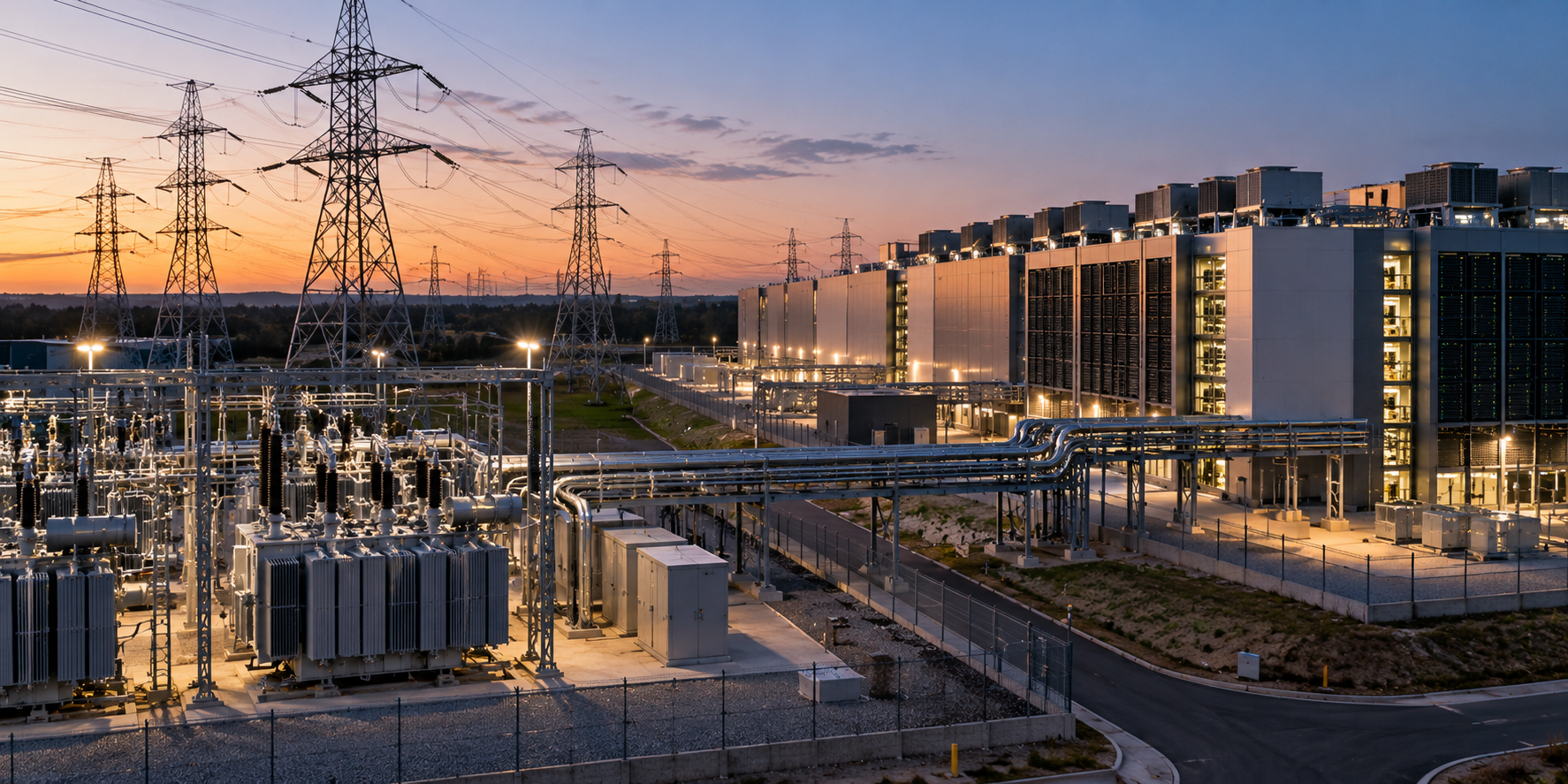
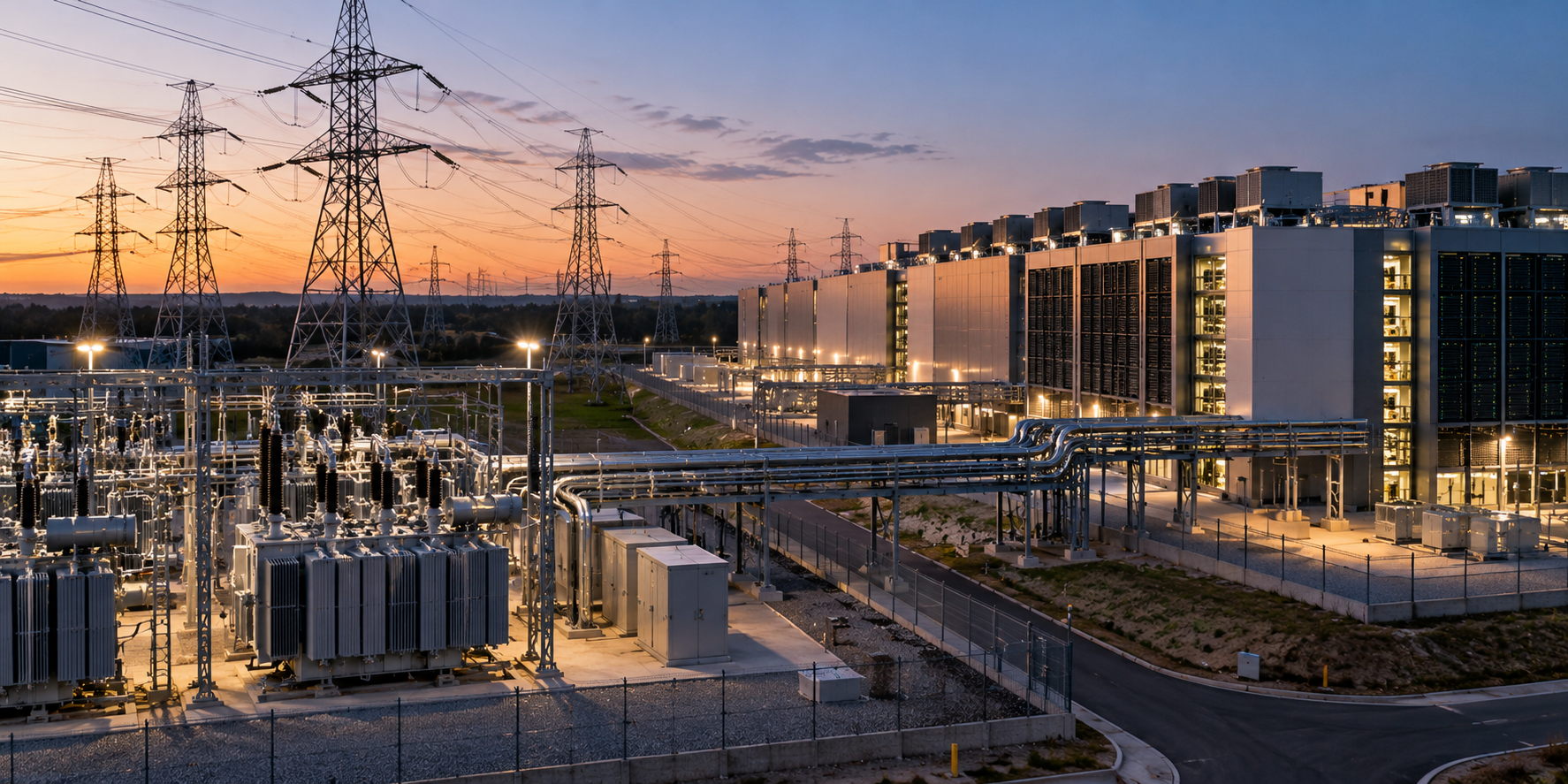
AI development is increasingly dependent on the physical infrastructure needed to power data centres, with electricity supply, grid connections and utility investment emerging as critical constraints on the industry’s expansion, according to Goldman Sachs.
While advances in AI models continue to drive demand for computing capacity, the infrastructure required to support that growth operates on a much longer timeline.
Transmission lines, substations, power generation facilities and data centres can take years to develop, potentially slowing the deployment of AI systems even as computing technology advances.
Goldman Sachs Research expects global data centre power demand to increase by 170% between 2025 and 2030, with more than 60% of the growth coming from the US.
However, supply-chain constraints, permitting requirements and limited grid capacity could moderate the pace of expansion.
“Power is probably the forever bottleneck,” said Jason Tofsky, global head of Digital Infrastructure Investment Banking at Goldman Sachs.
He noted that delivering a successful project requires coordination across numerous areas, including financing, over a period that can range from six months to two years.
AI growth depends on more than computing capacity
The AI industry requires substantial investment in computing hardware, data centres and power infrastructure.
Goldman Sachs estimates that aggregate AI capital expenditure could reach $7.6 trillion between 2026 and 2031 across these areas.
Financing this expansion will require substantial borrowing alongside other sources of capital.
Goldman Sachs Research projects that global hyperscaler debt issuance will reach $420 billion in 2027, more than 60% above its estimate for the 2026 financial year.
Hyperscalers, however, account for only around 40% of credit raised across the AI ecosystem, highlighting the broader financing requirements associated with the industry’s expansion.
These investments depend on more than the availability of capital.
Data centre developers must secure land, obtain regulatory approvals, source equipment, arrange electricity supply and complete construction before facilities can become operational.
The process creates multiple potential bottlenecks.
Delays in any one area can affect the entire project, regardless of how quickly AI models or computing hardware improve.
Grid capacity emerges as a critical constraint
The US electricity grid faces growing pressure as data centre developers seek access to large amounts of power.
One challenge is the volume of projects waiting to connect to the grid.
According to Goldman Sachs, the US interconnection queue contains roughly 2,600 gigawatts (GW) of generation and storage projects.
This is more than twice the installed capacity of the existing grid.
The size of the queue does not mean all proposed capacity will be built.
However, it illustrates the scale of demand competing for access to grid infrastructure.
The median time between submitting an interconnection application and reaching commercial operation is now approximately five years, with some projects taking longer.
Transmission infrastructure is another constraint.
Goldman Sachs Research data show that US construction of new high-voltage transmission lines declined from an annual average of 1,700 miles between 2010 and 2014 to just 350 miles between 2020 and 2023.
Equipment shortages can extend the timeline further.
Environmental reviews may take three to four years, while lead times for high-voltage substations and generation step-up transformers have stretched to roughly three to five years.
Utilities face rising investment requirements
The growing demand for electricity is changing the outlook for utilities, a sector traditionally associated with relatively low growth and defensive investment characteristics.
Goldman Sachs expects aggregate utility capital plans to reach $1.3 trillion between 2026 and 2030.
The projected spending reflects the need to expand infrastructure to accommodate rising electricity demand, including that generated by AI data centres.
Utilities must determine how to finance new generation capacity, transmission lines and substations while ensuring that infrastructure can support additional large-scale electricity consumers.
Hyperscalers and other large electricity users are increasingly considering arrangements in which they contribute directly to the cost of the generation and grid infrastructure required to serve their facilities.
These arrangements could help align investment in digital infrastructure with the capacity needed to supply it.
Tyler Miller, global co-head of Power, Utilities, and Infrastructure Investment Banking at Goldman Sachs, described the principle behind this approach as straightforward: “Growth enables growth.”
The idea is that investment in data centres can support additional investment in electricity infrastructure, provided that the costs and benefits are appropriately coordinated.
For utilities, the opportunity is accompanied by substantial execution and financing requirements.
Capital must be committed to projects that may take years to complete, while developers must manage equipment availability, regulatory approvals and uncertainty over the timing of future demand.
Behind-the-meter power offers an alternative
The constraints affecting grid connections have encouraged greater interest in alternative power arrangements, including behind-the-meter projects.
A grid-connected data centre must secure the necessary approvals to connect to the electricity network.
Behind-the-meter projects can avoid some of these grid constraints by arranging power supply outside the conventional grid connection process.
However, these projects do not eliminate the broader challenges associated with building power infrastructure. They may face air-permitting requirements and longer environmental reviews, depending on the project.
Goldman Sachs also identifies hybrid power arrangements and fuel cells as part of the changing mix of electricity sources supporting US data centres.
Its analysis of US data centre power demand indicates that grid-supplied electricity remains the dominant source, while behind-the-meter and fuel-cell power contribute increasing amounts in the later forecast years.
The relative appeal of these alternatives will depend on the constraints facing individual projects.
Avoiding some grid limitations does not remove the need to secure equipment, obtain permits, and finance construction.
For investors, the development of alternative power arrangements creates additional infrastructure opportunities.
Permitting and community opposition add to project risks
The expansion of data centres also depends on local regulatory decisions and community acceptance.
Large projects can place pressure on local infrastructure, including roads and public services.
Concerns about noise, emissions, water consumption, traffic and the potential effect on residential electricity bills can influence whether developments proceed as planned.
Goldman Sachs reported that, since January 2026, 86 projects had been cancelled or significantly delayed, with 76 directly linked to local opposition.
The figures show how community concerns can become a material constraint on infrastructure development, alongside grid capacity and equipment shortages.
The regulatory challenges also differ depending on how a project is structured.
Grid-connected facilities require regulatory approvals for their electricity connections, while behind-the-meter developments can face different permitting requirements.
Developers may improve their chances of progressing by addressing these issues early.
Goldman Sachs highlights the importance of credible community-benefit commitments and transparent plans for managing environmental impacts.
Skilled labour becomes another bottleneck
The AI infrastructure build-out also depends on the availability of workers capable of constructing and operating data centres and power facilities.
In some markets, competing projects are bidding up wages as developers seek to attract workers from a limited labour pool.
These shortages can disrupt projects even after developers have secured land, electricity arrangements and equipment.
The challenge extends across the infrastructure supply chain, from construction to the installation and maintenance of power systems.
Labour constraints could therefore add to project costs and delay the delivery of new capacity, affecting the timing of investment returns.
However, the expansion is also creating skilled, well-paying blue-collar jobs across the US.
This could broaden the economic benefits of AI infrastructure investment beyond technology companies and the digital economy.
Financing must adapt to longer project timelines
The growing complexity of AI infrastructure projects is increasing the need for financing arrangements that can accommodate different construction schedules and investment requirements.
Capital must be coordinated across land acquisition, development, power infrastructure, equipment procurement, construction and long-term operations.
These requirements bring together utilities, hyperscalers, infrastructure investors, private-credit providers, insurers and other long-term sources of capital.
Goldman Sachs‘ projections for hyperscaler borrowing illustrate the scale of financing needed to support the industry’s expansion.
Yet access to funding alone does not guarantee that projects will be completed on schedule.
Delays in power connections, equipment deliveries, or regulatory approvals can push back the point at which infrastructure begins generating revenue.
Longer timelines can increase risk and widen the gap between projects that have secured electricity supplies and those still waiting for grid access.
The report also points to the possibility of a more measured investment cycle.
Although infrastructure constraints can delay growth, a slower build-out may allow demand to absorb new capacity over time, potentially reducing the risk of investing in assets that are not fully utilised.
Power availability could shape the AI race
The infrastructure constraints identified by Goldman Sachs suggest that the next phase of AI expansion will depend as much on the ability to coordinate physical systems as on technological progress.
AI models can improve over months, but expanding electricity generation, transmission capacity and equipment supply can take years.
This mismatch could result in a less linear build-out, with new capacity becoming available in stages as power infrastructure comes online.
The timing of these additions will matter for companies investing in data centres and computing capacity.
Projects with secured power may be better positioned to progress, while those awaiting grid connections could face extended delays.
The report also raises questions about whether markets with the ability to expand generation and grid capacity more quickly, such as China, could develop competitive advantages.
For utilities, the rising demand creates an opportunity to invest in infrastructure and support a growing digital economy.
For investors, however, the scale of the opportunity must be weighed against capital requirements, permitting risks, labour shortages and the time needed to deliver new capacity.
The post Why Goldman Sachs views Grid and Utilities as the key AI growth bottlenecks appeared first on Invezz

