



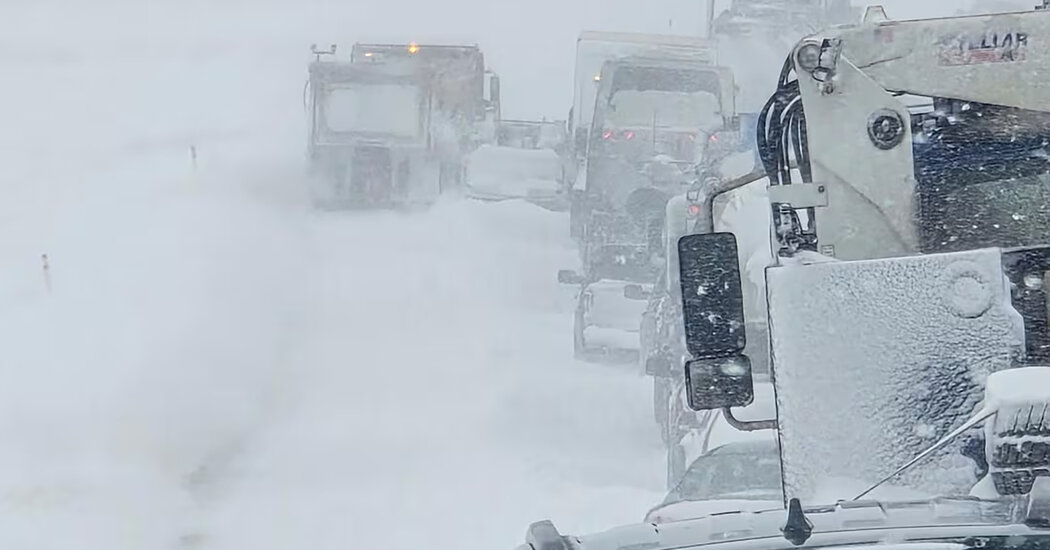
A spring snowstorm brought two highways in Alberta, Canada, to a standstill and left 300 vehicles stranded overnight into Friday as the authorities mobilized to bring them provisions, an official said.
Two highways, 63 and 881, were closed because of the weather, according to the Royal Canadian Mounted Police.
An emergency helicopter service that flew over the highways had estimated that 300 vehicles were stranded, according to a news release from the R.C.M.P.
On Friday, Highway 63 was closed around 1 a.m. and Highway 881 was closed around 9 a.m. As of Friday evening, Highway 63 remained closed and parts of 881 were open, though travel was not recommended.
“We’ve had dozens of calls from stranded motorists,” said Cpl. Teri-Ann Bakker, a spokeswoman for the R.C.M.P.
The storm, which stretched from the Northwest Territories through Alberta and part of Saskatchewan, had created rapid whiteout conditions and dropped more than a foot of snow, Corporal Bakker said.
Snowdrifts of two to three feet covered the highways in some areas, delaying the snow removal process, the R.C.M.P. said.
Many drivers had already removed their snow tires, thinking the winter was over, Corporal Bakker said.
“In Alberta, we have storms that decide to show up at any time,” she said, noting the winter weather is expected to continue until Sunday.
The storm had brought high winds that created whiteout conditions, she said.
Environment Canada said the regions affected would get between six inches and two feet of snow before the storm ends.
Corporal Bakker said that emergency authorities were trying to reach people who were stranded and bring food, water, fuel and medicine.
Because of the snowbanks and cars in ditches, the R.C.M.P. does not know the number of people who were stranded, she said. No fatalities have been reported, she said.
In Facebook groups dedicated to regional highway conditions, drivers and passengers reported being stuck in their cars for more than 12 hours.
Some coordinated the sharing of food and supplies, or invited strangers to hop in their vehicles once they had run out of gas.
Corporal Bakker said that those stranded should stay in their vehicles. If someone is in a ditch they should run their vehicle for 15 minutes at the most to prevent carbon monoxide poisoning.
The R.C.M.P. was also moving south in a northbound lane of one of the highways with tow trucks to recover vehicles, she said.
“In Alberta we never know what to expect with the weather,” Corporal Bakker said.
Erin McCann contributed reporting.

