



ENERGY DEPENDENCE A KEY WEAKNESS
The push for deeper integration comes as Asia faces a growing threat from energy supply disruptions linked to the Iran conflict.
A fortnight ago, the IMF warned that the region is especially vulnerable due to its reliance on Middle Eastern fuel. Asia sources nearly 60 per cent of its crude oil from the region, much of it shipped through the Strait of Hormuz.
Oil and gas consumption accounts for about 4 per cent of Asia’s gross domestic product (GDP), nearly double that of Europe’s. With limited domestic production, net energy imports amount to roughly 2.5 per cent of the continent’s GDP.
This dependence is already feeding through to the broader economy.
The IMF said the energy supply shock is pushing up inflation and weakening external balances, leaving policymakers with narrowing policy options.
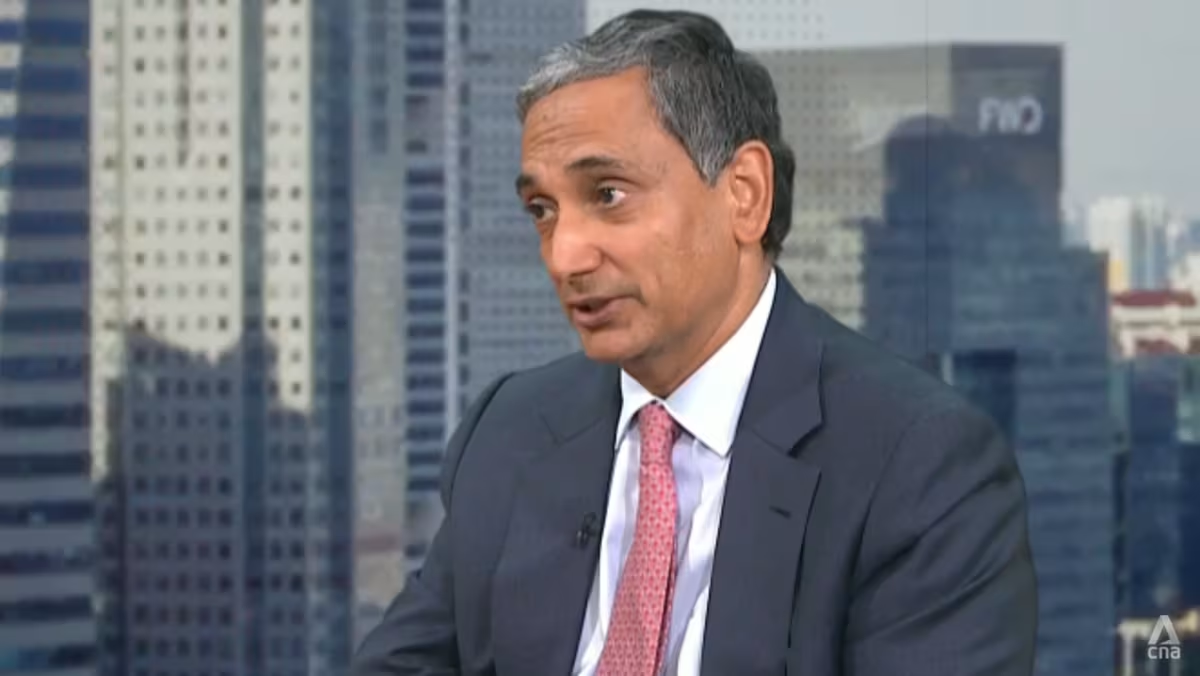
In „adverse“ or „severe“ scenarios, Asia’s growth could fall by 1 to 2 percentage points cumulatively through 2027, while inflation could rise by 1 to 4 percentage points, Srinivasan said.
He added that the longer the conflict drags on, the higher the likelihood of those downside scenarios materialising.
With a ceasefire between the United States and Iran extended without a clear end, risks are mounting, with economies that rely heavier on imported energy more likely to bear the brunt.
“Countries which import a lot of energy will take a bigger hit. That means their growth will decline more, (which) would translate into fewer jobs. Manufacturing and industrial production would also (be impacted),” Srinivasan said.
LIMITED POLICY ROOM
The challenge for governments is compounded by reduced fiscal capacity after years of crises, including the COVID-19 pandemic and the war in Ukraine.
“Fiscal buffers have eroded over the years and governments just don’t have the kind of fiscal space to provide support to everyone,” said Srinivasan.
He urged targeted measures over broad-based subsidies as policymakers face difficult trade-offs in cushioning the impact on households and businesses.
“You have to be smart in using your buffers. Boost certain parts of the economy which will create jobs … provide targeted support to the people who need it most … not generalised subsidies because those are regressive (and) expensive,” he said.
Despite the risks, Asia entered the current crisis from a relatively strong position, with low inflation and resilient growth, the IMF said.
“Inflation expectations in 2027 are still broadly anchored … but that could change if this shock continues for longer,” Srinivasan added.

